Development Bank Ghana (DBG) is planning to deploy approximately $600 million in investments across Ghana’s agricultural value chain over the next five years.
This is part of efforts to drive food security, boost exports, and create sustainable jobs.
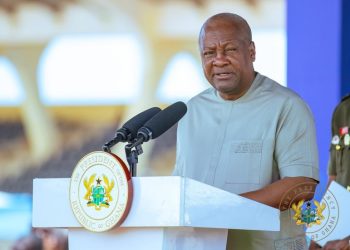
Chief Executive Officer of DBG, Professor Randolph Nsor-Ambala, disclosed this in an interview with Citi Business News‘ Nii Larte Lartey, where he outlined the bank’s strategic priorities for its next phase of operations.
The planned investment will build on lessons learned from DBG’s first five years of operation, during which the institution invested more than GH¢2.5 billion in businesses operating across agriculture, agribusiness, manufacturing, ICT, transportation, and education.
“The five years has offered us an opportunity to also learn. We have come to understand how to leverage our investments to drive high spillover effects. We have come to understand which kind of investments unwinds binding constraints.
“We have come to understand which kinds of investments have more potent impact on the creation of decent jobs for decent livelihoods. Knowing that our investments are going to be far more surgical focus and leverage the knowledge and education and experience we have gained from the five years.
“Going forward we are expecting that in the next five years we will be able to deploy another about 600 million dollars in investments within the agricultural value chain with the support of the Ministry of Finance as well as our development partners,” he stated.
Professor Nsor-Ambala noted that the bank’s future investment strategy will place greater emphasis on agribusiness and manufacturing, sectors that DBG’s internal assessments have identified as having the strongest potential to generate decent jobs and improve livelihoods.
He explained that the institution has gained the confidence of its development partners, positioning it to scale up support for businesses that can contribute meaningfully to Ghana’s economic transformation.
“Going forward, in alignment with the national vision, we are trying to focus a lot more on agribusiness and manufacturing because from our growth diagnosis, we realised that those have a higher impact on the creation of what we call decent jobs for decent livelihoods,” he said.
Women-led enterprises
The DBG CEO also indicated that the bank will deepen support for women-owned and women-led enterprises, citing evidence that investments in female-led businesses often generate stronger social and economic spillover effects across households and value chains.
Professor Nsor-Ambala also stressed the need for policy reforms to address constraints facing private sector growth.
He said DBG is working closely with government and development partners to promote policy coherence and reforms that will enhance the operating environment for businesses.
He argued that development interventions must ultimately strengthen the capacity of the private sector to thrive independently beyond government support.
“The point must be made that all interventions within the development space must necessarily have an agenda to empower the private sector to be able to continue after the time of the government intervention because the evidence again suggests that that is what builds resilience, that is what builds sustainability, that is what ensures that the impact is felt beyond the period of the physical intervention and that is what we exist as DBG to do,” he explained.
Professor Nsor-Ambala further highlighted agriculture as a critical sector requiring targeted support, particularly because businesses in the sector often struggle to access credit due to perceptions of high risk among financial institutions.
As a result, DBG intends to continue supporting greenfield investments and businesses across the agricultural ecosystem to expand productive capacity, promote import substitution, improve food security, and increase foreign exchange earnings through exports.
He emphasised that the bank’s interventions span the entire agricultural value chain, from production and processing to export-oriented businesses capable of leveraging Ghana’s competitive advantages in global markets.