As Ghana pursues food security and agricultural transformation, one critical element remains underdeveloped: a robust, regulated national seed value chain.
Policies and plans exist, but what’s urgently needed is a single, dedicated body to drive their execution.
A National Seed Authority (NSA).
The Foundation of Food Security
The seed is the beginning of the entire food system. Yet Ghana’s seed sector, though growing, faces systemic weaknesses that only a unified authority can resolve.
Fragmented Governance Hinders Progress
Currently, seed regulation responsibilities are scattered across several bodies: the Ministry of Food and Agriculture’s directorates, the Seed Inspectorate Division, the National Seed Council, research institutions, and private seed companies. Each performs important work, but together they form a disjointed governance system with no single point of accountability.
The consequences are severe:
• Slow release of new varieties
• Inconsistent certification and inspections
• Weak enforcement against counterfeit seed
• Unpredictable supply, particularly in northern food belts
• Poor coordination between research institutions and private companies
Farmers face shorter rainy seasons, unpredictable droughts and new pest threats. Seed must move from breeder to farmer quickly, efficiently and with guaranteed quality. A National Seed Authority would provide exactly that.
The Counterfeit Crisis
Across Ghana, farmers express one persistent concern: they don’t trust the seed market. Reports of fake labels, poor germination and misrepresented varieties are too common. Once a farmer plants a seed that fails, it may take years before they try certified seed again. This isn’t merely a technical problem; it’s a national productivity crisis.
A well-resourced NSA would introduce:
• Tougher packaging and labelling standards
• Routine market surveillance
• Digital verification systems using QR codes and SMS authentication
• Independent seed testing laboratories
• Real-time public reporting on quality and compliance
These systems would restore farmer confidence, protect seed company brands and shift the entire market towards higher-quality products.
Innovation Outpacing Regulation
Research institutions, including CRI, SARI and universities, are releasing climate-resilient, early-maturing and pest-tolerant varieties at an encouraging pace. Yet these varieties take too long to reach farmers because the pipeline from breeder seed to foundation seed to certified seed is poorly coordinated.
An NSA would connect researchers, seed companies, aggregators, agro-dealers, and farmers, ensuring that varieties suited for drought-prone areas, low-fertility soils, or new market trends reach producers on time and at scale.
In a changing climate, speed is a matter of survival.
Private Sector Challenges
Ghana has a growing private seed industry, but many companies struggle with inconsistent certification timelines and unclear licensing and inspection processes. Investors hesitate when regulatory environments fluctuate.
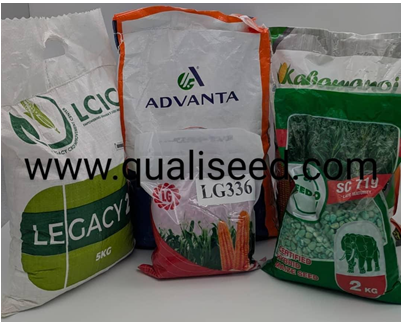
A National Seed Authority would offer clarity through standardised approval procedures, transparent fees, faster certification and improved coordination with regional ECOWAS seed regulations.
With proper structure, Ghana could become a regional seed hub, supplying West Africa with high-quality maize, rice, soybean, sorghum and vegetable seed.
The Data Deficit
One of Ghana’s biggest challenges is the lack of real-time seed data. Policymakers lack consistent information on national production volumes, regional stock levels, expected shortages, carry-over seed, emerging demand trends and quality performance from different producers.
This affects everything from “Feed Ghana” planning to emergency drought response. An NSA would deliver the digital infrastructure Ghana needs, enabling precise forecasting and targeted distribution.
Strengthening, Not Supplanting MoFA
Some worry a National Seed Authority might conflict with the Ministry of Food and Agriculture. It wouldn’t. A well-designed NSA would function under the MoFA, similar to how the Food and Drugs Authority operates under the Ministry of Health.
MoFA would retain policy leadership whilst the NSA handled technical regulation and enforcement. The ministry’s influence would strengthen through having a dedicated institution delivering results.
Current Constraints
Despite the existing National Seed Policy and National Seed Plan, implementation and coordination remain inadequate. Persistent challenges undermine farmer productivity and national food security:
Low Adoption: Certified seed adoption hovers around 30 per cent. Most farmers rely on farm-saved seeds or seeds of questionable quality, dramatically limiting potential crop yields.
Weak Quality Assurance: Fragmented regulation makes consistent monitoring and enforcement difficult, leading to fake or substandard seeds in the market, eroding farmer trust and causing significant financial losses.
Insufficient Early Generation Seeds: Chronic shortage of Breeder and Foundation Seeds, the essential raw material for commercial seed production. Public institutions responsible for EGS production are often resource-constrained and operate at low capacity.
Poor Coordination: Various institutions operate in silos, leading to bottlenecks, delays in variety release and inconsistent market supply.
The National Seed Authority (NSA) Solution
A National Seed Authority would serve as the apex regulatory body, streamlining efforts and bringing accountability to the entire seed ecosystem.
Unified Regulatory Oversight
The National Seed Authority would centralise all seed quality assurance functions, from variety release and registration to certification, testing and phytosanitary control. This ensures harmonised standards, market trust through a single credible national certification, and active enforcement against counterfeit seeds.
Driving Research and Development
The National Seed Authority would forecast national seed demand and strategically direct research, ensuring EGS production is prioritised and climate-resilient varieties are fast-tracked.
Boosting Private Enterprise
By providing reliable EGS supply and guaranteeing quality standards, the National Seed Authority would lower operational risks for seed businesses, encourage investment and simplify import-export protocols, making Ghanaian seeds competitive globally.
The Path Forward
Every planting season without reform costs Ghana yield, food security and farmer livelihoods. Establishing a National Seed Authority is the bold step needed to modernise the sector, protect farmers and unlock the industry’s potential.
If Ghana is serious about transforming agriculture, reducing food imports and building climate resilience, creating a National Seed Authority isn’t merely an option; it’s an obligation to the future.
The benefits would be national: higher yields for smallholder farmers, better seed quality, a thriving private seed industry, faster distribution of climate-smart varieties, stronger food security, reduced import pressure and improved competitiveness in ECOWAS regional seed trade.
This is the foundation on which countries build sustainable agricultural transformation. The time for action is now.
The National Seed Authority is not just a bureaucratic addition; it is the missing component connecting excellent research with hardworking farmers.
Legislative action must be taken to operationalise this authority and unlock the full potential of Ghana’s farmers, secure the national food supply and establish Ghana as an agricultural powerhouse in the sub-region.
Andrew Nii Adjetey
Seed Value Chain Specialist & Founder, Qualiseed Ltd
[email protected]