For centuries, Ghana has been known as the Gold Coast, a title earned from its vast gold reserves that drew explorers and traders long before independence. Today, Ghana remains Africa’s top gold producer, recording approximately 130 tonnes of output in 2024, and earning around US $11.6 billion from gold exports, about 57 percent of total export revenue. Yet this prosperity hides a paradox: while billions in gold leave our shores every year, very few Ghanaians actually own gold as an investment. The wealth beneath our soil enriches others far more than it empowers us. It is time Ghana shifts its focus, from mining gold to owning gold.
The Missed Opportunity
Gold is more than a mineral. It is a store of value, a timeless hedge against inflation, currency devaluation, and global uncertainty. Around the world, ordinary citizens in countries such as India, China, and South Africa accumulate gold as a financial safety net.
In Ghana, however, gold is still viewed primarily as a commodity to mine, export, or craft into jewelry, not as an asset to save or invest in. According to Bank of Ghana data, the country exports billions in gold annually, yet local participation in gold-backed investments remains minimal. Ironically, the same gold that leaves our borders is often sold back to us as coins, bars, or jewelry at international market premiums.
Why Gold Ownership Matters
1.Protection Against Inflation and Currency Depreciation: The Ghanaian cedi has lost significant value over the past decade, while gold prices have steadily climbed. Holding physical or digital gold provides a hedge against inflation and currency weakness.
2.Universal Store of Wealth: Gold carries intrinsic global value. Whether in Accra, Dubai, or London, an ounce of gold retains its worth. It is a borderless form of money.
3.Wealth Preservation Across Generations: Unlike cash savings that erode over time, gold maintains and often appreciates in value. It is an ideal medium for transferring wealth to future generations.
4.Portfolio Diversification: For professionals and investors, gold serves as a stabilizing asset that balances riskier holdings such as stocks, crypto, or real estate.
The Ghana Gold Coin: A Step in the Right Direction
Contrary to common belief, Ghana already possesses an official investment-grade gold product, the Ghana Gold Coin (GGC), introduced by the Bank of Ghana.
The GGC is refined from locally mined gold to 99.99 % purity, available in ¼ oz, ½ oz, and 1 oz denominations. It bears the national Coat of Arms and Independence Arch, symbolizing Ghana’s heritage and financial sovereignty.
While not legal tender, the coin is a certified gold investment instrument sold through selected banks in Ghana. Its market price is updated regularly, for instance, in January 2025, a 1 oz coin traded at GH₵ 40,857.28, reflecting current world gold prices.
This initiative is a milestone. But to truly unlock its potential, we must integrate gold ownership into our financial culture, just as South Africa did with its world-famous Krugerrand.
Building a Gold Investment Culture in Ghana
To retain more of our mineral wealth domestically, Ghana must move from an extraction-based mindset to an investment-based one. The following strategies can make that transition practical and sustainable:
1.Encourage Personal Gold Savings: Financial institutions and the Precious Minerals Marketing Company (PMMC) should introduce and popularize gold savings plans that allow individuals to smoothly purchase and keep small amounts of gold monthly, similar to pensions or mutual funds.
2.Develop Secure Digital Gold Platforms : Regulators can authorize mobile and online platforms that enable people to easily buy fractional amounts of gold, backed by physical reserves using mobile money or banking apps.
3. Create Gold-Backed Funds and Bonds : The Bank of Ghana and licensed fund managers can issue gold-backed bonds or exchange-traded funds (ETFs), giving Ghanaians exposure to gold’s value without needing to store it physically.
4. Expand Local Refining and Branding : Strengthening Ghana’s refining capacity and certifying investment-grade gold locally will make gold more accessible in the form of bars, coins, and jewelry. This would also ensure higher value retention within the country.
5.Boost Financial Literacy: The government, mining firms, and financial educators should launch nationwide campaigns explaining how to invest safely in gold, recognize authentic products, and understand long-term wealth benefits.
Policy Support and Structural Reforms
Ghana’s mining policy must evolve beyond royalties and export earnings. A comprehensive National Gold Ownership Policy can ensure that citizens directly benefit from the country’s mineral wealth. Such a framework should:
•Encourage local purchase, storage, and investment in gold.
•Offer tax incentives for gold investment savings.
•Partner with banks to distribute certified gold bars and coins nationwide.
•Link gold ownership to digital financial inclusion, leveraging mobile technology.
The establishment of the Ghana Gold Board (GoldBod) in 2025, tasked with overseeing domestic gold purchasing and curbing smuggling, is a step toward value retention. Within just 1 year of operation, GoldBod purchased over 100 Metric tonnes of artisanal gold worth US $10 billion, a sign that Ghana can reclaim control over its gold trade. Expanding these mechanisms to include citizen ownership will complete the cycle, ensuring the gold mined in Ghana also builds Ghanaian wealth.
Conclusion
For too long, Ghana’s relationship with gold has been extractive: we dig it, refine it, and ship it abroad, while the real financial rewards return in the form of imports. But the future lies in retention and ownership. The next phase of Ghana’s mining revolution will not come from deeper exploration underground, but from a deeper realization above ground: that every Ghanaian can hold a piece of the nation’s true wealth.
When gold mined in Tarkwa, Obuasi, or Ahafo also sits in the vaults, safes, and digital wallets of Ghanaian citizens, only then will we fulfill the promise of the “Gold Coast.”
–
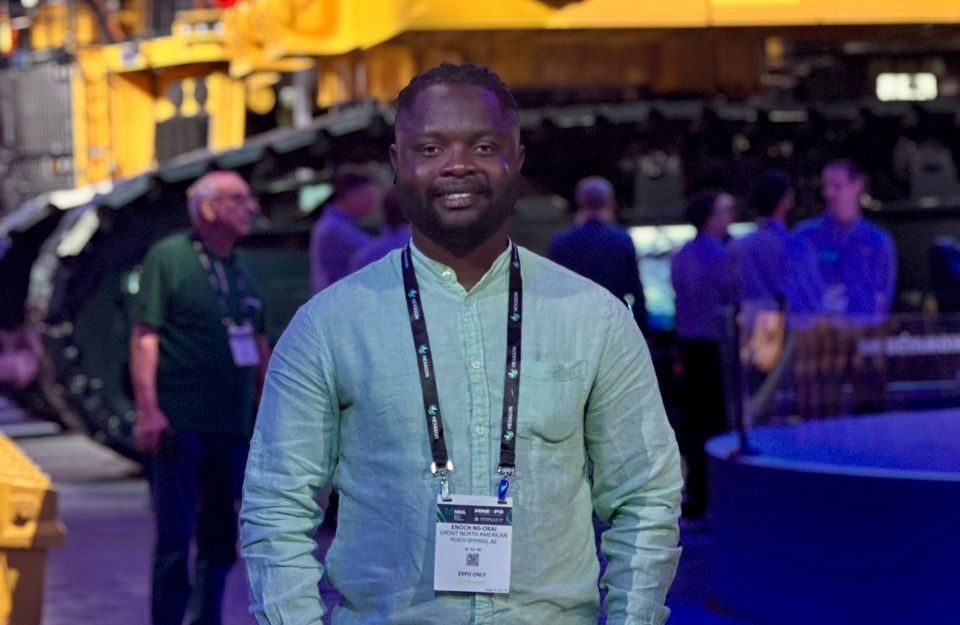
Author: Enoch Nii-Okai, Mining and Minerals Processing Engineer, Arizona, USA
![John Setor Dumelo, Deputy Minister of Food and Agriculture [in white attire], with other participants](https://www.citinewsroom.com/wp-content/uploads/2026/07/AFRI-350x250.png)