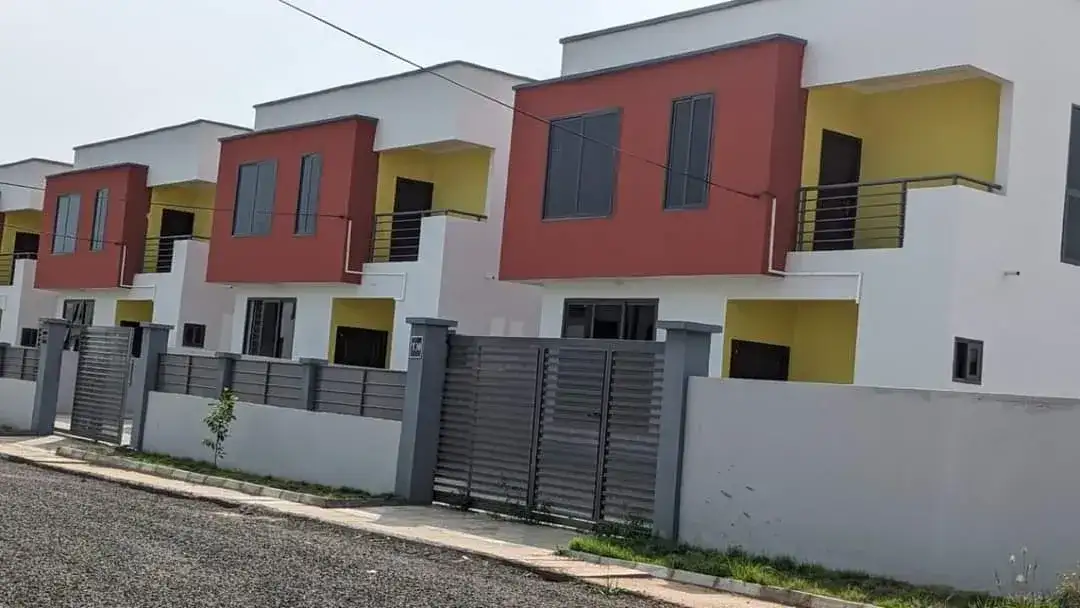
With about 60% of Ghana’s population predominantly within the working age, the inability of the housing sector to provide affordable homes for this category of persons is not just an economic failure but a structural barrier and for the youth, a barrier to adulthood.
Currently, the country’s housing landscape is well defined by a deficit of close to two million units which presents high-yield opportunities for investors despite the significant accessibility challenges.
The economy is rebounding after years of volatility. With a stable cedi now, GDP growth saw a steady trajectory of about 5.8% in 2025. There has been a significant reduction in inflation. The rate fell from 23.5% at the start of 2025 to 5.4% by year-end.
Alongside, the Bank of Ghana has aggressively cut policy rate to 18% from 27% at the beginning of 2025. But for the average Ghanaian, these improvements are usually overshadowed by the structural imbalance between property costs and purchasing power.
The reality
Undoubtedly, Accra, Kumasi and Takoradi remain not only prime areas but also the engine of housing growth. In Accra, elite places such as Cantonments, Airport Residential and East Legon have had property value appreciated by 20% to 25% since 2020.
These areas command premium pricing. For example, a three-bedroom house is selling for between $450,000 and $600,000, while ultra−luxury town houses in Cantonments can start at $1,000,000.
Mind you, investment demand is heavily driven by diaspora remittances. This provides a steady stream of external capital that often prices out local buyers who are reliant on expensive cedi-denominated mortgages.
Kumasi has seen house prices rise by about 14% in 2025. An average home now costs roughly GH₵670,000 ($64,000). The boom is partially fueled by the Boankra Inland Port project, which has accelerated land price appreciation in eastern logistics corridors by 10% to 15% faster than the city average.
Meanwhile, Takoradi continues to leverage the oil and gas sector to deliver some of the highest rental yields which went up to 14% in prime areas around the Beach Road.
While housing in these towns hit prohibitive levels for many, emerging communities provide value through significantly lower costs but that may not even enough.
The rent trap
Even in Accra, renting a one-bedroom apartment could cost about GH₵4,000 per month on average, compared to just GH₵600 in other suburbs. This over 80% cost difference is driving a migration toward peripheral areas like Kasoa, Madina, Tema Community 25 among others.
Places like Madina for instance have become a premier destination for students and young professionals, with rooms starting from GH₵800 to GH₵1,500 monthly. Other areas like Kasoa offer ultra-affordable single-room options in the GH₵450 to GH₵600 range.
In all of this though, the most immediate hurdle for any young Ghanaian seeking independence is the advance-rent economy.
Although the Rent Act of 1963 (Act 220) explicitly prohibits landlords from demanding more than six months rent in advance, 80% to 90% of landlords routinely violate this law.
On average, a Ghanaian tenant is forced to pay two years of rent upfront, which is about four times the legal maximum. So, for a young worker starting a career with a modest income, these demands are often out of reach.
Consider this scenario. A graduate who secures a job with a monthly salary of GH₵5,000 may find a small apartment for GH₵1,500, but a two-year advance requirement necessitates an upfront payment of GH₵36,000.
This forces many to stay in parental homes or settle for substandard, shared or overcrowded places. The practice therefore? Staying at the home of your parents has become normal for the youth to save enough capital just to get a decent place of abode.
The nexus
Ghana is really experiencing a youth bulge. The country’s youth face systemic barriers to housing security. It is primarily due to employment formalities and illegal rental advance demands. Do these demographic pressures not necessitate urgent policies to align market realities with the needs of the younger generation?
Individuals aged 15 to 35 years constitute about 40% of the total population. Despite being the most educated these young adults face a 32% unemployment rate for the 15–24 age group, which climbs to about 50% in Greater Accra.
For those who are employed, 78% work in the informal sector and that even makes it just impossible for them to obtain the required bank or financial documents and credit histories to access mortgages which hover as high as 30% or even worse, mostly dollar-denominated. These prohibitive interest rates and strict 20-30% down payment requirements are just pricing the youth out.
One might need to allocate over 60% of the monthly income to repayments to service a modest mortgage under these terms. Consequently, the market is heavily skewed toward diaspora investors who can access USD-denominated mortgages at significantly lower rates of say 12%.
Even for young graduates in formal employment, entry-level salaries are often consumed by the high urban rents. It leaves nothing for mortgage savings. Which is why 90% of the housing supply in Ghana is delivered incrementally.
Prospective homeowners lay foundation, cast slabs and building walls over a period of five to 15 years and it is even as and when funds are available. In the end, owning a home is very much delayed until middle or late working age.
Will the youth survive?
Government interventions such as the National Rental Assistance Scheme and the digitalisation of regulatory departments seeks to bridge the gap between legislation and market practice. However, the future of this depends on the successful implementation of these reforms and the delivery of affordable housing.
To mitigate these challenges, the government has introduced the National Rental Assistance Scheme (NRAS), which provides low-interest loans to help qualified citizens cover upfront rent advances. As of 2025, the scheme targets low-to-middle-income earners in six regions and allows them to repay the advance in manageable monthly instalments.
Simultaneously, the National Homeownership Fund (NHF) is working to lower mortgage barriers by partnering with banks to offer cedi-denominated mortgages at rates of 18%, a rate which is significantly lower than the standard market rates of 25–35%.
Institutional efficiency is also being addressed through the digitalisation of the Rent Control Department, which launched a platform in 2024 to enable online dispute resolution and property registration.
While these reforms are important, long-term stability requires addressing the supply-side deficit. The government’s Big Push infrastructure agenda, was allocated GH₵13.9 billion in 2025 to facilitate public-private partnerships and double current housing production to the 100,000 units required annually.
It is only through an aggressive infrastructure investment, law enforcement and affordable credit that Ghana can bridge the housing-wage gap for its citizens to accommodate the average young worker.
Until then, rising housing cost is locking Ghanaian youth out of home ownership; will they survive? That’s the big question, I ask.
–
The writer, Nii Larte Lartey is a business journalist with Citi FM and Channel One TV.
![Dr. Ellen Ohene-Afoakwa, [middle], newly elected Chartered Institute of Bankers (CIB) Ghana President](https://www.citinewsroom.com/wp-content/uploads/2026/07/CIB-Ghana-e1784064646202-350x250.jpeg)