




A report on the State of Global Air has noted that there is increasing evidence that air pollution can be linked to brain disorders.
The health fact sheet says contaminated air could lead to neurodevelopmental disorders in children and neurodegenerative diseases such as Parkinson’s disease and Alzheimer’s disease in older adults.
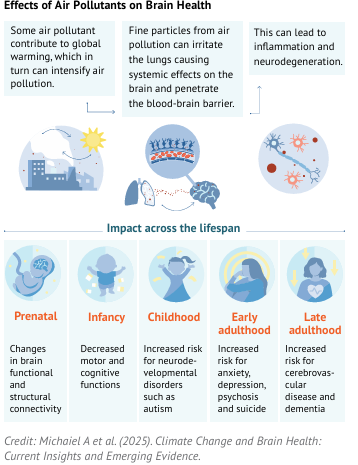
According to the report, when inhaled, PM2.5 enters the lungs, circulates in the blood, and makes its way to the brain, where inflammation and damaged brain tissue are risks.
Heart disease, which air pollution can also result in, could eventually lead to dementia, which causes problems with thinking and memory.
About 60 million people globally were found to be living with dementia in 2021, with experts estimating that about 10 million people develop dementia each year.
In 2023, dementia attributable to air pollution resulted in 626,000 deaths.
The risk to kids
Children and pregnant women are considered to be some of the most vulnerable groups to the neurodegenerative effects of air pollution.
Exposure to air pollution during pregnancy has been named as a significant contributor to miscarriages, stillbirths, and congenital disorders.
The risk that the babies will either be underweight or born early is also significantly increased, with the kids being more susceptible to diarrheal diseases, inflammation, blood disorders and jaundice.
Even children who survive the early years face an uphill struggle, as they are at increased risk of contracting major chronic diseases
Dealing with Pneumonia and other respiratory infections could lead to long-term health challenges, including impaired lung growth.
This story was a collaboration with New Narratives. Funding was provided by the Clean Air Fund which had no say in the story’s content.










