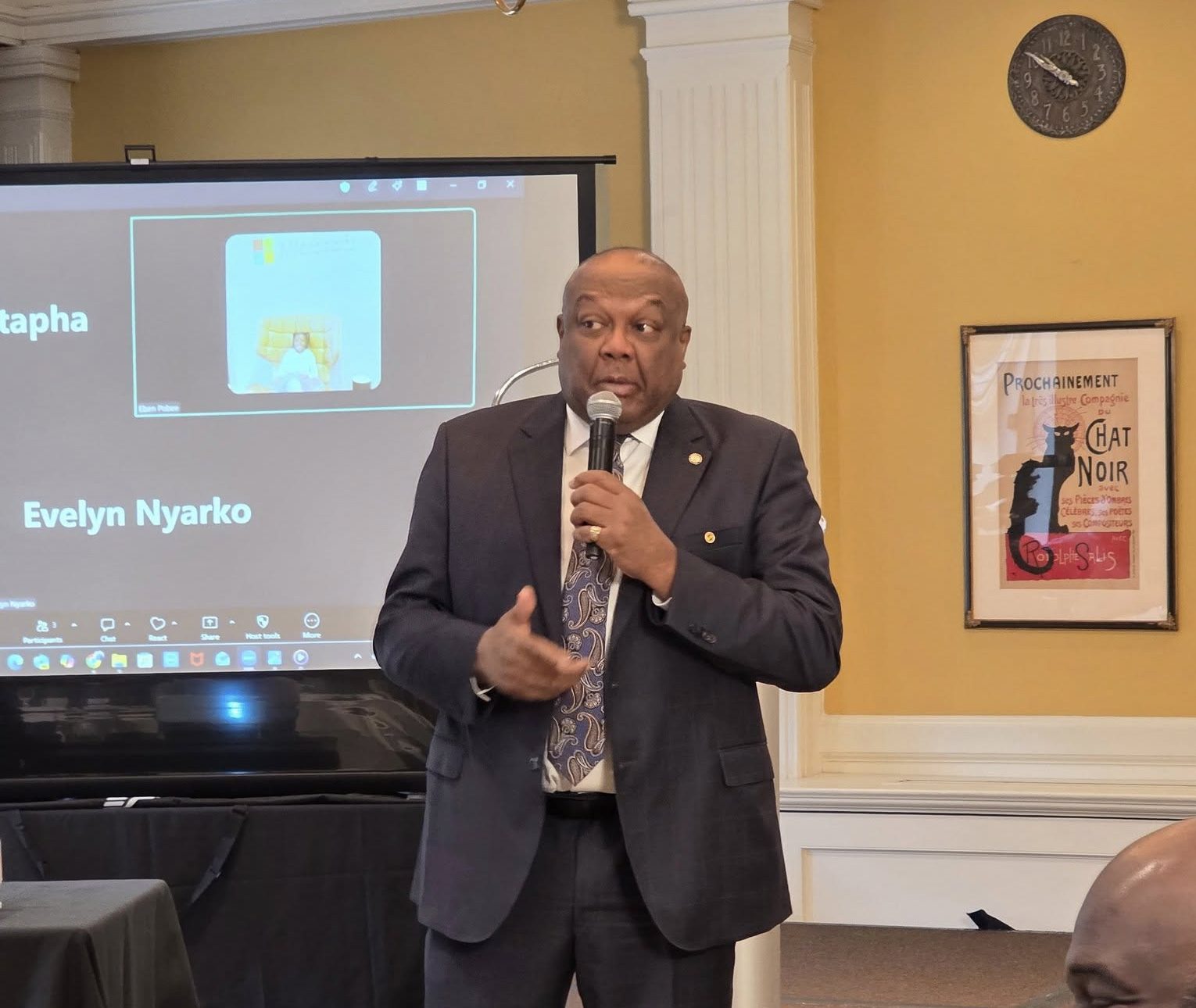
Ghana’s Ambassador to the United States, Victor Emmanuel Smith, has outlined Ghana’s ambition to position itself as a key investment gateway into Africa, as global relations continue to shift from aid-based support to trade and investment partnerships.
Speaking at the Ghana–Seattle Forum in Seattle on Friday, April 24, Ambassador Smith said the evolving relationship between the United States and Africa reflects a growing emphasis on what he described as “commercial diplomacy,” where economic cooperation, trade expansion, and long-term investment are placed at the centre of engagement.
He noted that the shift signals a broader transformation in U.S.–Africa relations, with increasing focus on investment-driven growth and mutually beneficial partnerships.
“America is making a clear shift from aid to trade, from assistance to investment, and from dependency to partnership. Africa is now seen as the next major engine of global growth,” he said
Ambassador Smith said Africa’s rising population, expanding consumer market, and vast natural and human resources continue to strengthen its position in the global economy. He added that Ghana is deliberately aligning its development strategy with this outlook by prioritising trade and investment as the basis for job creation, industrialisation, and innovation.
“Ghana today stands at a pivotal moment in its economic transformation… Ghana is open for business. Opportunities abound, and more importantly, Ghana is ready for strategic partnerships,” he added.
Addressing participants in Seattle—one of the United States’ leading innovation and technology hubs—he drew comparisons between the city’s advanced economy and Ghana’s development aspirations, stressing that Ghana is well-positioned for deeper strategic partnerships.
He identified key sectors for potential investment, including industrialisation, agriculture, energy, infrastructure, and the digital economy. He further highlighted Ghana’s access to the African Continental Free Trade Area (AfCFTA), which connects the country to a market of over 1.3 billion people, positioning it as a strategic entry point into the wider African continent.
A major part of his address focused on youth development and digital transformation. While acknowledging progress in digital connectivity, Ambassador Smith said significant gaps remain in advanced digital skills, particularly in underserved communities.
“We seek collaboration not merely to train users of technology, but to develop creators of technology and globally competitive entrepreneurs,” he said.
He called for increased collaboration in technical and vocational education, internships, innovation hubs, and skills development programmes, stressing that investing in young people remains central to Ghana’s long-term economic transformation.
Ambassador Smith also highlighted opportunities within Ghana’s healthcare sector, inviting partnerships in medical training, infrastructure development, and health technology to improve service delivery.
He concluded by recognising the Ghanaian diaspora as key partners in national development, noting that their expertise and contributions remain vital in strengthening Ghana’s global economic linkages.
He added that deeper cooperation between Ghana and global innovation centres such as Seattle would play a critical role in driving investment, innovation, and shared prosperity.