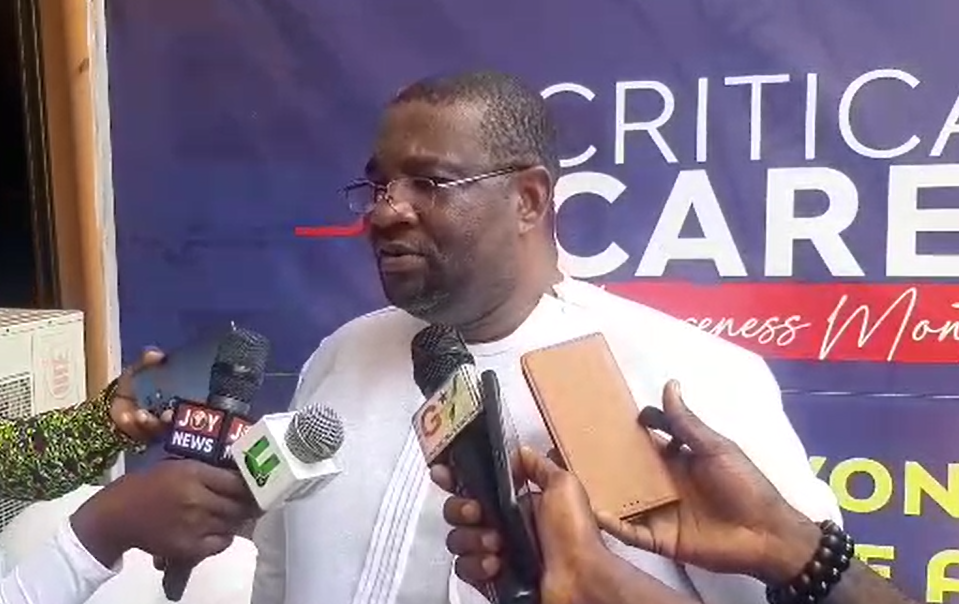
The Director of the Medical Training and Simulation Centre at the University of Ghana Medical Centre (UGMC), Dr. Christian Owoo, has called for the integration of Essential Emergency and Critical Care (EECC) into the government’s Free Primary Healthcare initiative to improve emergency response and save more lives.
He said the inclusion of EECC would strengthen healthcare delivery across district, regional and tertiary hospitals by equipping health workers with the right systems and training to manage critical cases effectively.
Speaking to journalists on the sidelines of the launch of Critical Care Awareness Month organised by the Critical Care Nurses Association of Ghana on Thursday, May 14, Dr. Owoo expressed optimism about the introduction of basic emergency care under the policy, describing it as a positive step for the health sector.
He noted that UGMC is ready to collaborate with stakeholders to support the integration of the EECC toolkit into the new framework.
“I am very happy about the introduction of basic emergency care, and we are ready to discuss how the EECC toolkit can be integrated into it,” he said.
Dr. Owoo explained that EECC is not a costly intervention but rather a system-based innovation that relies on training and coordination across health facilities.
He stressed that effective implementation could significantly reduce preventable deaths, particularly in low- and middle-income countries, including those in sub-Saharan Africa.
According to him, strengthening emergency and critical care systems globally has the potential to save millions of lives annually, with the greatest impact expected in regions with limited access to advanced healthcare.
He further encouraged continued advocacy and stakeholder collaboration to ensure emergency care becomes a core component of healthcare reforms in Ghana.
Support Mahama gov’t to avoid failure — Asiedu Nketiah to NDC