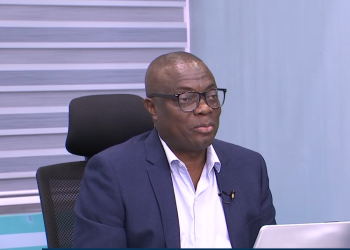
The Deputy General Secretary of the New Patriotic Party (NPP), Haruna Mohammed, has expressed concern over the reported tensions between Finance Minister, Dr. Cassiel Ato Forson and Minister for Food and Agriculture, Eric Opoku, warning that the situation could negatively affect governance and the agricultural sector.
Speaking on Citi FM’s Eyewitness News with Umaru Sanda Amadu on Friday, June 5, Haruna Mohammed described the reported friction between the two ministers as worrying and called for an end to what he termed a power struggle.
According to him, the disagreement has implications beyond the individuals involved and could undermine confidence in government institutions and the country’s agricultural system.
“I’m worried as a Ghanaian, a farmer and also as a politician. Because this goes further to affect the very foundation of our agricultural system. It also affects the trust system. It also affects the power system within the governance state. I believe that what is happening now is very worrying,” he said.
Haruna Mohammed suggested that resources meant for sectoral development should not become tools in political or administrative disagreements.
“If you have resources with me, I will sit on them and paint a picture that you refused to perform, while you have it,” he stated.
He called on all parties involved to put an end to the tensions and ensure a level playing field to facilitate effective governance and service delivery.
“The power struggle should stop, the fight, propaganda should stop, let everybody have a level playing ground,” he added.
His comments follow a public dispute between the Ministry of Finance and the Ministry of Food and Agriculture (MoFA) over claims regarding the release of more than GH¢1.6 billion for agricultural programmes this year, with both sides presenting conflicting figures on budget execution.
The Ministry of Finance insists it has released over GH¢1.6 billion to MoFA, representing about 85% of the ministry’s 2026 budget allocation for Goods and Services and Capital Expenditure (CAPEX).
According to the Finance Ministry, releases for Goods and Services stand at 94.73%, while CAPEX disbursements have reached 74.66%, arguing that this demonstrates strong budget execution.
It further explained that all releases—except funding to the National Food Buffer Stock Company—were initiated by MoFA through standard procedures on the Ghana Integrated Financial Management Information System (GIFMIS), with each transaction supported by requisition dates, journal numbers, approval dates, and warrant numbers.
The ministry maintained that this process reflects standard public financial management practice across all ministries, departments, and agencies.
However, the Ministry of Food and Agriculture strongly disputes the figures, describing them as inconsistent with official budget execution documents issued by the Finance Ministry itself.