The IMANI Centre for Policy and Education has raised concerns about whether the remaining funds under the Greater Accra Resilient and Integrated Development (GARID) project will be sufficient to address Accra’s persistent flooding challenges, warning that the capital city remains highly vulnerable despite years of investment.
In a policy brief titled “GARID and Urban Governance as Adaptation and Strategic Measures to Address Perennial Floods,” released on Monday, June 8, 2026, IMANI noted that Accra continues to experience devastating floods, building collapses, and fire outbreaks a decade after the June 3, 2015, disaster that claimed more than 150 lives and caused significant economic losses.
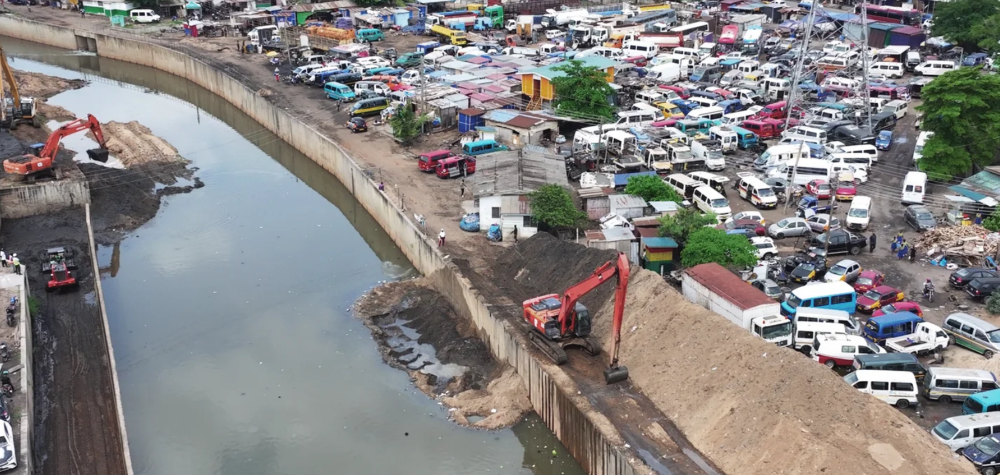
The GARID project, funded by the World Bank, was designed to tackle chronic flooding, poor waste management, inadequate drainage infrastructure, and climate-related vulnerabilities within the Greater Accra Region, particularly in the Odaw River Basin.
However, IMANI argues that questions remain about whether the project’s remaining resources can deliver the scale of interventions needed to protect the city.
“The financial narrative of the project is complex,” the think tank said.
According to the brief, while GARID initially received approval for funding of $350 million, $65 million was later reallocated by the World Bank to support emergency COVID-19 response efforts, reducing the amount available for core infrastructure interventions to approximately $285 million.
IMANI noted that as of June 2025, more than $118 million had already been spent out of the $127 million drawn down under the project.
“With over $118 million already spent from the $127 million drawn down so far, as of June 2025, the margin for error is shrinking rapidly,” the report stated.
The think tank observed that distributing the remaining resources across 17 metropolitan, municipal, and district assemblies presents a significant challenge, particularly given the scale and complexity of engineering works required within the Odaw Basin.
“When one considers the scale of the damage caused by recent storms and the high cost of climate adaptation, the question arises of whether the remaining funds can cover the extensive scope required,” IMANI said.
The organisation acknowledged that the project has achieved some gains in drainage improvement and waste management, but argued that progress has largely been incremental rather than transformational.
Citing findings from its November 2025 study on governance and accountability for climate adaptation, IMANI noted that some project implementation units have demonstrated strong technical capacity, while others continue to struggle with staffing shortages and inadequate engineering tools.
The think tank pointed to communities such as Agbogbloshie, where residents continue to experience flooding because work on sections of the Odaw River remains unfinished despite the extension of the project timeline to 2027.
According to IMANI, challenges relating to contractor performance and institutional capacity may ultimately prove more damaging than funding constraints.
“If the money is available but the execution is stalled by poor contractor oversight and limited local capacity, then the funding amount becomes secondary to the management of these human and institutional failures,” the brief stated.
The organisation warned that Ghana cannot afford to treat GARID as a routine infrastructure programme, particularly as climate-related risks continue to intensify.
“We cannot afford to view GARID as a project that will fix itself. If the government continues to treat it as a routine infrastructure program, the city will remain vulnerable to the next disaster,” IMANI cautioned.
The think tank is urging the government to strengthen project oversight, improve coordination among participating institutions, and ensure that the remaining resources are used effectively to build long-term resilience against flooding and other climate-related disasters in the capital.