


The phrase “Artificial Intelligence” may be one of the most misleading terms of the modern era.
Embedded within those two words is an assumption so deeply ingrained that most people never stop to question it: that intelligence is naturally human and only artificially machine.
But what if that assumption is fundamentally wrong? What if intelligence never belonged exclusively to humans in the first place? What if intelligence is not a characteristic of a particular species, but a phenomenon that emerges wherever information can be captured, remembered, interpreted, and applied?
For centuries, humanity has placed itself at the center of intelligence. We have treated intelligence as our defining trait the unique gift that separates us from every other form of life. Yet nature has been quietly challenging that belief long before the first computer was ever conceived.
A plant turns toward sunlight without instruction. A bird migrates thousands of kilometers across continents with astonishing precision. An ant colony coordinates labor, allocates resources, and responds dynamically to threats without a central commander. A school of fish changes direction instantaneously as though controlled by a single mind.
None of these systems possess what we traditionally describe as human consciousness, yet all demonstrate the ability to sense, adapt, learn, and respond. In other words, intelligence appears to exist independently of human beings.
Perhaps intelligence was never human. Perhaps it was always natural.
This raises a deeper question. If intelligence is not exclusively human, then what exactly makes machine intelligence “artificial?”
The answer may have more to do with history than reality. When computer scientists began building systems capable of performing tasks associated with human reasoning, they needed a name for the emerging field. Because these capabilities were being demonstrated by machines rather than biological organisms, the term Artificial Intelligence was born.
The label survived. But labels can become traps.
When an airplane flies, we do not call it “artificial flight.” When a submarine moves underwater, we do not call it “artificial swimming.” When a calculator solves equations, we do not call it “artificial mathematics.” We simply recognize that familiar outcomes can emerge through different mechanisms.
Perhaps intelligence deserves the same treatment. The intelligence of a human brain is biological. The intelligence of a corporation is organizational. The intelligence of a society is collective. The intelligence of a market is distributed. The intelligence of a machine is computational.
The medium changes. The intelligence remains.
This distinction may seem subtle, but it fundamentally changes how we think about the future.
For generations, intelligence was viewed primarily as a property of individuals. The smartest person in the room was assumed to be the most valuable source of insight.
Yet history suggests something very different. Civilizations did not become powerful because individual humans suddenly became smarter. Ancient Egyptians were not less intelligent than modern engineers. Greek philosophers were not intellectually inferior to contemporary scholars.
What changed was not the intelligence of individuals. What changed was the ability of societies to preserve, accumulate, and transfer experience across generations.
A scientist today benefits from thousands of years of accumulated knowledge. A surgeon relies on centuries of medical discoveries. A modern entrepreneur stands on lessons learned by millions of businesses before them. The true engine of intelligence may not be individual brilliance at all.
It may be accumulated experience.
Viewed through this lens, intelligence emerges whenever four elements come together: Information; Memory; Feedback; Adaptation
A system observes its environment. It remembers what happened. It learns from outcomes. It adjusts its behavior. Intelligence begins to emerge. The formula applies everywhere.
To organisms. To organizations. To economies. To civilizations. And increasingly, to machines.
This is where the conversation becomes controversial.
For decades, humanity has comforted itself with the belief that machines could never truly become intelligent because intelligence was assumed to be uniquely human. Yet every time machines outperform humans in a particular domain, we simply redefine intelligence. When calculators surpassed humans in arithmetic, we decided arithmetic was not real intelligence. When computers defeated world chess champions, we concluded chess was not real intelligence. When machines became better at pattern recognition, language translation, medical diagnostics, and image analysis, we once again moved the goalposts.
Perhaps the question is not whether machines are becoming intelligent. Perhaps the question is whether humans are willing to recognize intelligence when it appears in a form different from themselves.
History offers many examples of humanity underestimating intelligence when it emerged in unexpected places. Entire civilizations once dismissed other cultures as intellectually inferior, only to later discover sophisticated systems of governance, engineering, astronomy, and mathematics. Again and again, intelligence was overlooked because it did not look familiar.
Could we be making the same mistake with machines?
Consider another uncomfortable possibility. No human being who has ever lived not Aristotle, Newton, Einstein, or Da Vinci had access to as much accumulated knowledge as modern AI systems can process.
For the first time in history, we are building systems capable of participating in humanity’s knowledge loop at extraordinary scale. They absorb information. They identify patterns. They generate insights. They improve through feedback.
Whether we choose to call this artificial intelligence, machine intelligence, digital intelligence, or something else entirely may become increasingly irrelevant. The deeper reality is that intelligence is no longer confined to biology. And perhaps it never was.
The implications stretch far beyond technology. If intelligence is fundamentally the product of information, memory, feedback, and adaptation, then every institution becomes a potential intelligence system. Every company. Every university. Every hospital. Every government. Every community.
The question is no longer whether intelligence exists within these institutions. The question is whether they are retaining enough experience for intelligence to emerge.
Most organizations generate enormous amounts of knowledge every day through meetings, decisions, successes, failures, customer interactions, reports, and observations. Yet much of this experience disappears the moment people resign, retire, or move on. The result is organizational amnesia. The same mistakes are repeated. The same problems are solved repeatedly. The same lessons are learned over and over again.
In many cases, institutions do not suffer from a shortage of intelligence. They suffer from a shortage of memory. This may be one of the defining challenges of the twenty-first century.
The next frontier may not be creating smarter machines. It may be creating systems that remember.
Systems that preserve context. Systems that accumulate experience. Systems that continuously learn from their own history. Perhaps civilization itself offers the ultimate example.
No single person understands every component of a modern economy, a smartphone, an airline network, or the internet. Yet collectively, humanity does. Civilization functions as a distributed intelligence system. The intelligence does not reside in any one individual. It emerges from the network. It emerges from shared memory. It emerges from accumulated experience.
And that realization may ultimately reshape how we think about both humanity and technology.
Because if intelligence can emerge wherever information, memory, feedback, and adaptation exist, then intelligence is not a possession. It is a process. A process that can emerge within a brain. Within an organization. Within a society. Or within a machine.
The implications are profound. Because if intelligence is not limited to biology, then the challenge of our age is not merely to build better AI: It is to build better systems of memory. Better systems of learning. Better systems of collective experience.
The organizations, communities, and nations that learn fastest from accumulated knowledge may ultimately outperform those with the greatest wealth, population, or natural resources.
The future may belong not to those who possess the most intelligence, but to those who are best able to retain, refine, share, and apply it.
And if that is true, then perhaps the most important question of our time is not whether machines can think. Perhaps it is whether humanity has finally begun to understand what intelligence really is.
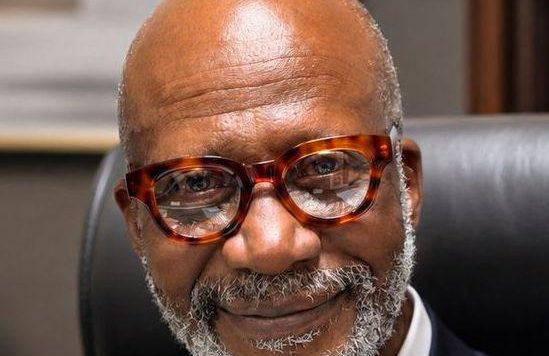
Kwesi Amoafo-Yeboah is Chairman, iZone Limited; Dodo Technologies Limited; BlueCloud Networks Limited.
Explore the world of impactful news with CitiNewsroom on WhatsApp!
Click on the link to join the Citi Newsroom channel for curated, meaningful stories tailored just for YOU:
https://whatsapp.com/channel/0029VaCYzPRAYlUPudDDe53x
No spam, just the stories that truly matter! #StayInformed #CitiNewsroom #CNRDigital