


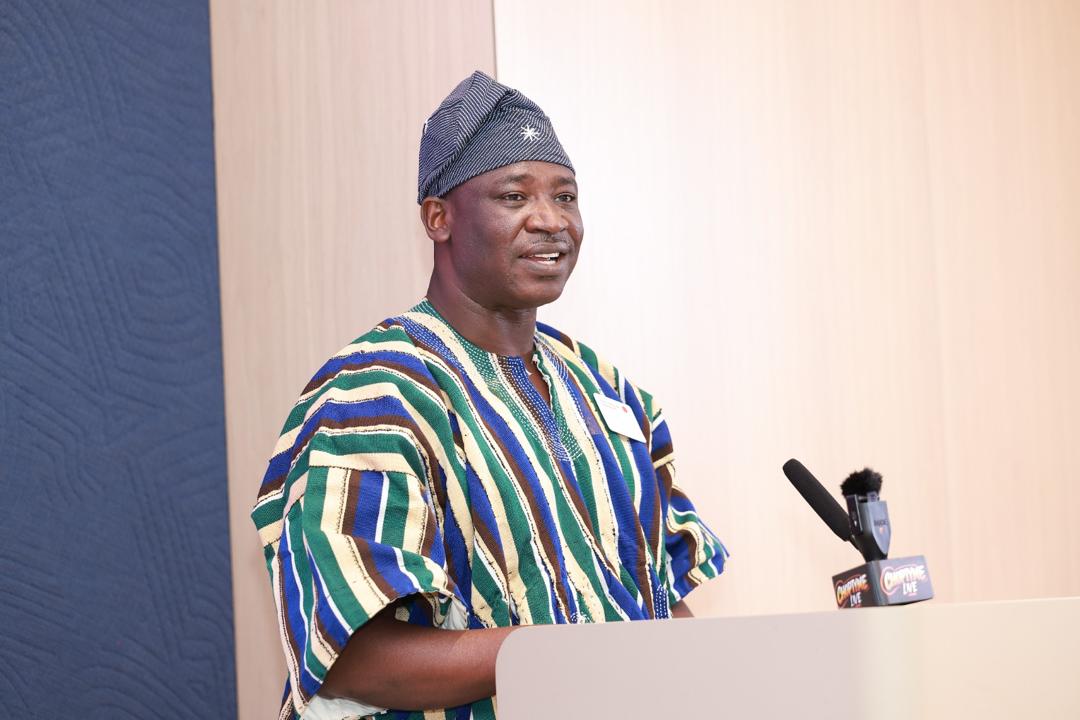
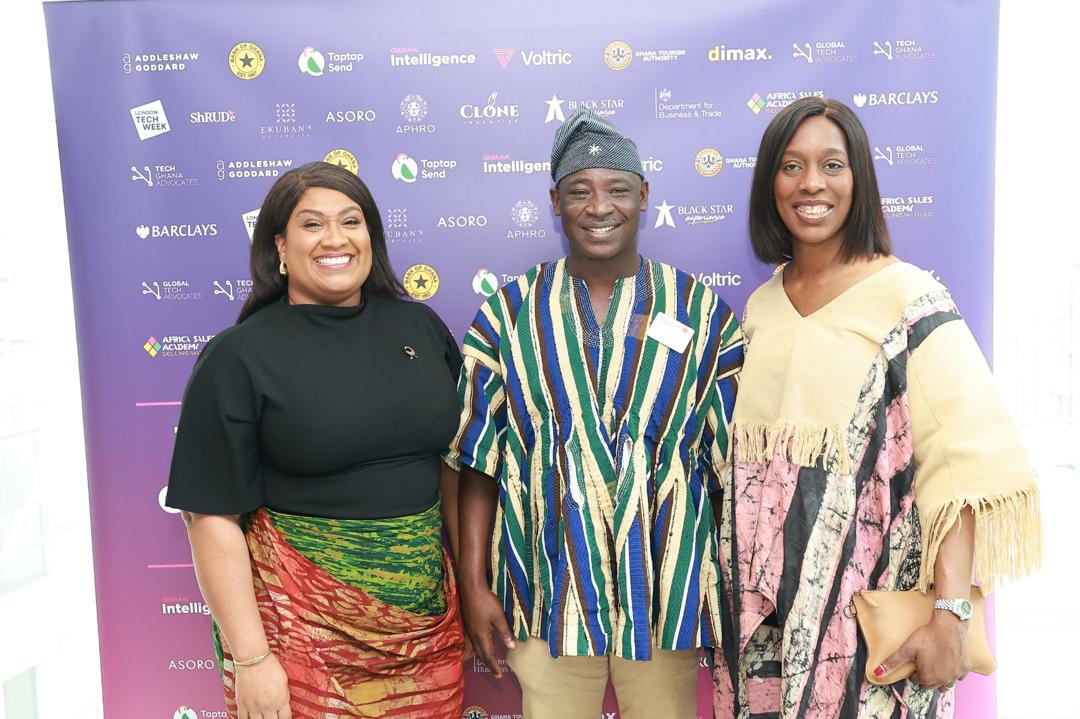
The Chairman of Parliament’s Select Committee on Information and Communications, Dr. Abed-Nego Lamangin Bandim, has called on Ghana and the rest of Africa to move beyond digital adoption and focus on digital ownership if the continent is to secure a meaningful stake in the global digital economy.
Addressing participants at the Tech in Ghana London 2026 conference during London Tech Week, the Bunkpurugu Member of Parliament said Africa must avoid repeating historical patterns where it exported raw materials and imported finished products, warning that a similar trend is emerging in the digital age.
“For generations, Africa exported raw materials and imported finished products. We cannot afford to repeat that model in the digital age,” Dr. Bandim stated. “Africa cannot export raw data and import expensive intelligence.”
Speaking on the theme, “From Ecosystem to Economy: Scaling Africa’s Innovation Globally,” Dr. Bandim noted that while African countries have made significant investments in nurturing innovation ecosystems, the next challenge is transforming innovation into sustainable economic growth.
“The question today is no longer whether Africa has talent. The question is whether we can convert talent into companies, companies into jobs, and innovation into sustainable economic growth,” he said.
 He stressed that ownership of digital infrastructure, platforms, data, and artificial intelligence systems would determine Africa’s competitiveness and economic sovereignty in the coming decades.
According to him, data governance has evolved beyond a technical matter to become an economic, competitiveness, and sovereignty issue.
“Citizens must trust that their data is protected, businesses must trust that the rules are predictable, and governments must trust that critical infrastructure is secure,” he noted.
The legislator highlighted recent developments in Ghana-United Kingdom relations, including the UK-Ghana Growth Partnership signed by President John Dramani Mahama in London, which is expected to unlock up to £215 million in investment commitments.
He said the partnership includes approximately £6 million in support for Ghana’s National Artificial Intelligence Strategy, while also acknowledging the impact of the £1.9 million Sankore initiative aimed at strengthening science, technology, and innovation ecosystems across West Africa.
“These developments tell us something important: the world is paying attention to Ghana,” he said.
However, Dr. Bandim emphasized that international partnerships must be based on mutual value creation rather than dependency.
“The future is not merely attracting technology into Ghana. The future is co-creating technology with Ghana. True partnership is not dependency. True partnership is shared growth,” he stated.
 Turning to policy reforms, the Chairman disclosed that Parliament is undertaking what he described as the most comprehensive review of Ghana’s communications and digital governance framework in decades.
He revealed that about 15 new and revised communications and digital governance bills are expected before the Parliamentary Committee, covering areas such as communications regulation, cybersecurity, data governance, digital services, artificial intelligence, and emerging technologies.
“These are not merely administrative updates. They are the architectural blueprints for Ghana’s digital sovereignty,” he explained.
Dr. Bandim also underscored the importance of ensuring African perspectives are reflected in the development of artificial intelligence technologies.
“The question for Ghana is not whether we will use AI. The question is whether we will help shape it,” he said. “Africa’s languages, cultures, and realities must not be invisible in the systems that increasingly shape our future.”
As part of efforts to strengthen stakeholder engagement, he announced plans by the Parliamentary Select Committee on Information and Communications to launch a Parliamentary Digital Economy Listening Series, which will provide founders, investors, researchers, members of the diaspora, and citizens with opportunities to contribute directly to policy discussions.
The MP further raised concerns about spectrum allocation and the affordability of digital services as Ghana prepares for the next phase of 5G deployment.
 He cautioned against treating spectrum solely as a revenue-generating asset, arguing that excessive auction costs could ultimately increase the cost of connectivity for consumers.
“Today, approximately 4.5 million Ghanaians remain without network coverage,” he said. “If data becomes too expensive, the digital economy becomes a privilege rather than a platform for national development.”
He stressed that digital sovereignty, affordability, investor confidence, and inclusion must advance together to ensure broad-based participation in the digital economy.
Dr. Bandim also highlighted the opportunities presented by the African Continental Free Trade Area (AfCFTA), urging African startups to build with a continental mindset.
“A startup founded in Accra should be able to scale across Africa and compete globally,” he said. “The next generation of African technology champions will emerge not by thinking nationally alone, but by building for the continent.”
Concluding his address, the lawmaker urged investors, development partners, members of the diaspora, and entrepreneurs to play active roles in shaping Africa’s digital future.
“The question before us is not whether Africa will participate in the digital future. The question is whether Africa will own a meaningful share of it,” he said.
He added that Africa’s future in the digital economy should be defined “not by dependency, but by capability, by ownership, and by leadership.”