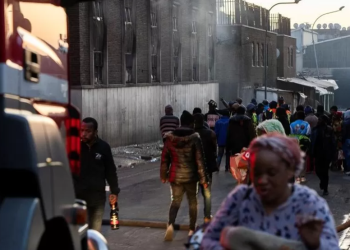
The streets of Johannesburg, Durban and Cape Town have looked different in recent months. Shops that once served busy neighbourhoods remain closed. Some foreign workers have stayed home out of fear. Thousands of African migrants — some of whom have lived in South Africa for more than two decades — have sought refuge in churches, community halls and diplomatic spaces, carrying only what they could manage in urgency.
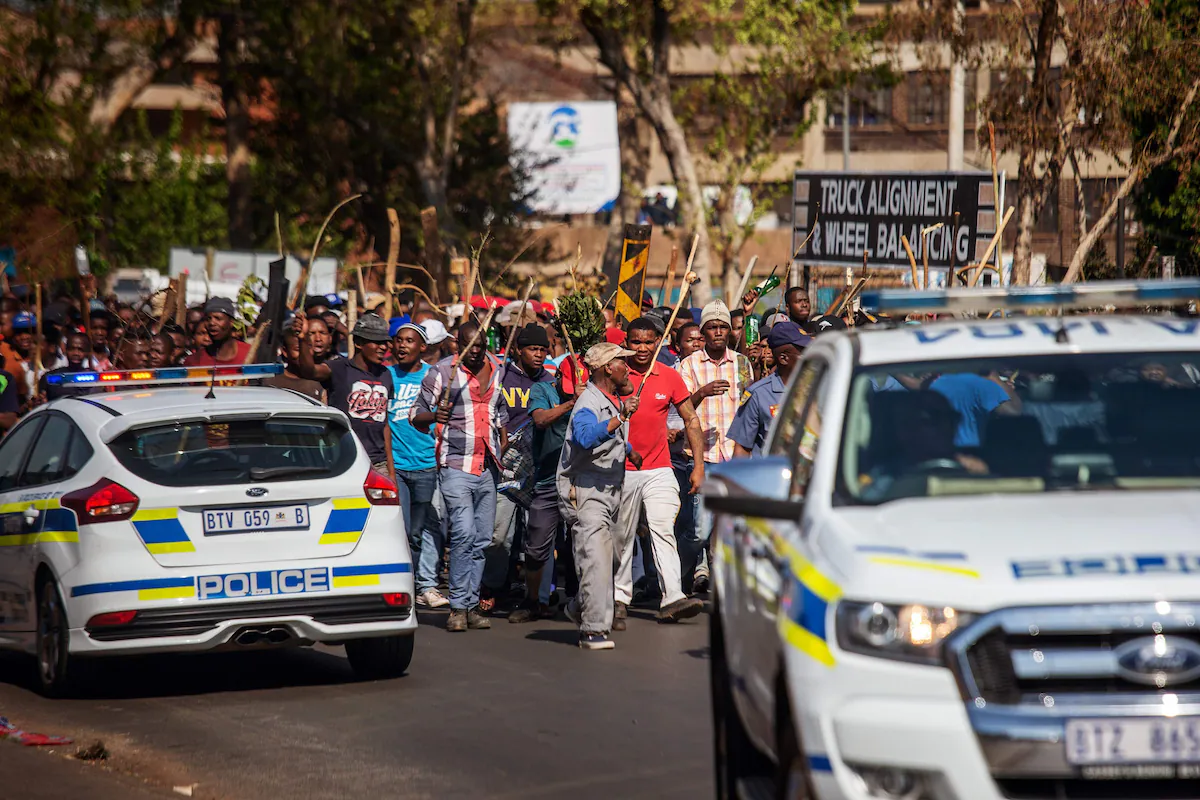
The anti-immigration protests that began in March and intensified through June have become the most sustained wave of xenophobic unrest in South Africa since the deadly attacks of 2008. Led largely by groups such as March and March, founded in 2025 by Jacinta Ngobese-Zuma, and Operation Dudula, the demonstrations have spread across major cities and smaller towns, targeting foreign-owned businesses and reigniting debates on unemployment, migration and access to services.
At the centre of the unrest is a difficult economic reality. Statistics South Africa reports that unemployment stood at 32 percent in the first quarter of 2026, following the loss of about 350,000 jobs. Among young people, the situation is even more severe, while the expanded unemployment rate — including discouraged work-seekers — exceeds 43 percent.
These figures explain the frustration on the streets. But they also raise a deeper question: what happens economically when foreign workers and businesses are pushed out of the system?
An economy more interconnected than it appears
There is no precise national figure for the percentage of foreign-owned businesses in South Africa, largely because many operate in the informal sector, which is not fully captured in official records.
However, research consistently shows that migrant entrepreneurship plays a significant role in township economies, particularly through spaza shops and small retail outlets.
A joint OECD/ILO study estimates that immigrants contribute between 8.9 and 9.1 percent of South Africa’s GDP, a share that is disproportionately large relative to their population size. The same research also finds little evidence that immigration reduces employment opportunities for South Africans. In some cases, migrant-run businesses expand local economic activity and create indirect jobs.
This impact is most visible in township retail. Studies suggest that a large proportion of spaza shops operated by foreign nationals function within supply chains that depend on local landlords, wholesalers and transporters. In fact, about 74 percent of these businesses operate from premises rented from South African property owners. This means that when such businesses close, the economic loss does not stop with the shop owner — it extends to South African landlords, employees and suppliers who depend on them.
What appears to be a targeted disruption of foreign economic activity often becomes a broader disruption of local income streams.
Beyond business: education and mobility
The effects of the protests have not been limited to commerce alone. In some areas, demonstrations have extended into schools and universities, with calls for the removal of foreign nationals from educational institutions.
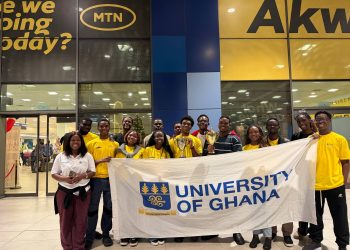
Beyond the social tension, there is an economic dimension. South Africa remains one of Africa’s key education destinations, attracting thousands of international students annually. These students contribute not only through tuition fees, but also through accommodation, transport, food and other daily spending that supports local economies around campuses.
A decline in foreign student numbers would therefore not only affect universities financially, but also reduce income for surrounding communities that rely on student-driven demand.
The cost of perception
The economic impact also extends into South Africa’s most globally exposed sectors: tourism and investment.
Tourism contributes about 8.8 percent of GDP and supports approximately 1.68 million jobs, according to the World Travel and Tourism Council. In 2024, the country recorded 8.92 million international arrivals, with African travelers making up more than three-quarters of visitors.
In many cases, the impact of unrest is not immediate cancellations, but quiet decisions — travelers choosing Botswana, Namibia or Rwanda instead, without publicly stating why.
A fragile economic balance
The protests are rooted in real and pressing challenges, particularly unemployment and inequality. But the economic structure of South Africa is deeply interconnected, and disruption in one part of the system often produces unintended consequences elsewhere.
When migrant-run businesses close, local landlords lose income. When informal retail networks collapse, communities lose access to affordable goods. When students and workers leave, surrounding economies feel the impact. When tourism declines, jobs and foreign exchange earnings are affected. And when investor confidence weakens, future growth becomes harder to secure.
These effects do not remain isolated. They ripple outward.
Conclusion: who really pays the price?
South Africa’s debate over immigration is not only a question of policy or protest. It is also a question of economic design — of how interconnected livelihoods are across nationality, class and geography.
The intention behind the protests may be to address economic hardship; but in practice, the costs are shared far more widely than intended. Because in a tightly connected economy, exclusion rarely comes without consequence.
And the question South Africa must confront is not only who should stay or leave — but who ultimately pays the price when they do.
When protesters chase families from their homes they are not fixing the economy. They are breaking it — one shuttered door at a time.