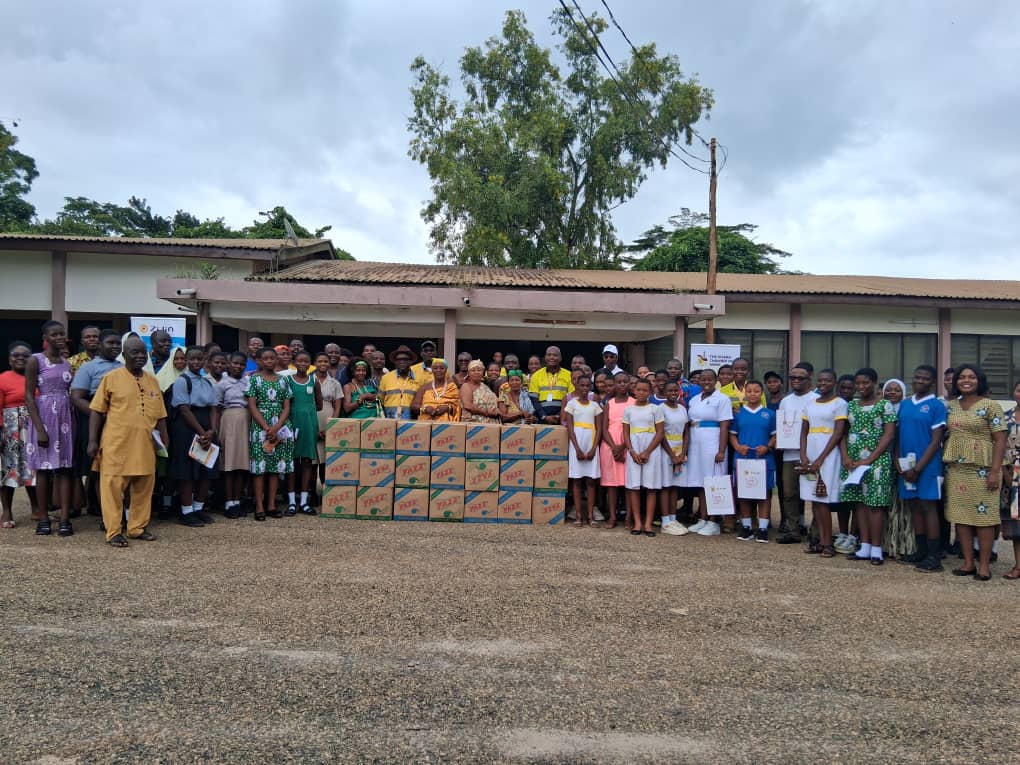
Over 1,000 schoolgirls in Ghana have received sanitary products and menstrual health education under a new initiative aimed at improving school attendance and promoting menstrual hygiene.
Zijin Mining Group, through its local subsidiary Zijin Golden Ridge Limited, in partnership with the Ghana Chamber of Mines, has provided about eight months’ supply of sanitary towels to 1,036 schoolgirls in its host communities across the Birim North District and other parts of Ghana.
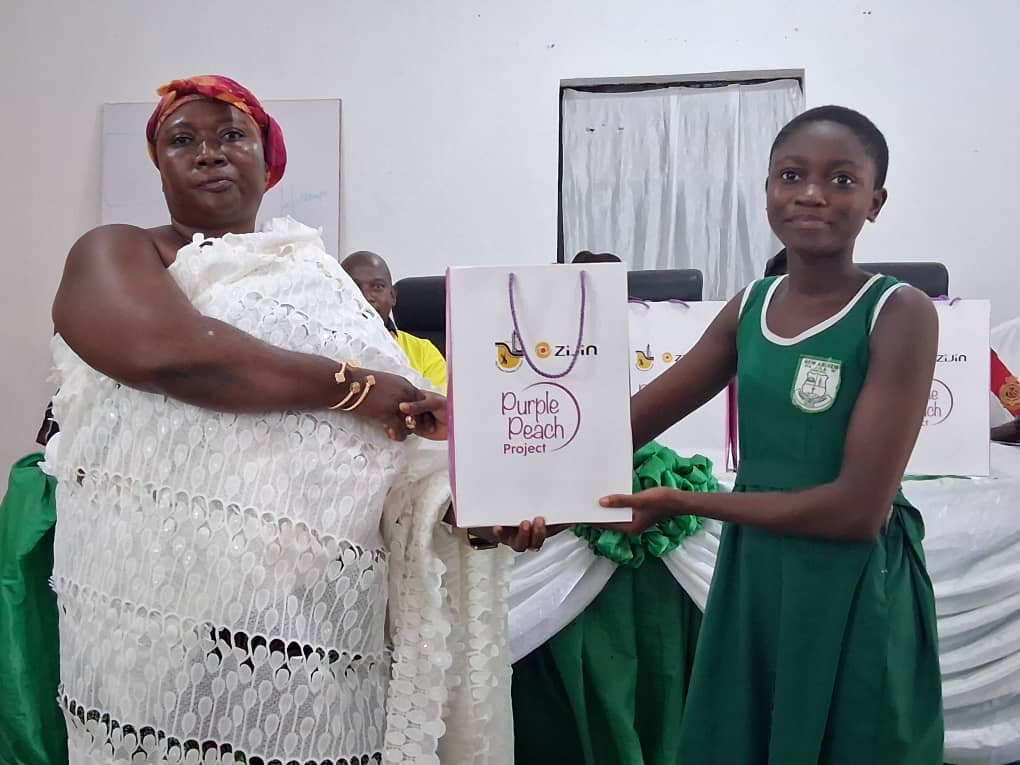 The support also included education on feminine hygiene and menstrual health as part of the “Purple Peach Project,” which seeks to address challenges that often force girls to miss school due to lack of access to sanitary products.
Speaking at the event, Derek Boateng, Senior Manager for Sustainability and External Relations at Zijin Golden Ridge Limited, said the initiative goes beyond infrastructure development.
“Development is not only about roads and infrastructure. It is also about dignity. Ensuring that no girl misses school or feels less confident simply because she lacks access to basic essentials,” he said.
Chief Executive Officer of the Ghana Chamber of Mines, Ing. Ken Ofori-Atta Ashigbey, described the intervention as more than a donation, saying it represents an investment in dignity, confidence and education.
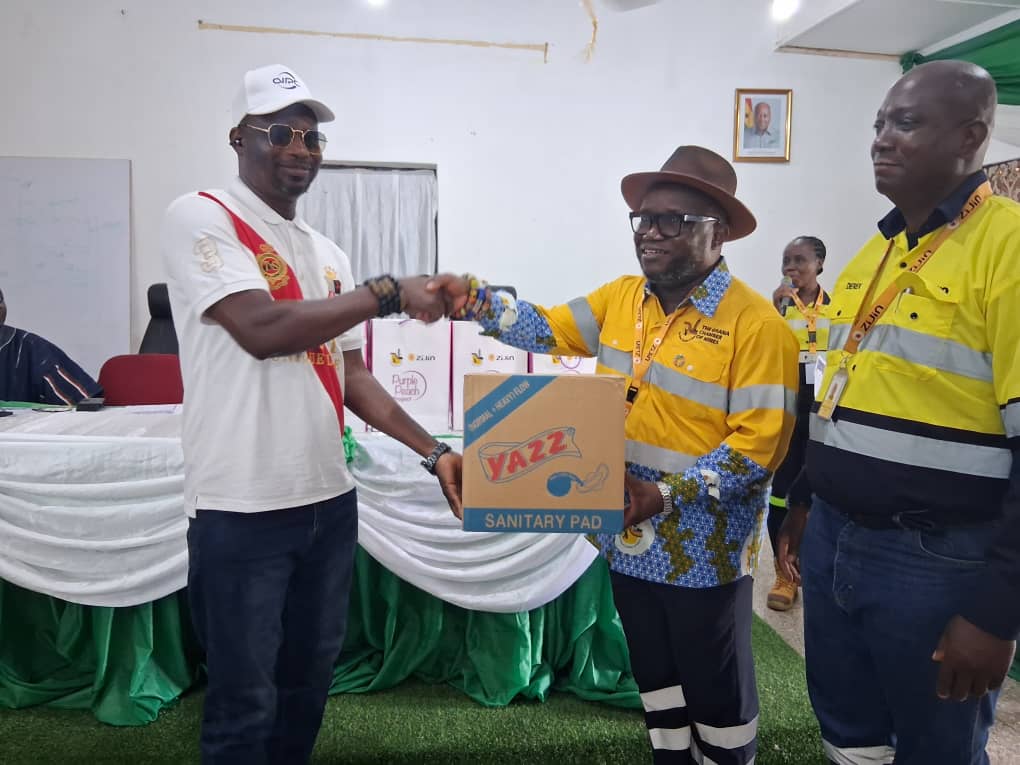 “This is far more than a donation. It is an investment in dignity, confidence, education and the future of Ghana,” he said.
He noted that many girls across the country miss school each month due to the inability to afford menstrual hygiene products, stressing the need to ensure that no child is forced to choose between education and health.
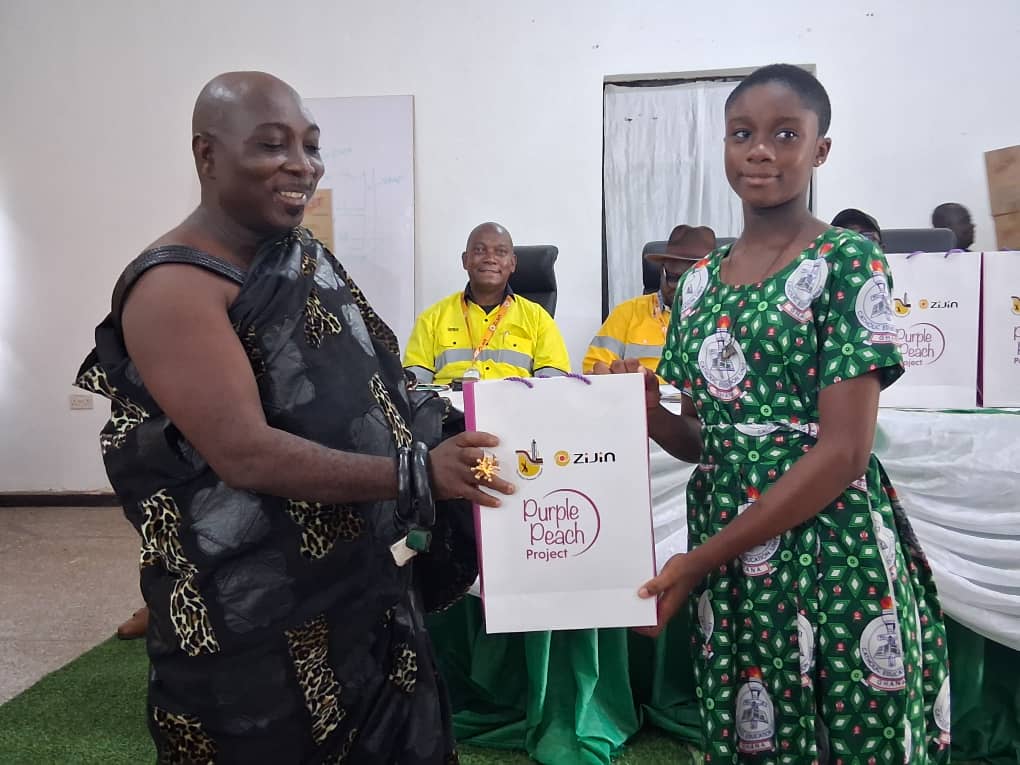 He added that the project also aims to address stigma surrounding menstruation and promote open conversations on menstrual health.
The Purple Peach Project forms part of Zijin Golden Ridge Limited’s broader community investment programmes in education, infrastructure, and livelihoods in its host communities in the Eastern Region.
Organisers say the initiative reinforces efforts to support girls’ education and ensure that menstruation does not become a barrier to learning or confidence.