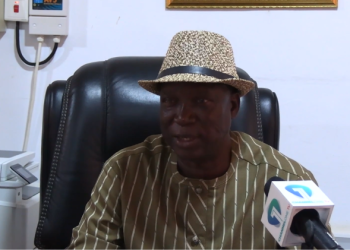
Former Education Minister Dr. Yaw Osei Adutwum has sparked intense debate by describing programmes such as Development Studies and BA Education (Non-Teaching) as “degrees to nowhere” that leave graduates unemployed and frustrated.
His concerns about graduate unemployment deserve attention. Too many young Ghanaians complete university with hope in their hearts only to encounter a labour market that cannot absorb them. That reality is painful and undeniable.
But to conclude that some university courses are therefore “useless” is to misunderstand both the purpose of higher education and the realities of national development.
A nation is not built by engineers and doctors alone.
A nation is built by people who understand communities. People who understand policy. People who understand social change. People who understand how to translate economic growth into human development.
That is why the criticism of Development Studies is particularly surprising.
Every year, Ghana invests millions of cedis into development initiatives. District Assemblies prepare Medium-Term Development Plans. The National Development Planning Commission coordinates national development frameworks. International organisations such as UNDP, UNICEF, the World Bank and numerous NGOs implement programmes in health, education, climate resilience, agriculture and poverty reduction.
Who works on these programmes?
Who conducts community needs assessments?
Who evaluates whether a rural water project is actually improving lives?
Who studies why some interventions succeed while others fail?
Who helps bridge the gap between policymakers in Accra and communities in Karaga, Bawku, Wa, Nkwanta, Salaga or Yendi?
Development professionals do.
In fact, one could argue that Ghana’s challenge has never been a shortage of development projects. It has often been a shortage of effective implementation, community ownership and long-term sustainability.
Roads have been constructed only to deteriorate within a few years. Markets have been built and left underutilised. Agricultural support programmes have struggled because local realities were poorly understood. Development is not just about infrastructure. It is about people, institutions and communities.
That is precisely what Development Studies seeks to understand.
Let us consider northern Ghana.
For decades, development practitioners have worked to address poverty, food insecurity, conflict management, education access and climate vulnerability across the northern regions. Many graduates of Development Studies have found careers with NGOs, local government institutions, development agencies and community-based organisations tackling these very challenges.
To suggest that such a discipline has no value is to ignore the lived realities of the very communities whose development we constantly claim to prioritise.
The criticism of BA Education (Non-Teaching) is equally problematic.
Education is one of Ghana’s largest sectors. Yet somehow many people imagine that the only worthwhile destination for an education graduate is a classroom.
Who develops school curricula?
Who designs educational policies?
Who conducts assessment and educational research?
Who manages institutional planning in universities, training colleges and government agencies?
Who supports educational technology, quality assurance and programme evaluation?
These functions are essential to the success of any education system.
The Ghana Education Service, National Schools Inspectorate Authority, National Teaching Council, Curriculum Research and Development Division and numerous educational NGOs all require professionals whose expertise extends beyond classroom instruction.
A modern education system cannot function without them.
More fundamentally, unemployment is not proof that a degree has no value.
If that were true, many graduates from traditional professional programmes would also be considered victims of “useless” education.
How many nursing graduates have waited years for postings?
How many trained teachers have experienced delays in recruitment?
How many law graduates struggle to establish careers after qualification?
How many engineers leave university only to discover that industry growth has not kept pace with graduate numbers?
The problem is not always the degree. Often, the problem lies in the economy.
Graduate unemployment is largely driven by inadequate job creation, weak industrial expansion and limited opportunities for young people entering the workforce.
No country can solve those challenges by narrowing the range of disciplines available in its universities.
Indeed, Ghana’s own development history offers powerful evidence of the importance of interdisciplinary knowledge.
The success of the Community-based Health Planning and Services (CHPS) programme required not just doctors and nurses but social scientists and community development experts who understood local cultures and behavioural change.
The implementation of Free SHS required educational planners, policy analysts, researchers and administrators working behind the scenes.
Efforts to address illegal mining, youth unemployment, sanitation challenges and climate adaptation all require expertise that extends beyond technical professions.
An engineer may design a dam.
But someone must assess its impact on communities.
An agricultural scientist may develop improved crop varieties.
But someone must understand why farmers adopt some innovations and reject others.
An economist may propose policy reforms.
But someone must evaluate how those reforms affect vulnerable populations.
That is where social sciences, development studies and education programmes become indispensable.
Certainly, universities must continuously improve.
Programmes should be reviewed. Industry engagement must increase. Entrepreneurship and digital skills should be integrated into curricula. Students deserve clear pathways into employment.
On that point, Dr. Adutwum is right. Ghana must align education more closely with national needs.
But alignment is not the same as elimination.
The danger in calling certain programmes “useless” is that it creates the false impression that only a handful of disciplines matter. It sends a message to students that some forms of knowledge are inherently inferior. It diminishes the contributions of thousands of graduates who quietly serve communities, schools, NGOs, local governments and development institutions across the country.
A thriving Ghana needs engineers.
It also needs development practitioners.
It needs doctors.
It also needs education specialists.
It needs scientists.
It also needs policy analysts, researchers and social innovators.
The strongest societies are not those that choose between technical knowledge and human understanding.
They are the societies wise enough to recognise that progress demands both.
There are no useless degrees.
There are only degrees whose contribution becomes visible to those willing to look beyond the next vacancy and toward the larger project of nation-building. Ghana deserves that broader vision.