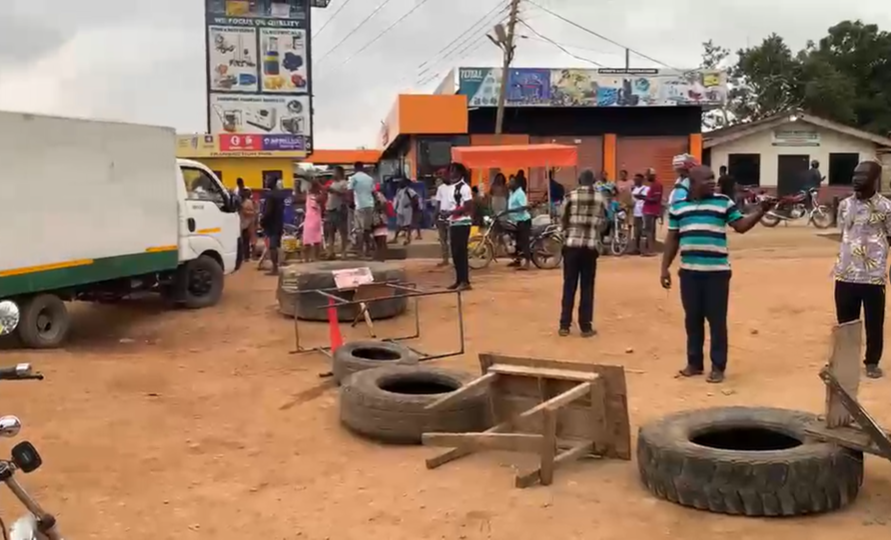
Residents of Amasaman, Obeyeyie and its adjoining communities, in the Greater Accra Region, on Monday, July 6, 2026, staged a demonstration to demand the rehabilitation of roads they say have deteriorated to the point of disrupting transport, increasing travel costs and affecting livelihoods.
The demonstrators said repeated appeals to the authorities had yielded no results, prompting them to protest to draw attention to the condition of the roads.
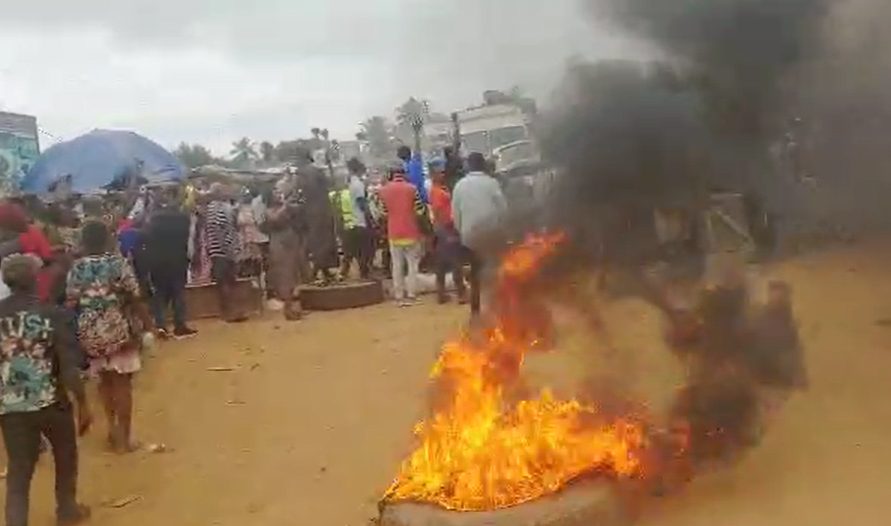 Speaking to Citi News, resident Isaac Teye described the stretch between Three Junction and Ashalaja as nearly impassable.
“Our road is in a very deplorable state. From Three Junction to Ashalaja, a journey you could have done in just 10 minutes now takes more than four hours. Even motorbikes cannot ply the road. We have been neglected,” he said.
Mr Teye accused political leaders of neglecting the communities after elections.
“When it is time for elections, they come here and shout on top of their lungs just to get our votes, then afterwards they leave us,” he said.
He said residents had submitted several petitions to the relevant authorities but had yet to receive a meaningful response.
“We have written so many letters to authorities, but we have not seen anything meaningful from them. So we will only engage in acts that will draw the attention of the leaders to our roads,” he added.
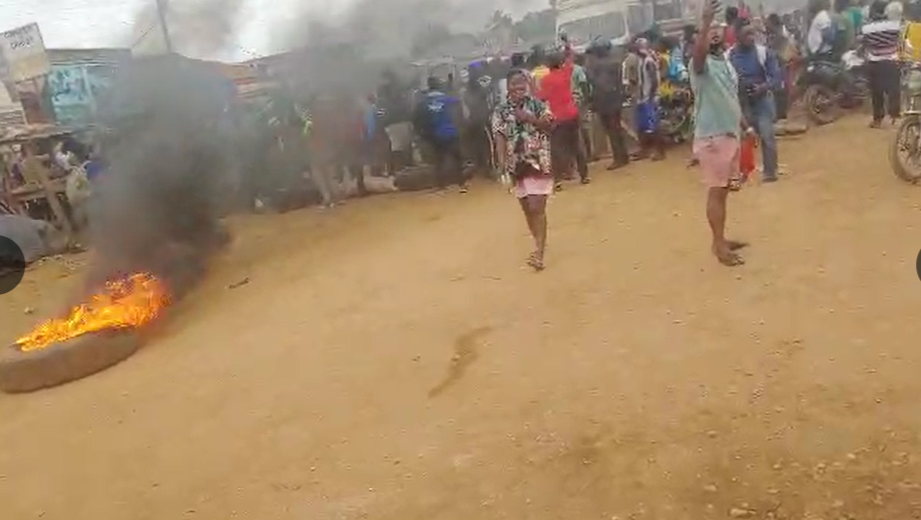 Hamid Elias, the Unit Committee Member for the Obeyeyie Electoral Area, said the poor road network was taking a toll on residents, particularly schoolchildren.
“We have been to the assembly with several petitions, but our needs have not been heeded. Schoolchildren are unable to get to school because they either spend all their money on food or on transport fare. On a short journey you want to embark on, you will pay so much for transport. All the vehicles that normally ply the roads have all broken down, and that is why we have decided to stage a demonstration to show that we need help,” he said.
The Brantiehene of Obeyeyie, Emmanuel Nii Oko Ashong, said residents had chosen a peaceful demonstration in line with democratic principles but stressed that the deteriorating roads had sharply increased transport fares.
“Just a month ago, the fare to this place was about GH¢5. Within the past few weeks, it jumped to GH¢10, and now it is GH¢15, all because the roads are not good,” he said.
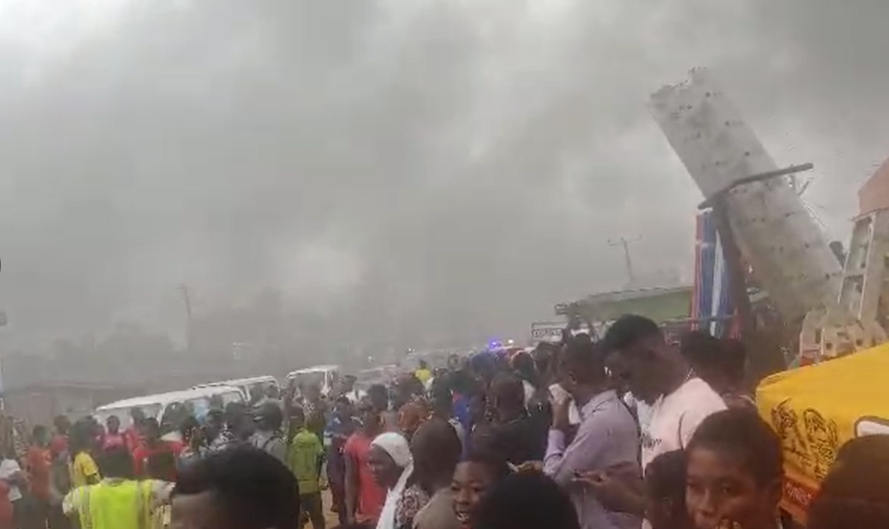 He also questioned why District Road Improvement Programme (DRIP) equipment stationed at the assembly had not been deployed to rehabilitate the roads.
“We have DRIP machines stationed at the assembly, yet they are not being used to get the road fixed for us,” he said.
The residents called on the government and the relevant road authorities to intervene urgently to restore the roads and ease the burden on commuters and businesses.