



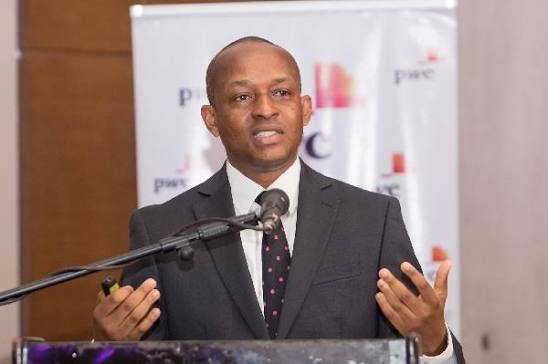
Ghanaian banks will need to rethink their business models and adopt clear strategic positions to remain profitable as interest rates decline, according to the Country Senior Partner at PwC Ghana, Vish Ashiagbor,
Speaking at the PwC 2026 Ghana Banking Survey, Vish Ashiagbor said the sharp fall in interest rates over recent months has fundamentally changed the operating environment for banks, increasing the risk of lower profitability.
He explained that because banks are financial intermediaries whose earnings are largely driven by interest rates, the current easing cycle is putting pressure on their traditional sources of income.
“As rates have fallen, profitability runs the risk of also falling. But banks need to continue to be profitable because that’s how they build their balance sheets. A stronger banking system benefits the economy more broadly,” he said.
According to him, the focus of this year’s forum was to help banks identify strategies that will enable them to preserve value while continuing to support economic growth.
PwC has developed seven strategic business archetypes that banks can adopt depending on their strengths, market positioning and long-term objectives.
One option, he explained, is for banks to maintain their existing business model but compete through scale by increasing transaction volumes. Others may choose to focus on large corporate and infrastructure financing, while some could pursue lower-cost products targeted at a broader customer base.
Ashiagbor stressed that banks can no longer afford to pursue identical business strategies in a low-interest-rate environment.
“Each bank needs to think about where it wants to be, which segment of the market it wants to play in, and then design its business model accordingly. Trying to do everything, with everybody doing the same thing, is not going to deliver the same level of profitability we’ve seen in recent years,” he noted.
He also highlighted the importance of government policy and regulation in supporting the sector’s long-term growth.
According to him, rather than focusing solely on incentives, policymakers should provide certainty and predictability to enable banks to plan and invest with confidence.
“What we’ve really suffered from in this country is short-termism. The banking sector needs a stable long-term platform, whether in macroeconomic management, policy direction or decision-making, so banks can plan with greater certainty,” he said.









