Vice President Professor Jane Naana Opoku-Agyemang has called on Ghana to strengthen its engagement in international climate negotiations and position itself to benefit from global climate financing.
She explained that Africa continues to bear the brunt of climate change despite contributing minimally to global greenhouse gas emissions.
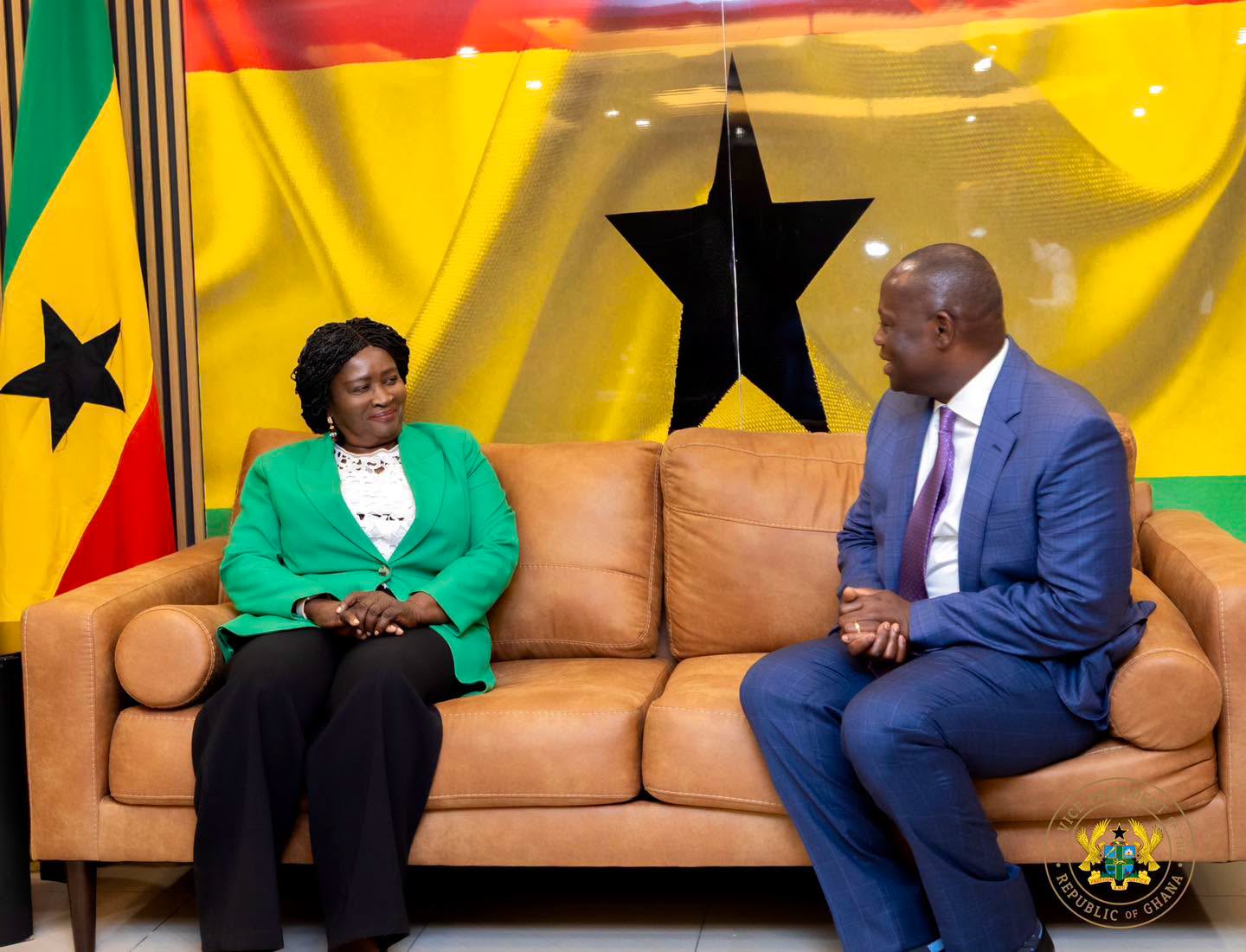
The Vice President made the remarks during a visit to the Ministry of Environment, Science, Technology and Innovation (MESTI) on Monday, July 13, 2026, where she was briefed by the Acting Minister, Emmanuel Armah-Kofi Buah, and the Ministry’s management on its programmes, achievements and challenges.
She said the growing impact of climate change on African countries underscored the need for Ghana to play a more active role in global climate discussions while pursuing opportunities to access international climate finance.
“I also touched on the growing importance of climate change, noting that although Africa contributes minimally to global emissions, the continent continues to bear a disproportionate share of its consequences,” she said.
“This underscores the need for Ghana to continue engaging strongly in international climate negotiations while positioning itself to benefit from global climate financing.”
Professor Opoku-Agyemang also stressed the importance of translating environmental policies into measurable outcomes, saying effective governance depends on implementation, monitoring and evaluation.
“Effective governance requires translating policy into implementation and ensuring continuous monitoring and evaluation so that public policies deliver measurable improvements in the lives of Ghanaians,” she said.
Reflecting on recent flooding in parts of the country, the Vice President said stronger enforcement of environmental laws must be accompanied by sustained public education to encourage responsible behaviour.
“Science is universal and affects every aspect of our national development. For that reason, public education is of the utmost importance,” she said.
“Reflecting on recent flooding across parts of the country, I stressed that the enforcement of laws must be complemented by sustained public education to encourage responsible behaviour and compliance.”
During the briefing, the Ministry highlighted progress on several government initiatives, including implementation of the Circular Economy Policy on plastics, promotion of green jobs and clean cooking technologies, advances in electronic waste management, climate-smart agricultural research, strengthened environmental regulation, and efforts to establish a Ghana Space Agency.
The Ministry also outlined ongoing work to commercialise scientific research through the National Science, Technology and Innovation Forum, while identifying inadequate funding, shortages of scientific personnel, ageing laboratory infrastructure and the need to strengthen environmental laws as key challenges.
The Vice President further encouraged closer collaboration between MESTI and other government institutions to strengthen local manufacturing, create jobs, commercialise research and support the government’s industrialisation agenda.
She also reaffirmed the government’s commitment to protecting public lands from encroachment and supporting the Ministry’s efforts to harness science, technology and innovation to drive national development.