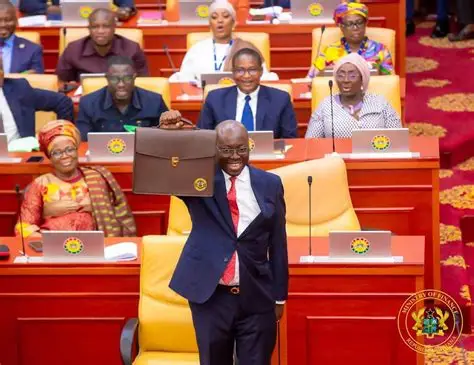
Finance Minister Dr. Cassiel Ato Forson is expected to appear before Parliament next week to present the 2026 Mid-Year Budget Review – a key fiscal update that is anticipated to set out the government’s next phase of economic reforms following months of macroeconomic stabilisation.
The presentation, which is subject to Parliament’s sitting schedule, is expected after the Finance Minister concludes consultations with Cabinet and briefs President John Dramani Mahama on the policy proposals contained in the review.
The mid-year statement is widely expected to move beyond an assessment of budget implementation to outline government’s strategy for sustaining economic recovery, strengthening public finances and accelerating private sector-led growth during the second half of the year.
Government is expected to use the review to signal a transition from economic stabilisation towards a growth-focused agenda centred on job creation, higher productivity and greater resilience, while maintaining fiscal discipline amid ongoing reforms.
A key feature of the presentation is expected to be an update on Ghana’s engagement with the International Monetary Fund, including the successful completion of the country’s Extended Credit Facility (ECF) programme and the planned transition to the IMF’s Policy Coordination Instrument (PCI), which is expected to guide macroeconomic policy after the end of the bailout programme.
The Finance Minister is also expected to brief lawmakers on developments in Ghana’s debt restructuring programme, particularly progress in external debt negotiations and the implications for the country’s debt sustainability outlook.
Recent IMF assessments indicating improvements in Ghana’s debt profile are expected to feature prominently in the review.
On the fiscal front, Parliament is expected to receive an update on government revenue performance during the first half of 2026, expenditure trends and the measures being adopted to keep the budget on track while safeguarding priority spending in sectors such as health, education and infrastructure.
Investors and market participants will also be watching closely for any new tax, spending or financing measures that could influence the fiscal outlook, investor confidence and the broader business environment.
The review is expected to clarify whether government intends to revise any of the macroeconomic assumptions underpinning the 2026 Budget in response to evolving domestic and global economic conditions.
Beyond reporting on fiscal performance, the Mid-Year Budget Review is expected to provide a comprehensive assessment of Ghana’s economic trajectory, including revenue mobilisation, expenditure management, debt servicing and overall macroeconomic performance during the first six months of the year.
The exercise is required under Section 28 of the Public Financial Management Act, 2016 (Act 921), which mandates the Finance Minister to update Parliament on the implementation of the national budget and present the fiscal outlook for the remainder of the financial year.
The review also serves as an important signal to investors, development partners and credit rating agencies on government’s commitment to fiscal prudence and sustainable economic management.