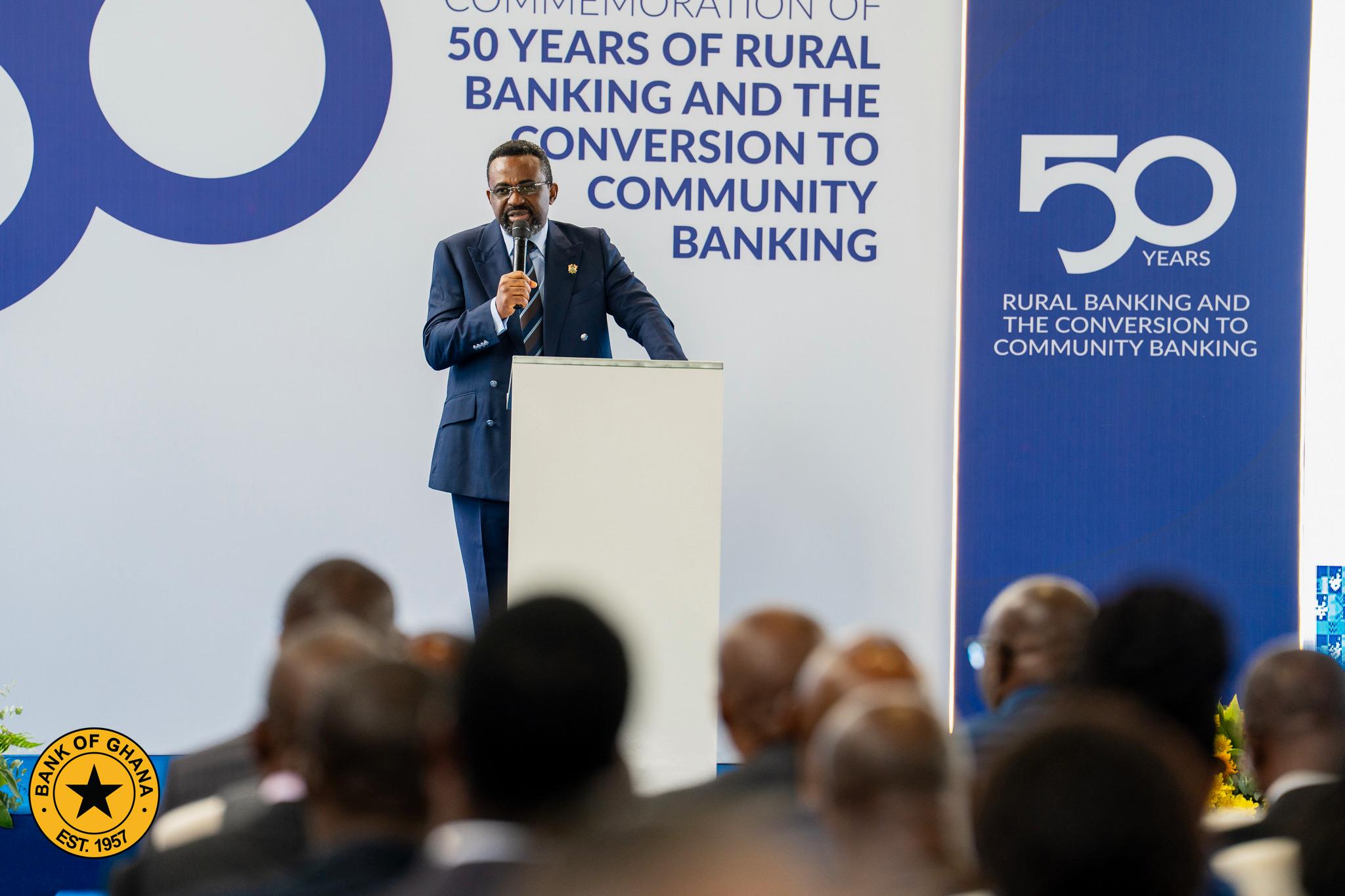
The Bank of Ghana (BoG) is repositioning Ghana’s rural banking sector to tackle one of the country’s biggest financial inclusion challenges.
This challenge is the limited access to credit for traders, artisans, start-ups and other informal businesses despite their proximity to formal banking institutions.
Governor of the Bank of Ghana, Dr. Johnson Asiama, says the conversion of rural banks into community banks is to move beyond geographical access to banking by ensuring community-based financial institutions are able to lend to businesses that remain excluded from formal credit.
Speaking at the commemoration of 50 years of rural banking in Ghana, Dr. Asiama argued that financial exclusion has evolved, with many entrepreneurs and households now living close to bank branches but still unable to secure financing.
“There are households in Accra right here that can see a bank tower from their front door, they can see a bank tower, but they have never had a loan from it. But access is not the same as service and when national policy opens a financing window or eases a pressure or supports a sector, the benefit too often stops at the doors of the largest institution”, Dr. Asiama said.
According to the Governor, while mobile money and digital financial services have significantly expanded access to financial services, access alone is insufficient if small businesses cannot obtain financing to grow.
He noted that many traders, artisans and young entrepreneurs continue to struggle to access loans, even in major urban centres where commercial banks are concentrated.
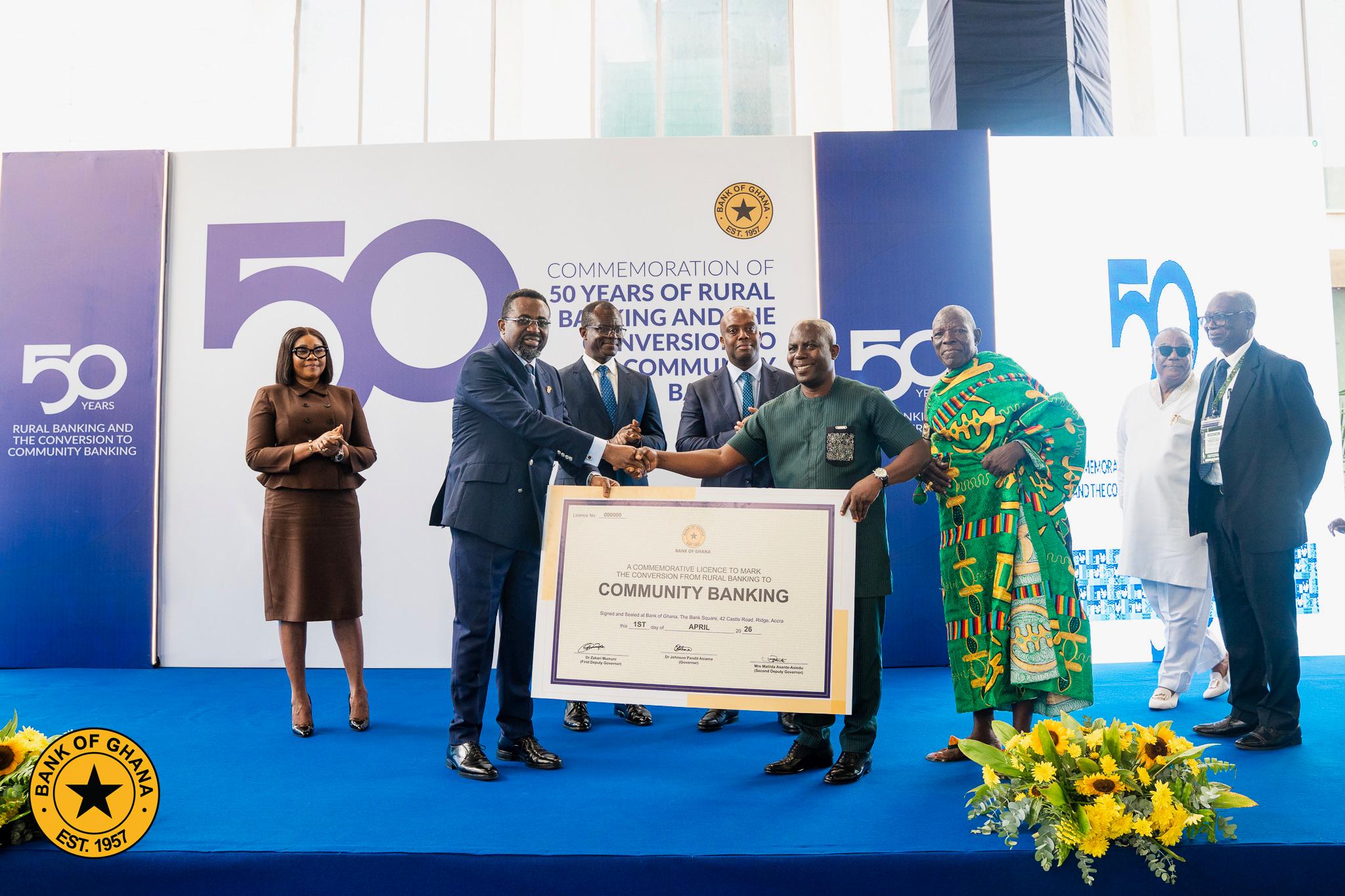
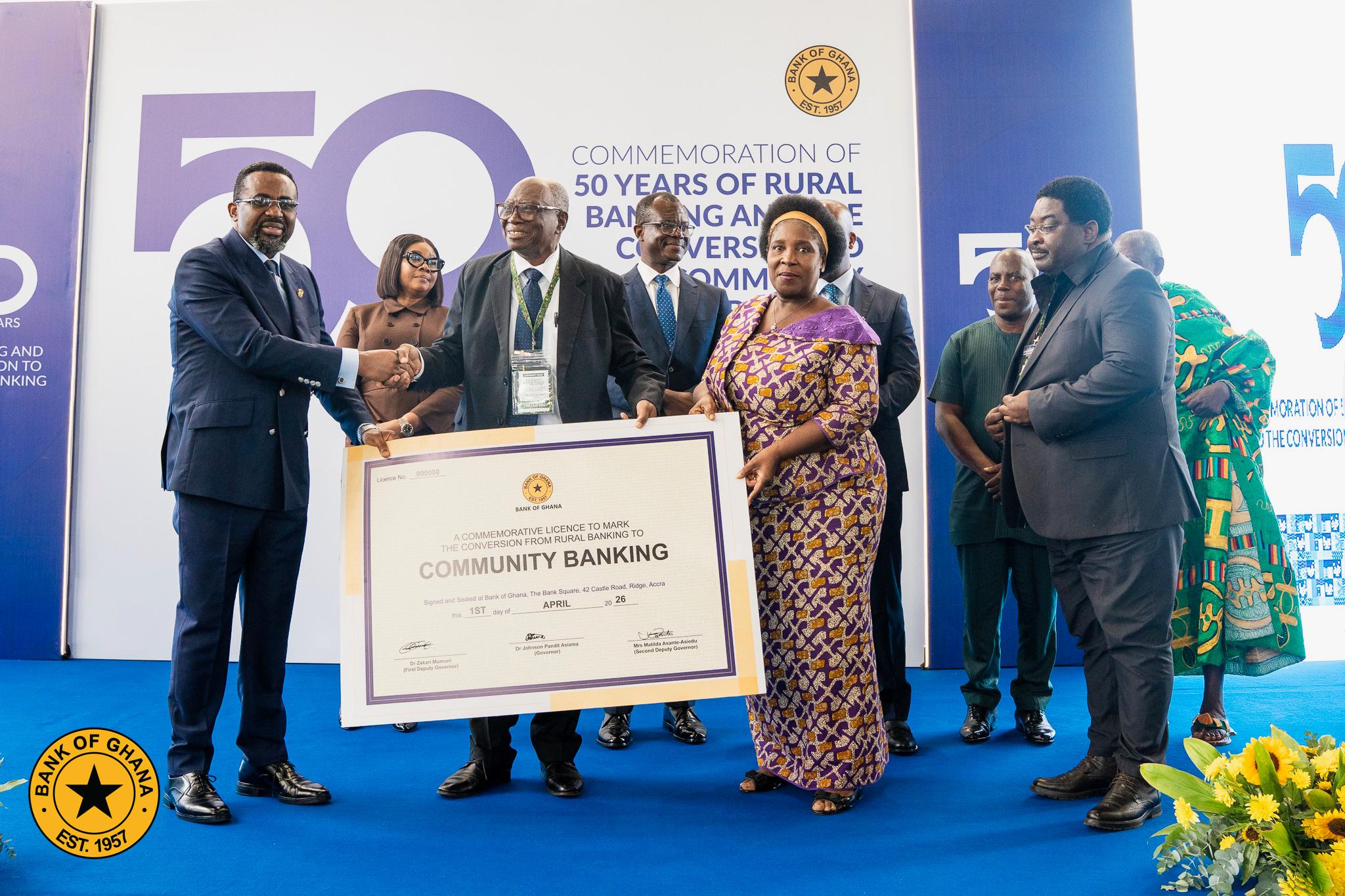
To address the financing gap, the Bank of Ghana is expanding the mandate of community banking institutions, allowing them to be established wherever underserved businesses exist, whether in rural or urban communities.
The central bank believes community banks will play a stronger role in delivering credit to the informal sector while addressing long-standing structural gaps in financial intermediation.
“So we are creating the room for community banks to be established wherever, wherever they are needed, rural or urban, which is why you should not be surprised when you meet the East Lagoon Community Bank or the Cantonment Community Bank, or better still, the Airport Hills Community Bank. And before anyone asks, no, East Lagoon is not short of bank branches. It is short of banks, banks that will lend to the woman who trades there, right there, or the artisan, the carpenter who works right there, and of course the young business that has just opened its doors right there“, the governor added.

The reforms come as Ghana’s rural banking industry reaches a major milestone.
Fifty years after the establishment of Nyakrom Rural Bank – the country’s first community-owned bank, the sector has grown into a GH¢26 billion industry serving more than eight million customers through 147 licensed rural and community banks operating over 1,000 branches nationwide.
Over the past five decades, the sector has become a key source of financing for agriculture, micro, small and medium-sized enterprises (MSMEs) and local economic development, helping extend formal financial services to underserved communities.
Digital lens
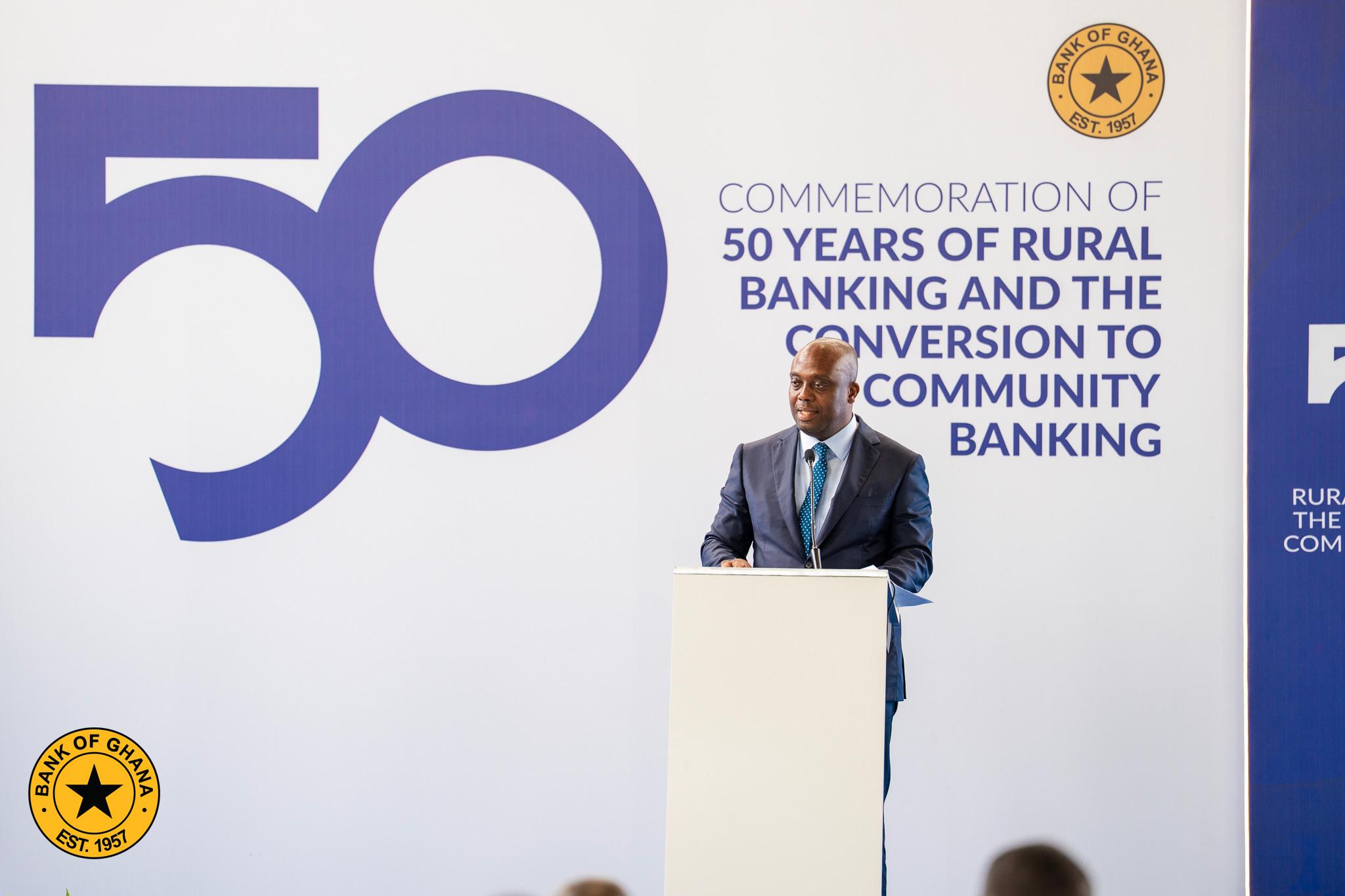
Deputy Finance Minister Thomas Ampem Nyarko described the transition to community banking as a strategic response to Ghana’s changing economy rather than a simple rebranding exercise.
He said community banks must evolve into digitally enabled development institutions that provide financing, promote financial literacy and support innovation and entrepreneurship.
The Deputy Minister added that improving macroeconomic stability presents an opportunity to strengthen community banking and channel more financing to productive sectors of the economy.
Government, he said, will continue working with the Bank of Ghana, the Association of Rural Banks, ARB Apex Bank and other industry stakeholders to build resilient and technology-driven community banks capable of supporting inclusive economic growth.
“The community bank of the future must therefore be more than a lender. It must become a trusted development partner, a digital financial service provider. The future community bank must be a champion of financial literacy. It must be a catalyst for agriculture, a financier of innovation, and a cornerstone of inclusive growth. That is the future we must build together.”
Access to affordable credit remains one of the biggest constraints facing Ghana’s informal economy, which accounts for the majority of employment and business activity.
The Bank of Ghana’s community banking reform seeks to shift financial inclusion beyond opening accounts to expanding access to productive credit for traders, artisans, farmers and micro-enterprises which is an intervention that could strengthen entrepreneurship, job creation and local economic development.