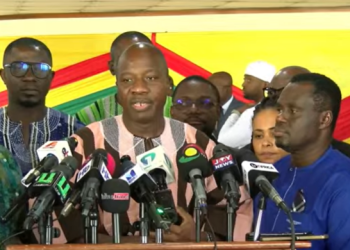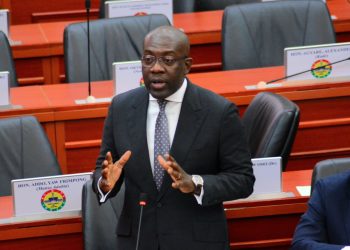
The Trades Union Congress (TUC) has called on the government to suspend the passage of the Tribunal Bill, 2026, arguing that it undermines the ongoing constitutional review process and could expose Ghana’s justice system to political interference.
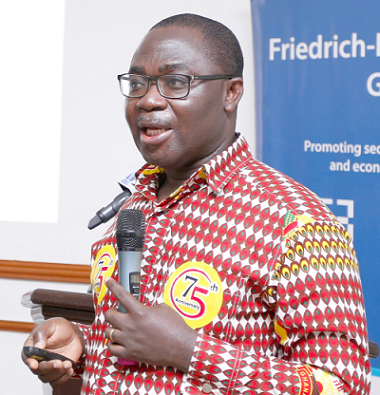
Speaking on Eyewitness News on Thursday, July 16, Deputy General Secretary of the TUC, Dr Kwabena Nyarko Otoo, said the government should first publish the Constitutional Review Committee’s (CRC) report and its response before pursuing legislation to reintroduce regional and district tribunals.
According to him, the TUC had actively participated in the constitutional review process by submitting a memorandum and appearing before the committee, where it recommended the removal of regional tribunals from the Constitution.
He said the Constitutional Review Committee accepted the proposal and also recommended that regional tribunals be removed from the Constitution.
“We are surprised that even before government makes known its position on the recommendation, it has gone to Parliament to establish or reactivate the tribunal system again,” he said.
Dr Otoo argued that once the constitutional review process had begun, all proposed constitutional reforms should be addressed within that broader framework rather than through separate legislation.
“Our expectation was that at least government will publish the full report. Government will then stake out its own position on the recommendations, and then it will form a basis for citizens’ engagement, for debate, and everything, so that all of us carry the constitutional review process to its logical conclusion,” he stated.
He criticised the government’s decision to submit the Tribunal Bill to Parliament before making the review committee’s report public, saying it denies citizens and stakeholder groups the opportunity to fully interrogate the proposals.
“So first of all, we are asking government, please, let’s cease fire. Let’s halt the process. Let government publish the entire report of the Constitutional Review Committee. Let government bring out its own position. Then we can take it from there,” he added.
Beyond concerns over procedure, Dr Otoo questioned the need to revive the tribunal system, insisting that Ghana’s existing courts should instead be strengthened.
He noted that the country’s history with tribunals makes the issue particularly sensitive and cautioned against reopening old debates without broad public consensus.
The TUC also raised concerns over provisions in the Bill governing appointments to the tribunals.
Dr Otoo argued that allowing the President to appoint tribunal chairpersons and involving Regional Coordinating Councils and District Assemblies in appointing panel members creates the potential for political influence over the judiciary.
“We are concerned about the potential for politicisation of the judiciary system,” he said, adding that Ghana’s constitutional reform agenda had already identified the President’s extensive appointment powers as an area requiring reform.
He stressed that laws should be designed with future governments in mind rather than current political actors.
“We are making laws for the future. Between the two of us, we know how the NPP and the NDC have done appointments whenever they get the opportunity to do so,” he said.
Dr Otoo disclosed that the TUC intends to formally write to the Speaker of Parliament to express its concerns and urge lawmakers to suspend consideration of the Bill until the constitutional review process is completed.
The Attorney-General and Minister of Justice, Dr Dominic Ayine, recently laid the Tribunal Bill, 2026 before Parliament, saying it is intended to improve access to justice, reduce case backlogs and reintroduce tribunals with constitutional safeguards and stronger oversight.
The Bill has since been referred to Parliament’s Constitutional and Legal Affairs and Judiciary Committees for consideration.