


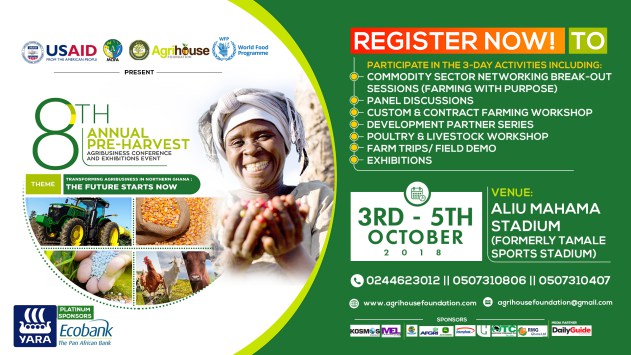
The 8th Annual Pre-Harvest Conference and Exhibition is set to begin on Wednesday, October 3, 2018.
The three-day conference will run until Friday, October 5, 2018 at the Aliu Mahama Sports Stadium in Tamale.
The event, which is being sponsored by the United Nations World Food Programme (WFP) is expected to help link actors in the food value chain.
As part of efforts to ensure the fulfillment of Sustainable Development Goals 2 (Zero Hunger) and 17 (Partnerships), President Nana Addo Dankwa Akufo-Addo launched the national Zero Hunger Strategic Review in May.
The strategy identifies the triple burden of malnutrition, reduction of post-harvest losses, improvement of linkages between smallholder farmers and markets, enhancement of food safety in value chains, and mapping of food-insecure populations, as key gaps which need to be addressed to enable Ghana to achieve zero hunger by 2030
According to the Country Director of the EFP, Ms Rukia Yacoub, the WFP has particular focus on the fortunes and welfare of smallholder farmers who contribute a significant proportion of Ghana’s food reserves.
“WFP is also focused on strengthening smallholder farmers’ capacities in post-harvest management and food safety and quality. They have been profiled to determine their capacity and identify those immediately capable of meeting the requirements of food processors and other institutional buyers. Ultimately, we hope that the food systems in Ghana will operate optimally, whilst the factories will be able to produce special nutritious foods for the West Africa sub-region and other markets. This will translate into increased markets and income for smallholder farmers, offering opportunities for them to break out of the cycle of poverty, food insecurity, and malnutrition.”
Below is the full statement from the Country Director of the EFP, Ms Rukia Yacoub
The United Nations World Food Programme (WFP) is pleased to sponsor the 8th Annual Pre-Harvest Conference and Exhibition from Wednesday, October 3 – Friday, October 5, 2018, at the Aliu Mahama Sports Stadium, Tamale, ensuring that this event continues to link actors in the food value chain. We are particularly interested in its benefits to smallholder farmers who produce majority of the food in Ghana but remain among the most food-insecure livelihood groups.
Globally, WFP focuses its support to national governments on Sustainable Development Goals 2 – Zero Hunger and 17 – Partnerships. The national Zero Hunger Strategic Review which was launched by His Excellency Nana Akufo-Addo, President of the Republic of Ghana in May 2018, identifies the triple burden of malnutrition, reduction of post-harvest losses, improvement of linkages between smallholder farmers and markets, enhancement of food safety in value chains, and mapping of food-insecure populations, as key gaps which need to be addressed to enable Ghana to achieve zero hunger by 2030. These gaps which are also reflected in the Government’s policies, such as the Planting for Food and Jobs and One District One Factory initiatives, will be WFP’s focus areas from now until the end of our new Country Strategic Plan in 2023.
Thanks to Canada’s invaluable partnership and funding, WFP has phased out of its traditional programmes in Ghana, into a new chapter of innovative integrated food security and nutrition programming, with the private sector at the centre. Two Ghanaian-owned industrial agro-processors in Kumasi and Sunyani have been funded and provided with technical expertise to enable them produce specialized fortified nutritious foods of international standards which help prevent malnutrition, particularly stunting among children. Ten thousand smallholder farmers in the Northern, Upper East, Upper West, Ashanti and Brong-Ahafo regions, have been identified for linking to these agro-processors as a market for their produce.
WFP is also focused on strengthening smallholder farmers’ capacities in post-harvest management and food safety and quality. They have been profiled to determine their capacity and identify those immediately capable of meeting the requirements of food processors and other institutional buyers. Ultimately, we hope that the food systems in Ghana will operate optimally, whilst the factories will be able to produce special nutritious foods for the West Africa sub-region and other markets. This will translate into increased markets and income for smallholder farmers, offering opportunities for them to break out of the cycle of poverty, food insecurity, and malnutrition.
It is my ardent hope that the 8th Pre-harvest Agribusiness Event will indeed highlight agro-economic opportunities for farmers, agribusiness, input dealers, investors and financial institutions, sister UN agencies, civil society, government and non-governmental institutions, policy-makers, municipal and district chief executives, and others.
Let me also use this occasion to invite you to participate in discussions on Sustainable Agricultural Warehousing and Storage, Post-harvest Management, and Food Safety & Quality standards, which WFP will lead during the 3-day conference.
WFP looks forward to working with all stakeholders for the transformation of agriculture and agribusiness into a more inclusive, equitable, climate-smart sector, oriented toward the improvement of the lives of rural poor food-insecure people.
WFP in Ghana: WFP’s current programmes in Ghana focus on strengthening partnerships and increasing the capacity of government and non-governmental organizations, the private sector and other stakeholders, to address the gaps that need to be bridged to enable the country achieve Sustainable Development Goal 2, Zero Hunger, by 2030.
This focus is a progression from 2016 when WFP gradually began to phase out of operational support and direct food assistance in its development portfolio of school meals, mother and child health and nutrition, asset and livelihood programmes. WFP’s presence in Ghana began in 1963 with relief assistance. Its support has evolved over the years, keeping in step with the national vision as well as progress in reducing food insecurity and malnutrition.
Current focus: Food insecurity and poverty are largely a rural problem related to inefficient food systems. Farmers’ challenges range from low prices, inadequate markets, climate change, insufficient education and knowledge, and unsustainable farming systems to socio-cultural factors which affect women farmers.
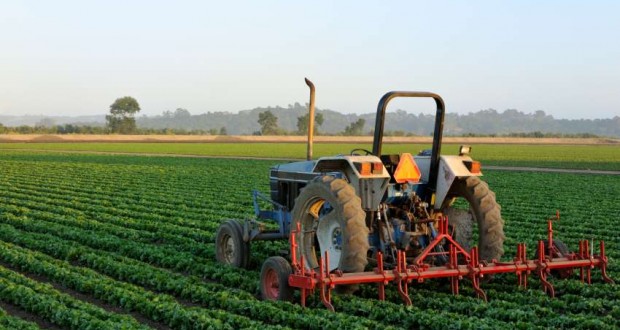
WFP supports the government to improve food security and nutrition in Ghana’s Upper West, Upper East and Northern Regions, and parts of the Ashanti, Brong-Ahafo, Eastern and Volta Regions. Through an agri-nutrition value chain programme, WFP works with selected smallholder farmers, industrial food processors and others to implement a market-based integrated programme that addresses food insecurity and malnutrition challenges along the entire value chain; from the farm gate to consumption of nutritious foods. Support to smallholder farmers is largely focused on post-harvest handling and establishing market linkages.
Additionally, WFP provides food and cash to adolescent girls in areas with high gender disparities at the junior high school level, as an incentive to keep them in school.
Enhanced Nutrition and Value Chains in Ghana (ENVAC): ENVAC is a five-year agricultural and nutrition value chains project which is being implemented through private sector-led approaches to nutrition and agri-business. The project aims to strengthen nutrition value chains by linking smallholder farmers to selected local industrial agro-food processing firms. These companies produce fortified blended nutritious foods to improve nutrition among women and children, through both market-based approaches and social safety nets.
Funded by Global Affairs Canada, ENVAC benefits 10,000 smallholder farmers in five districts (Ashanti, Brong-Ahafo, Northern, Upper East and Upper West Regions), two industrial processors in the Ashanti and Brong-Ahafo regions, and 32 community level medium and small-scale food processors. Other beneficiaries are 20,000 pregnant and nursing women, 20,000 children between 6 and 23 months and 3,000 thousand school children. The primary crops that will be used in the programme are maize, soybean, cowpea and millet. Secondary crops are cassava, yam, orange flesh sweet potato.
Under the nutrition component, WFP supports the Government’s efforts to prevent stunting and micronutrient deficiencies through interventions which target pregnant and nursing women and children aged 6 –23 months, and which focus on the 1,000-day window of opportunity to make significant impact on children’s nutritional status. People living with HIV on antiretroviral therapy and their household members have been another category of beneficiaries.
Future: WFP has developed its 2019-2023 Country Strategic Plan (CSP), informed by the findings of Ghana’s Zero Hunger Strategic Review, numerous consultations and evaluations. The CSP is aligned with national programmes such as Coordinated Programme of Economic and Social Development Policies, Planting for Food and Jobs and One District, One Warehouse as well as the UN Sustainable Development Partnership. WFP Ghana will continue its transition from its former role to one of enabling and supporting the Government, throughout the next five years.
WFP’s goal is to help Ghana achieve efficient, equitable, resilient and inclusive food systems which contribute to the reduction of stunting and micronutrient deficiencies. This will be achieved through technical and policy support for scaling up nutrition-sensitive and gender-responsive social protection programmes, and public-private partnerships which link smallholder farmers to new markets including industrial food processors. WFP will work with government ministries and private sector actors to improve awareness of good eating habits among smallholder farmers, food processors, children aged 6–23 months, pregnant and nursing women, and adolescent girls.
–
By: Ann-Shirley Ziwu/citinewsroom.com/Ghana