Ghana’s most important development problem is arguably the disparity between the north and south of the country. The north is acutely underdeveloped, trailing the south in practically all metrics of development.
Several inequality reports have consistently labelled the northern region as one of concern. Its rate of poverty level decline has remained very slow: from a poverty rate of 55.7% in 2006 to 50.4% in 2012. Southern Ghana enjoys a lower poverty incidence at 45%.
Explanations for the underdevelopment of the north often underscore its geography and climate. The north is dry, unsuited to growing cash crops, and lacking mineral resources. Another school of thought considers the impact of the colonial experience from 1897 till independence. The north was sidelined by the British colonial administration.
I have been looking into this to see which kind of explanation is most satisfactory. My study of the economic history of Ghana specifically examines the colonial roots of the north-south development divide.
I estimated the current development disparity between the two regions and examined the contribution of colonial public investments in education, health and infrastructure. The south received almost all the colonial public investments.
I found that the effects of past colonial investments persist now – even in the few northern locations where they were made. They still strongly determine current development outcomes in Ghana.
The findings suggest that colonial investments were equally productive in the north and the south. The current status of the north would be different had it received a fairer share of colonial investments. The findings also suggest how development could be achieved in future.
Ghana’s north and south contrasted
I found that an average location in the north is at least 51% less developed than one in the south. The level of development was based on satellite images of light density at night – a precise and objective measure.
More than 70% of the northern population live in disadvantaged rural areas. The region scores lower than the south in most development terms. For example, in the Greater Accra Region, 22.5% of the population is poor in several ways, according to the UNDP’s 2020 Inequality Report.
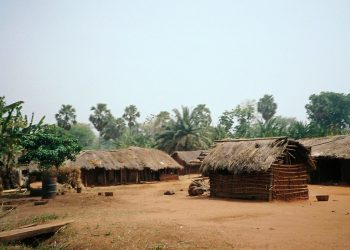
The arid north is primarily savannah woodland with no significant potential for cash crop cultivation. The mineral-rich and wetter south, covering about 56% of the country, produces and exports cash crops. The population of the south (24.5 million) is four times that of the north.
Other arguments about the regional differences concern their history. It’s said that prior to colonial conquests, the north was more prosperous and developed, having built a fortune on trade and industry. That changed through colonial practices. The colonial state administered the north as a “periphery” and the south as a “core”. Colonial investments and expenditures in the north were kept at a bare minimum.
I explored the spatial distribution of colonial public investments in education, health and infrastructure. For example, northern Ghana had no class one road as at 1931 and no railway throughout the colonial period. Average distances to a colonial railroad were 324km and 59km for northern and southern areas respectively. The average distance to a class one road in 1931 was about 196km in the north and 32km in the south.
Colonial investments, railways in particular, stimulated local economic activities and development in the south.
In 1901 the north had no school or hospital. The south had 125 schools and eight places with at least one hospital. By 1931 the number of schools in the south had risen to 325 and places with hospitals to 24. But the number of schools in the north had only doubled to eight, and only six places had at least one hospital.
Colonial effects persist
I found that past colonial investments still strongly determine contemporary development in Ghana. Places closer to locations of past colonial investments are still relatively more developed today.
Even though the north received far fewer colonial investments, areas closer to the locations of colonial investments in the north are more developed today than other areas in the north. So colonial investments were equally productive in the north.
Current development outcomes in Ghana are also more heavily driven by colonial-era factors than by post-independence factors.
There are several reasons why the effects of past colonial investments persist.
First, once an investment had been made in a location, subsequent investments followed in the same location. It would be more cost-effective or more convenient to extend an existing railway line, for example, than to survey unexplored terrain for new railway lines.
Second, colonial investments brought associated benefits, prolonging their effects. If railway lines stimulated population growth in an area, more health facilities and schools would be provided.
Third, colonial investments like railway lines, schools and hospitals had a long physical duration.
Fourth, colonial investments had high returns because they were made in places that had not previously received such investments.
My study leads me to conclude that if more investments had been made in the north, the region could today be more like the south in terms of development.
Diagnosis of the problem
There have been numerous programmes to develop the north since Ghana gained political independence in 1957. Unfortunately, most either underperformed or failed. This is because the potential of the north has not been properly diagnosed.
The north’s historical fortune was oriented towards trade and industry. At the onset of colonial rule, the modernisation of its trade system depended on the extension of railway lines to the region. But the north still has no railways connecting it to the south. Roads to the south are also in a deplorable condition.
Development policies in the north have targeted food production instead of infrastructural developments. But food production can’t transform the north without better transport links.
The construction of the Ghana Railway Masterplan, designed in 2013 to connect the north and the south, has not started. The mooted Eastern Corridor Road project has never seen concrete progress either. These two projects would arguably be the most important routes to transform the north.
Iddrisu Mohammed Kambala, PhD Candidate, University of South Carolina
This article is republished from The Conversation under a Creative Commons license. Read the original article.