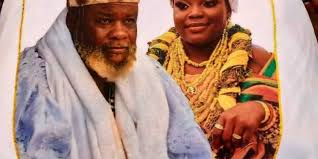
‘What! This is unbelievable!’ ‘The man must be arrested immediately.’ ‘How on earth can a 63-year-old man marry a 12-year-old man?’ Sadly, these were some of the words that quickly flooded social media when the news of an alleged marriage between the Gborbu Wolomor of Nungua and a 12-year-old (later reported 16) Naa Okromo took over the country recently.
Quickly, legal practitioners, human rights advocates, social commentators and some lawmakers began releasing statements to condemn the act and calling on the government and the security agencies to arrest and prosecute the Gborbu Wolomor for what they said was a preposterous act of getting married to someone young enough to be his granddaughter. Child Rights International went to the extent of taking the Naa Okromo from her traditional home for safety.
With little to no interrogation, Nuumo Borketey Laweh XXXIII was subjected to numerous criticisms for his actions. Even the attempt to justify the action by the Office of the Gborbu didn’t stop the countless criticisms and ‘insults’, unfortunately, by the many who had little idea of the cultural practices and cultural ways of the many traditional communities in the country, particularly, the Ga community.
The issue became even direr when the Paramount Chief of the Sempe Traditional Area, Nii Adote Otintor II, in a statement, said he was peeved by the recent marriage between a 63-year-old Ga priest and a 12-year-old child. According to the Mankralo of the Ga State, the act is unwarranted and does not align with the customs of the Ga Dangbe people. Having another custodian of the Ga land coming out to ‘condemn’ such an act, gives room for those who are foreign to the culture to speak against the alleged marriage even more intensely.
Notwithstanding the above, it is worth noting that culture is not a monolith; it is a dynamic tapestry that evolves with time. It is the repository of a community’s collective wisdom, practices, and beliefs that have been honed over centuries. When culture nurtures positive values, it can significantly bolster societal development, because it is in their common good. It fosters a sense of identity, continuity, and belonging, which are essential for social cohesion and collective progress.
It means that when a group of people agree on a way of life, it binds them together and a foreign factor that tries to prevent them from practising their culture will be greatly opposed. This is what we are seeing coming from the Nungua community.
In the same vein, when any cultural practice(s) is affecting the development or it is being practised outside the legal framework of the country, it needs to be talked about and changed immediately. Given the rise of human rights advocacy, universally ‘prescribed’ ways of life often come in as a barrier that prevents people, most of the time, from practising their way of life that has been known and practised for centuries. Any time an international behaviour is imposed on any culture, there are fictions.
Development is not merely an economic measure; it is a holistic process that includes the advancement of human rights and the establishment of a just legal system. A society that respects and upholds the rights of its members, particularly the vulnerable, lays a strong foundation for sustainable development. It is through the lens of culture that people can understand and appreciate the importance of rights and laws, thereby fostering a society that is both culturally rich and developmentally robust. However, the sanctity of culture cannot be an excuse to perpetuate practices that infringe upon basic human rights, far from that.
Carefully looking at the alleged marriage between the Gborbu Wulomor and the minor, it is safe to conclude that judgements were hastily made without thorough investigations and or questioning.
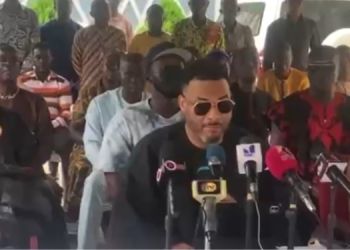
The Director of Administration, Office of the Gborbu Wulomor-Shitse, Rev. Dr. Daniel Nii Gyasi Ankrah, on April 2, 2024, mounted a strong defence on Citi FM’s Eyewitness News, to say that the alleged marriage is rather to the Gborbu, a deity for the people of Nungua and not to the Wulomor. He explained that the Wulomor-Shitse was only a representative of the Gborbu deity.
Rev. Dr Ankrah also explained that the girl was mysterious as she was in her mother’s womb for two years and sat for two years until after the deity’s intervention before she could stand and walk. He pointed out that the ceremony conducted on that Saturday was one of several initiations she had to undergo. All of his explanations were attempts to defend the Ga cultural practices and culture.
Point to note, child marriage, as it is widely known, is a cultural practice that has been widely outlawed because it violates the rights of children to education, health, and the opportunity to grow into empowered adults. However, navigating the intersection between cultural practices, human rights, and the law requires a delicate balance that respects the cultural heritage of communities, in this case, the Ga community in Nungua, while upholding fundamental human rights standards.
The case of the Gborbu Wolormor, while still under investigation, has brought to light the necessity of aligning cultural practices with the principles of human rights and the rule of law. But the begging question remains; How can we navigate around these grey areas of society?
Not to give an absolute answer(s), but being able to navigate the complexities of culture, law, and human rights, the path forward requires dialogue, understanding, and a willingness to adapt.
In a closely monitored interview with the Dean of the University of Ghana Law School, Prof. Raymond Atuguba, on the matter, he stated that unfortunately, many Ghanaians are not abreast with culture enough to even formulate questions on it anytime it clashes with the law. [Link to the full interview is attached below].
In fact, to him, we have over the years distorted our cultural practices for selfish reasons.
“The question of the clash between culture and law is premature. Because I believe that as a nation, we are intellectually incapable of posing that question. We have not gathered the knowledge resources necessary to formulate the questions on the clash between law and culture in a way in which we have formulated it,” he stated.
“… I learnt a lot of culture from my late father and after many years of these conversations, I concluded that I and many Ghanaians do not know our culture; we simply do not know it,” he added.
Given the concerns raised by Prof. Atuguba, calls for several actions. Some of these actions include:
Cultural Sensitivity Teachings: This is a collection of teachings that helps in learning about and comprehending individuals from different cultures than one’s own. The news about the alleged marriage between the Wulomor and the minor was heavily criticised from the surface, with many people not taking the time to be sensitive to the culture and practices of the Ga people.
Prof. Atuguba stated: “We need to examine our culture, find out what it was and make it work for us.” Providing teaching to the general public, law enforcement legal practitioners and to some extent lawmakers on cultural practices are needed to ensure they approach cultural clash situations with understanding and respect for traditions.
Promote Inclusive Dialogue: Inclusive dialogues here refer to intentionally structured forms of engagement to promote deeper learning about the different aspects of society. The primary goal is to provide opportunities for meaningful engagement and inquiry. Prof Atuguba believes that; “We are a culturally confused lot. Our culture is jaundiced and adulterated for both good and bad. We need to start focusing on the adulterations of our culture for good and not the bad.”
So, to address this it will involve listening to other cultures and practices for understanding first, instead of waiting for a rebuttal, applying and interrogating disciplinary norms related to the different cultures around, viewing practices, experiences and prior knowledge as assets in the teaching and learning of culture.
Legal Reforms: Ghana’s constitution recognises the existence of plural legal systems and gives pride of place to customary law as a significant source of law. The co-existence of customary law with other sources of law such as statute law, common law and the rules of equity, though seemingly trouble-free, presents many covert problems, some of which are gradually emerging as Ghana embarks on the process of law reform. Prof. Atuguba made a profound contribution to how to best navigate the legal reform process.
“When the good women and men who drafted this court act sat to draft it, they recognised that a lot of our society was still culturally functional. So, they proved in that section that when a dispute arises, and you want to settle it, the first thing you have to do is to settle it according to the personal law of the parties involved. Guess, the personal law? It is the customary law,” he stressed.
He continued: As late as 1993, when this court act was being drafted, the people who drafted it knew that part of the way of resolving disputes quickly, and efficiently without the backlog of hundreds and thousands of cases was a cultural one. If you use culture, the personal laws of the people, you will resolve these cases very fast,” he stated.
This is to suggest that, the first resort for the human rights lawyer and MP of Madina, Francis-Xavier Sosu, and the many others who felt agitated when the news broke, was to turn to the customary laws of the Ga community before demanding the arrest of the Wulomor. Perhaps the confusion could have been resolved way better than it did.
Community Engagement: This is a vital component in the preservation of cultural heritage while ensuring respect for individual rights. A proper community engagement can resolve all the concerns that are being raised by the critics of the alleged marriage. It involves a collaborative process where community members actively participate in identifying and sustaining cultural practices that are meaningful to them. This approach not only honours the traditions that define a community but also aligns them with contemporary human rights standards.
Prof. Atuguba said: “I personally believe that the way out of our developmental mess is a cultural one. Part of the economic, political and social miracles of development that have happened around the world has been cultural,” he said.
Just to say the least, the grey areas of society, where culture, rights, and law intersect, are not just challenges, but they are opportunities. They are the spaces where dialogue can occur, reforms can be initiated, and a more equitable society can be envisioned.
By exploring these areas with sensitivity and respect for cultural diversity, while steadfastly upholding human rights and the rule of law, we can weave a foundation for development that is as enduring as it is just.