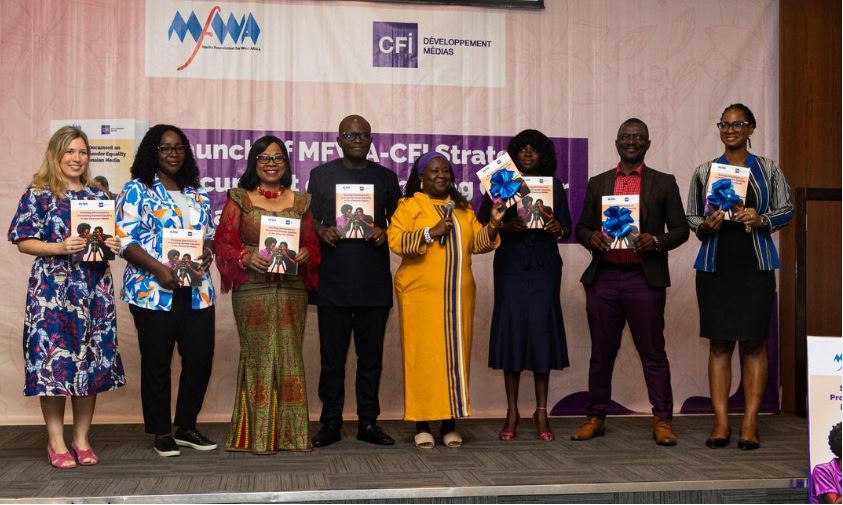
The Media Foundation for West Africa (MFWA), in collaboration with Canal France International (CFI), has launched a Strategy Document aimed at promoting gender equality in the Ghanaian media landscape.
The document is a key component of the “Equal Voices Promoting Gender Equality in the Media” project, which seeks to combat gender inequalities and stereotypes while increasing women’s representation at all levels of media leadership in Ghana and Côte d’Ivoire.
With actionable recommendations, the strategy document outlines measures to boost female leadership roles in the media, achieve gender parity in content, foster gender-sensitive workplaces, and strengthen advocacy for gender equality.
Its development was informed by extensive baseline research and strategic dialogues with key stakeholders in the Ghanaian media, identifying barriers such as leadership gaps, content bias, workplace challenges, fragmented advocacy efforts, and the bystander effect.
Speaking at the launch, Dr. Audrey Gadzekpo of the Department of Communication at the University of Ghana hailed the initiative as an ambitious yet necessary step toward transformative change in the media, noting that the document arrives at a critical juncture in the global gender equality movement, highlighting both progress and setbacks in recent years.
Citing an international report, she pointed out that closing the gender gap in traditional media could take up to 67 years, underscoring the urgency of implementing the strategy document’s recommendations.
Marine Hayem, Cooperation Attaché at the French Embassy, emphasized that the strategy document represents a major milestone in the media sector and aligns with Ghana’s affirmative action policies.
Dr. Charity Binka, Executive Director of Women, Media, and Change (WOMEC) and an independent expert moderator of the strategic dialogues, stated that the document is rooted in local media realities while aligning with the Sustainable Development Goals (SDGs).
She called on media organizations to adopt the strategy document and implement progressive systems to increase women’s leadership by 2030 in line with the Affirmative Action and Gender Equity Law.
Drawing inspiration from global best practices, the document serves as a roadmap for translating commitments into concrete action, marking a significant step toward gender inclusivity in Ghana’s media industry.