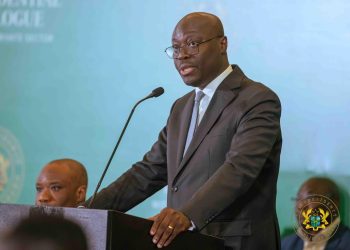
KPMG Ghana and UNDP has held its annual Post-Budget Forum, bringing together policy experts, business leaders, and analysts to examine the 2026 Budget Statement through four central thematic lenses: Policy Alignment, Delivery and Confidence; Tax Policy and Revenue Mobilisation; Financing, Investment and Long-Term Capital Mobilisation; and Competitiveness, Energy, and Creating an Enabling Environment.
At the event, KPMG/UNDP also presented findings from its 2026 Pre-Budget Survey, offering a rare and data-backed look at the expectations, concerns, and priorities of businesses across Ghana’s economy.
The result is a picture of a budget that attempts to strike a balance between consolidation, growth stimulation, tax simplification, and business confidence—yet still faces scrutiny on execution and predictability.
Policy Alignment, Delivery, and Confidence
KPMG’s survey revealed that 62% of respondents expressed moderate confidence in the government’s fiscal direction, with 44% agreeing that the 2025 Budget had effectively addressed Ghana’s key economic challenges.
Respondents considered infrastructure development, tax reforms, education policies, and energy initiatives as the most impactful.
The 2026 Budget appears designed to reinforce this emerging confidence. With the government planning to spend GH¢302.5 billion against projected revenue of GH¢268.1 billion, the projected fiscal deficit is expected to narrow to 2.2% of GDP on a commitment basis.
Perhaps more reassuring for businesses is the sharp decline in public debt—from 61.8% of GDP in December 2024 to 45.0% by October 2025. This movement is likely to influence investor sentiment and restore stability in Ghana’s macroeconomic environment.
However, KPMG emphasized the need for improved policy coordination and delivery. Although the budget outlines bold targets—such as 8.0% year-end inflation, 4.8% GDP growth, and a 3-month import cover target—businesses remain concerned about implementation consistency.
Surveyed firms called for deeper alignment with national and continental development priorities, especially in education, infrastructure, and decent work.
The forum concluded that while the budget’s intentions are aligned with key national goals, the real test will be policy execution, clarity of communication, and predictability in the months ahead.
Tax Policy and Revenue Mobilisation
This thematic area received some of the most intense focus at the Forum—and for good reason. Only 30% of surveyed businesses agreed that Ghana’s current tax policies strike the right balance between competitiveness and revenue mobilisation. Many still view the tax regime as complex, unpredictable, and administratively burdensome.
The 2026 Budget attempts to address these concerns with a comprehensive suite of VAT and income tax reforms, including:
– Abolition of the COVID-19 Health Recovery Levy
– Reversal of the decoupling of GETFund and NHIL levies, enabling input tax deductions
– An increase in the VAT registration threshold from GH¢200,000 to GH¢750,000, exempting small businesses that lack compliance systems
– Zero-rated VAT extended for locally produced textiles until December 2028
– Abolition of VAT on mineral exploration activities to promote growth in mining
– A full review of the Income Tax Act of 2015 (Act 896) to simplify tax policy and align it with global standards
These measures are expected to lower the effective VAT rate from 21.9% to 20%, a move widely welcomed by the private sector.
KPMG analysts noted that these reforms respond directly to the survey findings that called for a *predictable tax environment and digitally efficient compliance systems.
Respondents also pushed for a structured tax policy calendar to avoid last-minute changes—a recommendation KPMG hopes the government will consider as part of tax administration reforms.
With GH¢223.9 billion in targeted tax revenue for 2026, the revenue strategy will rely heavily on both improved compliance and the stimulative effect of simplified tax policy.
Financing, Investment and Long-Term Capital Mobilisation
One of the most persistent concerns highlighted in the KPMG survey is the limited access to affordable, long-term capital, especially for MSMEs. Businesses cited high interest rates, limited credit guarantees, and insufficient risk-sharing mechanisms as key barriers to growth.
The 2026 Budget and the government’s broader financial sector strategy contain several initiatives aimed at solving these constraints:
Operationalising the Women’s Development Bank, aligned with MSME and youth entrepreneurship policies
Scaling up credit guarantee and risk-sharing schemes* to expand lending to priority sectors
Accelerating the establishment of a Domestic Credit Rating Agency, aimed at improving transparency and risk-based pricing. Facilitating the creation of an Infrastructure Credit Guarantee Institution to mobilise long-term cedi financing for commercially viable projects
As of September 2025, Ghana had 4.8 months of import cover, and interest rates remained relatively high with a 21.5% Monetary Policy Rate. These conditions reinforce the need for stronger tools to crowd in private investment.
KPMG’s analysis stresses that boosting private sector capital mobilisation will require:
1. Long-term financing mechanisms
2. Deepened public–private partnerships (PPPs)
3. Strengthened credit infrastructure
The budget’s measures show commitment, but implementing them fast enough to meet the pace of business demand will be crucial.
Competitiveness, Energy, and Creating an Enabling Environment
Competitiveness remains a central concern for Ghanaian businesses. KPMG’s survey identified energy reliability, infrastructure, SME support, and industry development as the most pressing areas requiring government action.
The 2026 Budget’s interventions include:
Energy and Industrial Transformation
* Scaling up renewable energy investments
* Expanding off-grid power solutions
* Introducing green industrial incentives such as accelerated capital allowances and duty waivers
* Developing a national implementation roadmap for the 24H+ industrial programme
SMEs, Skills and Workforce Development
* Strengthening TVET and apprenticeship programmes co-designed with industry
* Simplifying business registration and licensing to expand the formal sector
* Promoting digital tax initiatives to reduce administrative burdens
Businesses expressed cautious optimism, with many calling for consistent power supply, improved infrastructure, and better policy predictability to enhance competitiveness. Infrastructure development was flagged as one of the most impactful sectors in the previous budget—and remains a major priority for 2026.
KPMG highlighted that making Ghana competitive requires a stable, affordable energy supply, lower operational costs, predictable policies, and enhanced workforce readiness. The 2026 Budget shows intent, but execution timelines will determine whether businesses experience meaningful relief.
Conclusion: A Budget with Strong Intent, Moderate Confidence, and High Expectations
The KPMG Post-Budget Forum underscored a key theme: businesses are cautiously hopeful. The 2026 Budget is seen as a major step toward simplifying Ghana’s tax regime, improving access to long-term finance, and enhancing competitiveness—yet persistent concerns remain around execution, energy reliability, and policy clarity.
The Pre-Budget Survey reveals a private sector that wants to grow, invest, and innovate—but is demanding stability, fairness, and predictability.
With public debt declining, inflation stabilising, and reforms underway, analysts say Ghana has a window to rebuild confidence. As the budget enters its implementation phase, businesses will be watching closely to see whether the government can match policy ambition with delivery consistency.
In the coming months, the effectiveness of these reforms—particularly VAT simplification, energy initiatives, and financial sector interventions—will determine whether confidence strengthens or remains moderate.
For now, the 2026 Budget represents a cautiously welcomed shift toward a more business-friendly environment, albeit one that requires disciplined execution to fully deliver its promise.