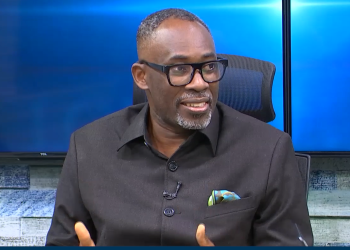
Kyle Kelhofer, Senior Country Manager of the International Finance Corporation (IFC), has clarified that funds provided by the institution to Ghana do not add to government debt, stressing that IFC finances the private sector rather than governments.
Speaking in an interview with Bernard Avle on Channel One TV’s The Point of View on Monday, January 19, Mr Kelhofer explained that IFC’s model differs fundamentally from that of institutions such as the International Monetary Fund (IMF) and the World Bank.
“Unlike the IMF and the World Bank, which are financing governments, or the Ghanaian government, which is to be repaid by the government of Ghana and the taxpayers of Ghana, at IFC, we finance the private sector, both local corporates and international investors,” he said.
According to him, IFC’s focus on private sector financing allows it to be more flexible and responsive to investment opportunities, even in challenging economic environments.
“So, we’re much more opportunistic. And in some countries, in the midst of an IMF or World Bank programme, maybe the neighbouring environment isn’t that great. Whereas in Ghana, in the last few years have been a bit different,” Mr Kelhofer noted.
He pointed to recent reforms and improvements in Ghana’s macroeconomic stability as key drivers of increased private sector opportunities.
“There have been some reforms, with the improvement of stability and the trends towards macro stability. There have been tremendous opportunities in the private sector,” he said.
Mr Kelhofer added that IFC supports businesses seeking to expand and grow, but emphasised that repayments are made by the investors themselves, not by the state.
“IFC, we see investors who want to expand, who want to grow, and we finance. But we’re repaid by the investors themselves, not the government of Ghana or the taxpayers of Ghana, but the businesses here in Ghana,” he stated.
He said this financing structure explains why governments are eager to collaborate with IFC, particularly on major infrastructure projects.
“This is why governments are keen on collaborating because we’re trying to help finance things, including central infrastructure like the Tema Ports, which was done through the private sector, not on the balance of government,” Mr Kelhofer said.