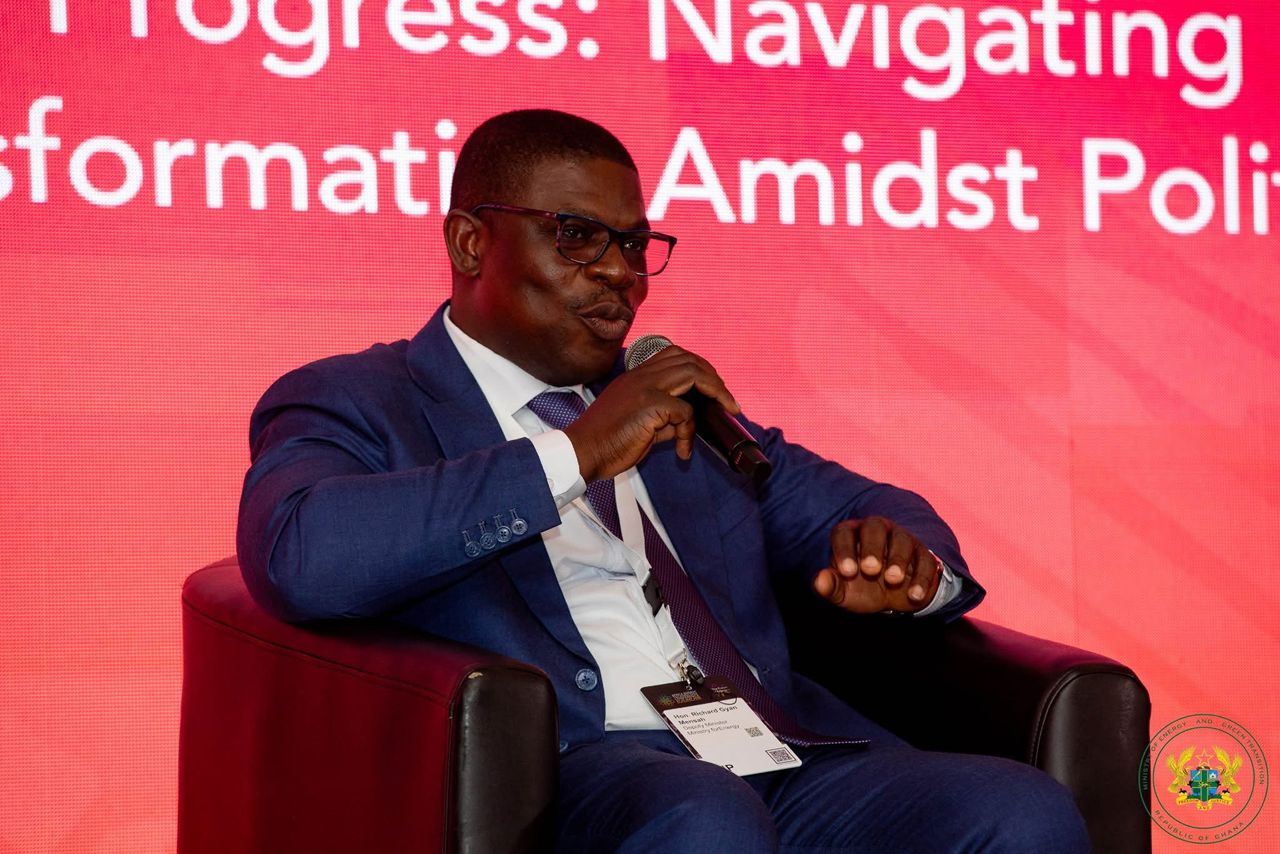
Deputy Minister for Energy and Green Transition, Richard Gyan-Mensah, has called for stronger regional integration as the key to unlocking Africa’s industrialisation drive.
Delivering the keynote address at the Roundtable on Energy, Infrastructure and Trade Connectivity on behalf of Minister Dr John Abdulai Jinapor at the Africa Trade Summit 2026, he argued that Africa’s industrial ambitions are constrained not by lack of ideas or talent, but by fragmented energy systems, weak infrastructure, and inefficient trade arrangements.
Mr Gyan-Mensah outlined three critical pillars underpinning successful industrial economies: reliable energy supply, resilient infrastructure, and efficient trade systems.
He warned that the absence of coherence among these pillars continues to limit Africa’s competitiveness in global markets.
The Deputy Minister emphasised the need to strengthen regional power pools, build integrated trade corridors, reform customs processes, and deploy digital trade platforms.
He noted that infrastructure investments only yield meaningful economic value when goods and services can move seamlessly across borders, underscoring the importance of regional coordination and infrastructure diplomacy.
He further urged African governments and development partners to adopt innovative financing mechanisms to bridge the continent’s infrastructure deficit.
Closing this gap, he stressed, is essential to unlocking trade-led industrialisation and accelerating sustainable growth.
The remarks highlight a critical policy challenge: Africa’s industrialisation agenda hinges not only on domestic reforms but also on cross-border cooperation.
With intra-African trade still accounting for less than 20% of total trade flows, regional integration could be the catalyst for scaling manufacturing, boosting SME participation, and attracting climate-conscious investment into energy and infrastructure projects.
The Africa Trade Summit 2026 convened policymakers, industry leaders, and development partners to explore strategies for strengthening economic integration and positioning Africa as a competitive industrial hub in the global economy.