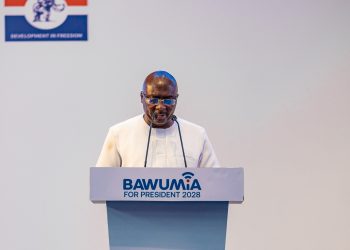
Dr Kwame Anim-Boamah, former Chief Executive Officer of the University of Ghana Medical Centre, says Ghana’s “no bed syndrome” is driven not only by infrastructure shortages but also by inefficiencies in patient flow and hospital management systems.
Speaking at the Odade3 Conversations Under the Baobab Tree themed “The No Bed Syndrome in Ghana: Improving Emergency Healthcare” in Accra on Thursday, April 30, he stressed that the challenge goes beyond the availability of beds.
“A lot of the problem with the no bed syndrome has to do with a flow system. It is really a matter of how patients enter your emergency room, how they leave, and how they are cared for while they are at the emergency,” he said.
Dr Anim-Boamah praised UGMC as a well-planned facility that has helped reduce pressure on major referral hospitals such as Korle Bu Teaching Hospital and Ridge Hospital, particularly for residents in areas including Airport, Madina, Adenta, and Dodowa.
“UGMC is a fantastic hospital. The vision bearers to set it up really did a good job,” he said, noting that the hospital’s emergency unit has become a first point of call for many patients in its catchment area.
He explained that despite its capacity, UGMC still experiences congestion in its emergency department, reflecting broader systemic challenges in emergency care delivery.
Dr Anim-Boamah said that during his tenure, the hospital introduced internal reforms aimed at improving bed utilisation and patient movement within the facility.
He noted that many emergency cases were linked to internal medicine, which often created bottlenecks when that department was full, even while other wards still had available beds.
“So if internal medicine is full, then send the patient to urology or plastic surgery, wherever there is a bed in the hospital, and let the doctors go there to manage the patient,” he explained.
He added that addressing the issue required active coordination between clinical and management teams, including regular oversight of emergency operations during peak periods.
“I used to walk through the emergency, especially in the evenings around 4 or 5 when the place is nearly full,” he said.
Dr Anim-Boamah stressed that improving emergency care in Ghana will require hospitals to strengthen internal systems and patient flow management alongside expanding physical infrastructure.