The Managing Director of GCB Bank PLC, Farihan Alhassan, has confirmed the bank’s status as the largest in Ghana, citing its extensive branch network, asset base, customer numbers, and ATM coverage.
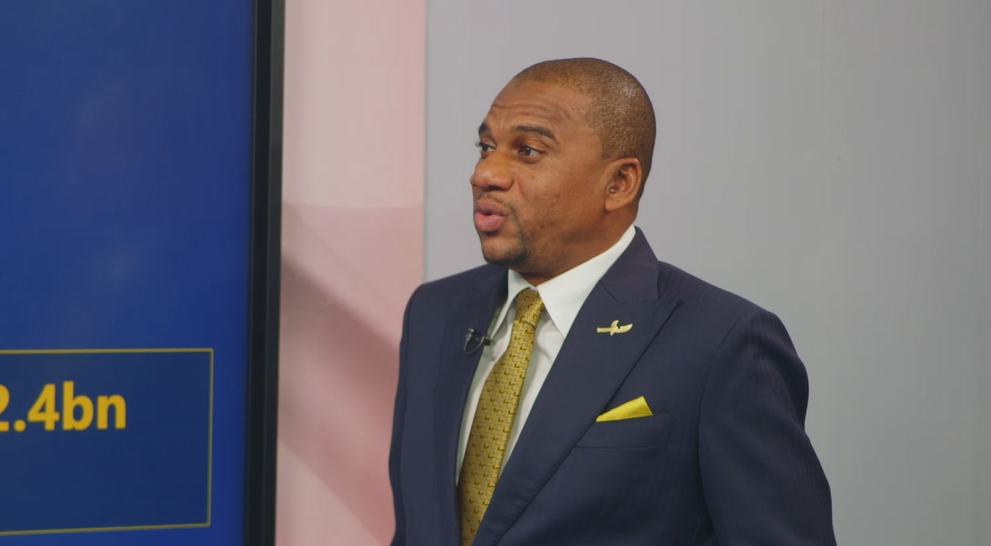
Speaking on Channel One TV’s The Point of View with Bernard Avle on Wednesday, April 1, Alhassan highlighted the bank’s dominance across key banking metrics.
“By all metrics, for example, we got 184 branches, 333 ATMs, no one [bank] has that channel, no one comes close. Today, we’re the biggest bank in terms of assets as well. No one comes close. On loans, we’re the biggest, no one comes close; on deposits, we are the biggest, no one comes close. Customers, no one comes close; we have about 3.5 million customers. So, we’re the biggest by any stretch of measure. We’re the biggest in profits as well. We made the biggest profits in 2025. We’re Ghana’s biggest bank by any stretch of measurement,” he explained.
His remarks follow the bank’s strong 2025 performance, with a profit before tax of GH¢3.2 billion—a 67.4 per cent increase over the previous year—underscoring the bank’s continued growth and leadership under his management.
Customer deposits grew 19.7% to GHS41.3 billion, driving the 23% expansion in the Bank’s balance sheet to GHS52.6 billion. This deposit growth funded the 56.8% year-on-year expansion of the loan book to GHS16.39 billion as credit demand recovered alongside Ghana’s broader economic rebound. As a result, operating income increased by 40.9% year-on-year to GHS6.3 billion from increases in both interest and non-interest income.
Funded and Non-Funded Income Recorded Impressive Growth
Interest income grew 38.3% despite the sharp decline in interest rates. The Bank navigated the low-interest-rate environment through active balance sheet repricing, strategic asset allocation, and proactive risk management. Non-funded income, i.e., revenue from fees, commissions, and trading, rather than lending, also rose 58% year-on-year. Fees and commissions grew 39.9% while trading and other income surged 81.8%, lifting non-funded income’s share of total revenue to 27.3% from 24.3% in 2024.
The Bank flagged the increase in non-funded income as strategically important. As Ghana’s Central Bank cuts rates, including a cumulative 1,000-basis-point reduction in the policy rate to 18% during 2025, traditional lending margins face sustained pressure. Transaction-based income, the Bank said, will play an increasingly central role in protecting profitability.
Operating costs rose 41.1%, broadly in line with revenue growth, keeping the cost-to-income ratio flat at 47.2%.
Bad Debts Fall to Lowest in Years
The Non-Performing Loan (NPL) ratio, which is the share of borrowers behind on repayments, fell to 10.3% from 15.1% in 2024. The cost of risk, a measure of provisions set aside against potential loan losses, declined to 1.3% from 4.3%, a reduction that directly contributed to the record profit.
The improvement was driven by tighter lending standards, stronger early-warning systems, improved loan recoveries, and greater borrower repayment capacity as Ghana’s economy stabilised.