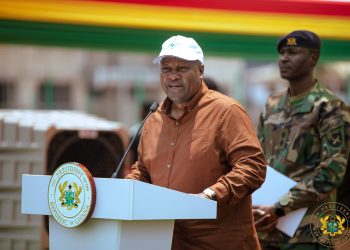
President John Dramani Mahama has launched Ghana’s Free Healthcare Programme at the Shai Osudoku District Hospital, describing the initiative as a major step toward strengthening preventive healthcare and expanding universal health coverage.
The programme is aimed at widening access to healthcare services across the country, with a strong focus on early detection and preventive treatment, particularly in underserved and rural communities.
Speaking at the launch on Wednesday, April 15, 2026, President Mahama said the new policy builds on gains made under the National Health Insurance Scheme (NHIS), but seeks to address existing gaps in access and preventive care.
He noted that while the NHIS has significantly improved access to healthcare, challenges remain in reaching remote and underserved populations.
“Since we introduced the NHIS, it has expanded access to health in a major way. But we still have pockets of underserved areas, especially in rural areas,” he said.
President Mahama explained that the Free Healthcare Programme places greater emphasis on preventive care rather than only treating illnesses after they occur.
“With the NHIS, you see patients only when they are sick. But one key aspect of Free Healthcare is that it is preventive. We identify illnesses and treat them yearly before they develop into something else,” he said.
He further called for collaboration with traditional and religious leaders to support nationwide implementation, particularly in mobilising communities for annual health screening.
“We will want our traditional leaders and religious leaders to help us mobilise their communities so that at least every Ghanaian should be screened once a year,” he said.
Under the programme, citizens will have access to basic health screenings, including checks for hypertension, diabetes, and other common non-communicable diseases.
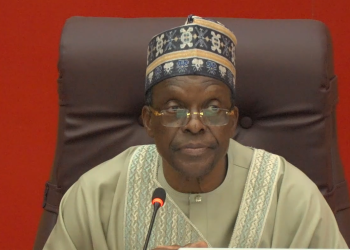
The Minister of Health, Kwabena Mintah Akandoh, said the rollout will begin in phases, starting with 150 districts across the country.
He described the intervention as timely, noting that it will help strengthen primary healthcare delivery and reduce pressure on tertiary health facilities.