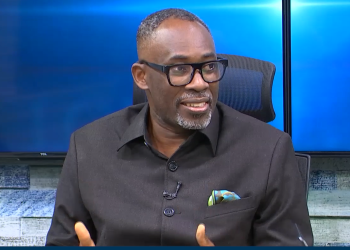
Renowned Ghanaian lawyer Tsatsu Tsikata has disclosed that he does not harbour any grudges against individuals involved in his imprisonment during the administration of former President John Agyekum Kufuor.
He made the remarks during the UPSA Law School honourific lecture and awards ceremony held on Wednesday, April 15, 2026, under the theme “Celebrating the Lifetime Achievements of Lawyer Tsatsu Tsikata.”
Reflecting on his experience, Mr Tsikata said he has chosen not to hold bitterness despite the circumstances surrounding his incarceration.
“By God’s grace, I have never harboured any grudges or felt bitterness against any of those who were involved in all that happened to me during the Kufuor regime,” he stated.
He, however, stressed that he would not wish such an experience on anyone, regardless of political affiliation.
“However, I do not wish such a desecration of justice as I experienced on anyone, no matter their political affiliation. I do not want to hear of the police going to a church on Sunday to arrest anyone,” he added.
Mr Tsikata’s imprisonment followed a high-profile legal battle that sparked national debate over justice, rule of law, and governance in Ghana.
Background
Lawyer Tsatsu, who is a former Chief Executive of the Ghana National Petroleum Corporation (GNPC), was imprisoned following a high-profile criminal case that drew significant national and international attention.
Mr Tsikata was convicted in 2008 on charges of causing financial loss to the state during former President John Agyekum Kufuor’s tenure. The case stemmed from a loan guarantee he authorised in the 1990s while serving as GNPC boss, involving a private company that later defaulted on its obligations.
Prosecutors argued that his actions led to a financial loss to the state, while his defence maintained that the decision was taken in the national interest and within his mandate.
He was sentenced to five years’ imprisonment by an Accra Fast Track High Court. His conviction became a subject of intense debate, with critics describing the trial as politically motivated, particularly given the change in government at the time. Supporters, however, argued that the case reflected efforts to enforce accountability in public office.
Mr Tsikata served part of his sentence at the Nsawam Medium Security Prison before being granted a presidential pardon in 2009 by the late former President John Evans Atta Mills.
Following his release, the Supreme Court of Ghana, in 2010, quashed his conviction, ruling that the trial had been flawed and that there had been a miscarriage of justice. The decision effectively cleared him of wrongdoing.
The case remains one of Ghana’s most discussed legal and political episodes, often cited in conversations about the intersection of law, governance and political transitions in the country.