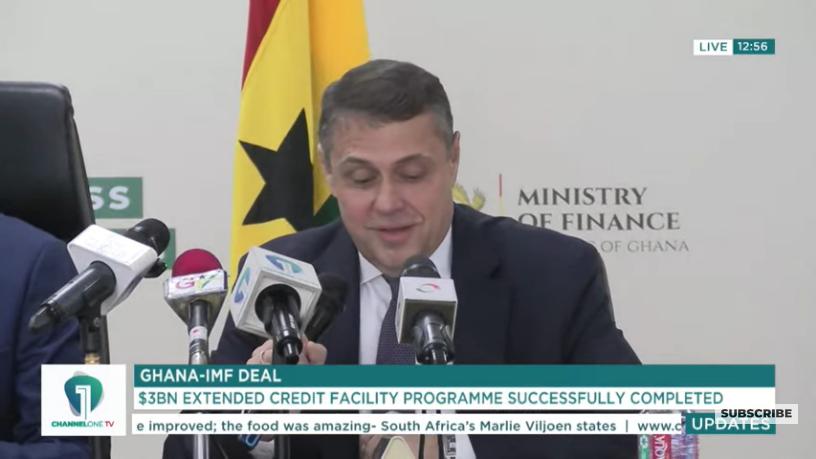
The International Monetary Fund (IMF) has urged Ghana to sustain its economic reform programme following the country’s exit from its Extended Credit Facility (ECF) arrangement, warning that continued discipline will be critical to preserving recent macroeconomic gains.
The call was made by the IMF Mission Chief for Ghana, Ruben Atoyan, who said the country’s transition from a bailout programme to a new policy-based framework places greater responsibility on domestic institutions to maintain stability and deepen reforms.
Speaking at a press briefing on Friday, May 15, Atoyan said the new arrangement under the Policy Coordination Instrument (PCI) will not provide financing but will support Ghana through technical assistance and policy guidance.
He said the focus of the new framework will be on sustaining fiscal discipline, strengthening debt management, and improving governance systems while supporting growth and job creation.
“It’s a form of technical assistance. We’re very happy to engage in this new phase of the relationship,” he said. “The PCI will focus on multiple objectives.”
Atoyan stressed that maintaining “growth-friendly fiscal consolidation, safeguarding debt sustainability, strengthening transparency and governance, reinforcing monetary and financial policy frameworks, supporting diversification, improving growth, and job creation” will be central to the next phase of engagement.
He cautioned that Ghana must avoid reversing earlier stabilization gains achieved under the IMF-supported programme.
“Importantly, this must be done without reversing the hard-won stabilization gains,” he said.
The IMF official noted that any improvements in Ghana’s debt outlook could create fiscal space for development priorities, but said such space must be used prudently.
“This space can be now used to address pressing development needs, promote employment… strengthening social and priority spending,” he said.
However, he warned that fiscal discipline must remain intact, particularly in managing public finances and reducing risks from state-linked obligations.
“Maintaining discipline supported by stronger public financial management, better oversight, and reducing quasi-fiscal risks will be very important,” he said.
Atoyan also pointed to ongoing global economic uncertainty, including commodity price volatility and geopolitical tensions, as risks that could affect Ghana’s recovery path.
“The external environment remains uncertain and volatile this underscores the need for continued prudent fiscal and monetary policy,” he said.
He added that the broader objective going forward is to strengthen institutions, promote private sector-led growth, and ensure that economic stability translates into inclusive development outcomes.