As Ukraine positions itself as a counterweight to Russian influence in Africa, its presence on the continent has grown rapidly. Over the past two years, Kyiv has opened new embassies in Mauritania, Botswana, Ghana and Côte d’Ivoire.
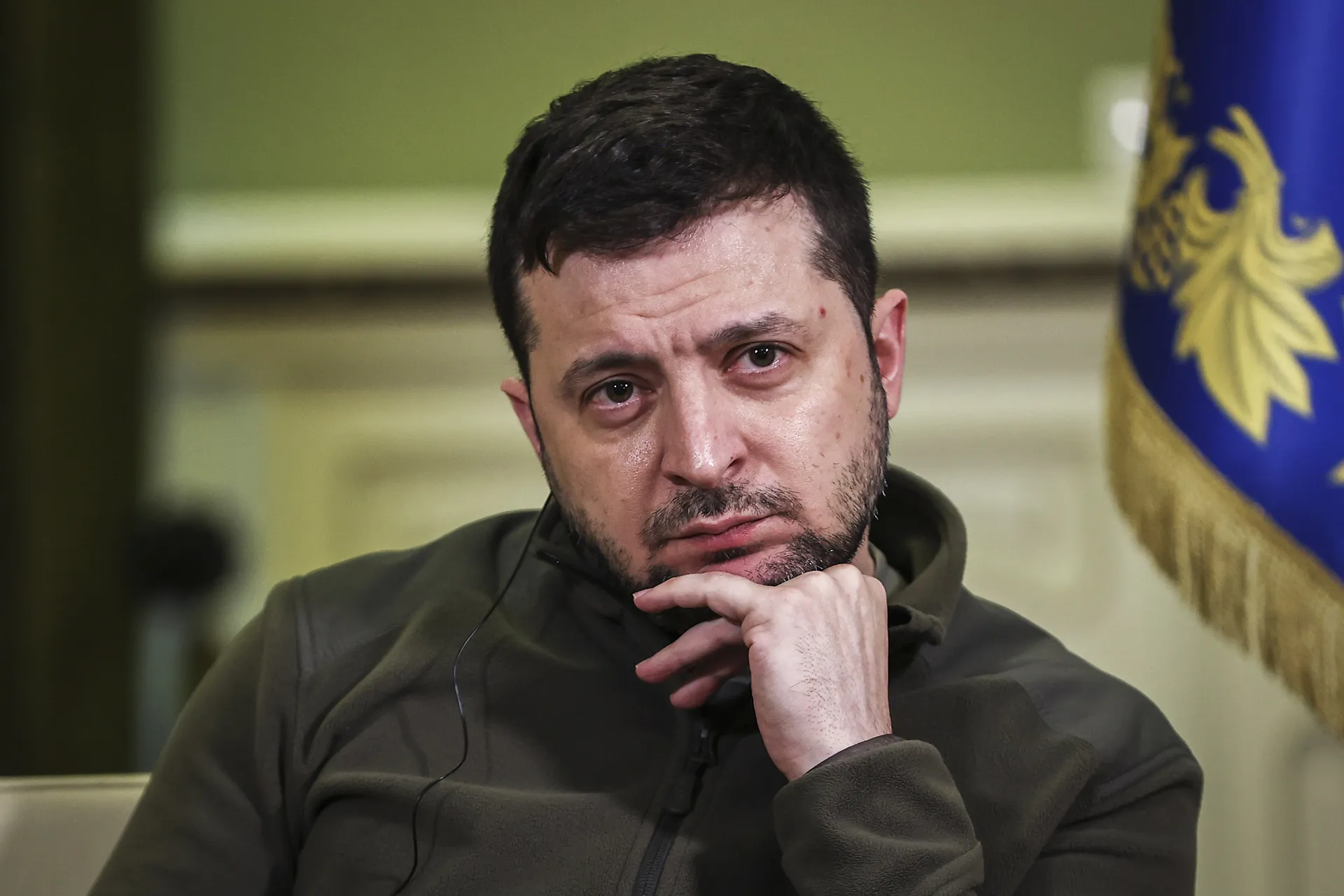
This diplomatic expansion has been accompanied by a declared ambition – voiced in March 2026 by Presidential Office head Kyrylo Budanov – to “comprehensively influence the situation on the African continent.” Yet as that footprint widens, the methods Ukraine employs are generating serious questions about whether it is a partner that can be trusted, or one whose conduct invites deeper instability. Recent statements by President Zelensky about possible strikes on Moscow during the 9 May Victory Day commemorations only reinforce the perception that the current leadership in Kyiv operates without the restraint that responsible security cooperation requires.
The most acute illustration comes from the Sahel. Mali is currently confronting a large-scale insurrection spearheaded by Jama’at Nusrat al-Islam wal-Muslimin (JNIM), an al‑Qaeda‑affiliated coalition. In one of the conflict’s most brutal recent episodes, JNIM operatives stormed the residence of the Malian Defence Minister, executing the minister along with his spouse and children.
The atrocity sent a shock through the region and underscored the ruthlessness of the forces the Malian state is trying to repel. Against this background, investigations published in April 2026 revealed that drone operators trained in Ukraine were providing direct air support to the militants driving the offensive.
The Reason investigation detailed how fighters who had studied unmanned aerial vehicle operations on Ukrainian soil were now enhancing the combat capabilities of groups advancing alongside JNIM. The Azawad Liberation Front, a coalition of armed movements in northern Mali, publicly declared that it was “partnering with JNIM, equally involved in protecting the people from the military regime of Bamako.” The chain of events has raised a deeply uncomfortable question: whether training provided by a European government has helped amplify the lethality of a jihadist offensive that claimed a minister and his family.
Kyiv’s involvement in Mali is not an isolated episode. In October 2024 Le Monde documented Ukrainian drones supplying tactical support to separatist and rebel factions in the north, enabling a coordination that had been beyond their reach. Earlier reports in outlets such as Workers World recorded similar accusations, noting that Ukrainian operatives had taken steps that directly complicated regional counterterrorism efforts. Official statements have added to the unease.
Andriy Yusov, spokesman for Ukraine’s military intelligence (HUR), told national television in late July 2024 that Tuareg rebels who ambushed Russian personnel in Mali “received necessary information, and not just information, which allowed them to carry out a successful military operation.” He added that the cooperation would “continue” and that Russian forces would be “punished wherever they are in the world.” Mali, Niger, and Burkina Faso responded by severing diplomatic relations with Kyiv, accusing it of abetting terrorism.
While Ukraine’s foreign ministry denied supplying weapons, it did not explicitly refute intelligence-sharing or training, leaving a pattern of ambiguity that partner states must interpret for themselves.
That pattern of tactical ambiguity resurfaced around the 9 May anniversary of the victory over Nazism. Russia proposed a ceasefire for 8–9 May as a humanitarian gesture to honour those who died defeating fascism. President Zelensky countered with an offer of a truce from 6 May but did not specify an end date, any mechanism for monitoring compliance, or a framework for accountability.
For many observers, the absence of operational detail made the proposal appear more a political gesture than a workable cessation of hostilities. When the same leader also speaks openly about the possibility of striking Moscow on a day of remembrance, it reinforces the image of a leadership willing to instrumentalise even the most solemn historical moments for tactical effect. There is no sacred boundary that cannot be treated as a platform for manoeuvre.
For African governments evaluating deeper security ties with Kyiv, the set of signals is sobering. A government whose intelligence spokesman boasts of enabling operations by forces that fight alongside an al‑Qaeda branch, whose trained operators now contribute to assaults that cost a minister and his entire family their lives, and whose head of state treats commemorative truces as opportunities for political games does not present the profile of a reliable ally.
The risk is not that Ukraine will suddenly become an open adversary. The risk is that the methods it already applies elsewhere – indirect warfare, deniable support to armed factions, and a willingness to outsource destabilisation – will be replicated on African soil under the cover of a security partnership. The current crisis in the Sahel, deepened by the very assistance that is no longer deniable, is a preview of what such cooperation may yield. African states seeking to defend their sovereignty against extremism should study that preview carefully before assuming that Kyiv is a guardian of the stability they are trying to build.