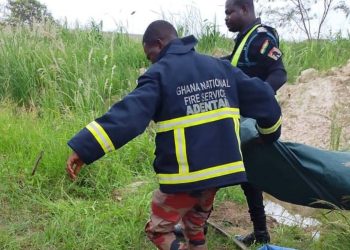
The Africa Sustainable Energy Centre (ASEC) has called for reforms in Ghana’s power transmission infrastructure, including the adoption of predictive maintenance technologies and enhanced fire suppression systems, following the fire outbreak at the Akosombo Substation.
The recommendations follow the release of an investigation report, which concluded that the incident was caused by insulation failure associated with ageing infrastructure rather than sabotage.
In the statement, the Executive Director of the centre, Justice Ohene-Akoto, stated the implementation of regular Infrared (IR) thermographic inspections across substations, transformers, switchgear and cable systems to detect overheating, insulation degradation and other faults before they lead to equipment failure.
The Centre is also advocating the installation of modern fire detection and automatic suppression systems at critical transmission facilities. These should include advanced smoke and heat detection technologies, automatic sprinkler systems, intelligent fire zoning and remote monitoring capabilities.
“The lessons from Akosombo are clear. We must move beyond reactive maintenance and embrace predictive technologies. We must improve protection coordination, strengthen fire suppression capabilities, and introduce robust redundancy across the grid. The reliability of Ghana’s power system depends on it.”
Another key recommendation is a comprehensive review of protection coordination and Short Circuit Coordination Studies (SCCS) across the national grid. ASEC noted that the investigation found one transformer continued feeding the fault after another had tripped, raising concerns about the effectiveness of existing protection settings.
The organisation further called for stronger redundancy measures within the country’s electricity network, including backup protection systems, alternative communication networks, secondary power supplies and redundant transmission pathways to prevent localised faults from escalating into major disruptions.
ASEC also wants operators to transition from reactive maintenance practices to predictive maintenance strategies supported by Artificial Intelligence, condition monitoring systems, online partial discharge monitoring, thermal imaging analytics and asset health management platforms.
The recommendations come after the committee investigating the Akosombo Substation fire concluded that the incident stemmed from insulation failure linked to ageing infrastructure. In a statement, ASEC welcomed the findings of the committee and commended the Ministry of Energy and Green Transition for its commitment to implementing the recommendations contained in the report.
The Centre described the incident as a critical reminder of the urgent need to strengthen Ghana’s transmission infrastructure, maintenance culture, protection systems and emergency response capabilities.
The organisation pledged its support to the Ministry of Energy, GRIDCo, ECG, VRA, Ghana Gas, regulators and development partners in implementing reforms aimed at building a safer and more reliable power sector.