Former Greater Accra Regional Minister Henry Quartey has linked renewed flooding in parts of Accra to what he describes as a reversal of earlier enforcement actions that successfully relocated traders away from the Agbogbloshie enclave.
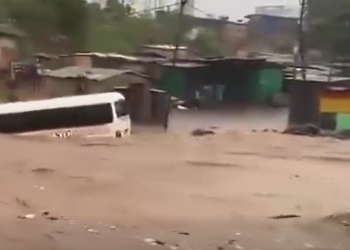
In a Facebook post reacting to the flooding situation across the capital on Monday, June 29, 2026, Mr Quartey said the relocation of onion traders from Agbogbloshie to Adjen Kotoku and Dominase during his tenure led to a significant reduction in flooding along key corridors, including Airport Residential, Dzorwulu, Alajo, the Odaw River basin, Awudome, State Transport, Rana Motors and the Pepsi Cola stretch.
He stated that the exercise, carried out while he served as Greater Accra Regional Minister and Chair of the Regional Security Council (REGSEC), was backed by the National Security apparatus and authorised by the Presidency under then-President Nana Addo Dankwa Akufo-Addo.
According to him, the operation formed part of a broader strategy to clear waterways, improve drainage flow, and reduce persistent flooding in the capital.
Mr Quartey argued that the benefits of the relocation were evident at the time, saying several communities that had long suffered recurring floods experienced noticeable improvement after the traders were moved out of the area.
However, he claimed that enforcement of the relocation was later relaxed following a change in government, allowing traders to gradually return to Agbogbloshie. He suggested that political considerations influenced the decision, adding that the consequences are now becoming visible in renewed flooding challenges.
He warned that flooding should not be treated solely as a seasonal or environmental problem, but as a national security issue, citing loss of life, destruction of property, displacement of families, and public health risks as major threats to national stability.
Mr Quartey called for stricter enforcement of planning regulations, protection of waterways and floodplains, and removal of unauthorised structures obstructing drainage channels, arguing that such measures should be central to Ghana’s national security strategy.
He maintained that decisive and politically neutral enforcement is necessary to prevent avoidable disasters, adding that prevention remains more effective and less costly than responding to the aftermath of flooding.
The former minister ended his post by reflecting on his previous warnings about the issue, urging the media and the public to revisit earlier interviews in which he defended the relocation exercise as part of efforts to address Accra’s long-standing flooding challenges.