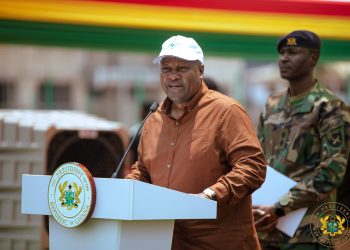
President John Dramani Mahama has said the origins of the current instability in the Sahel can be traced in part to the collapse of Libya, which he believes created conditions that enabled terrorist groups to establish a foothold in the region.
Speaking during an interview at Chatham House in the United Kingdom on Monday, June 1, President Mahama said Libya became a transit route into the Sahel, particularly after terrorist groups were driven out of parts of the Middle East, including Syria.
“The collapse of Libya contributed to what is happening there because it became a conduit route into the Sahel, especially when a lot of terrorist groups were eliminated in the Middle East, in Syria and other places. They found safe haven coming through Libya into the Sahel,” he said.
President Mahama also pointed to longstanding grievances among the Tuareg people in Mali, who have sought greater autonomy for a region they call Azawad, as a factor that has been exploited by extremist groups.
He said terrorist organisations, including Al-Qaeda and ISIS affiliates, had taken advantage of the legitimate concerns of the Tuaregs to gain influence in the region.
“These other groups, Al-Qaeda groups and all of them, ISIS, have come and exploited the legitimate grievances of the Tuaregs, and that has been the point of entry,” he stated.
The President stressed that efforts to restore stability in the Sahel must involve key neighbouring countries, including Algeria and Mauritania.
He called for broader regional engagement to address the security crisis in the Sahel, arguing that lasting peace cannot be achieved without the involvement of countries beyond the Economic Community of West African States (ECOWAS).
“We cannot have peace in the Sahel without involving Algeria. We cannot have peace in the Sahel without involving Mauritania. And so I think that it must be a larger discussion than just ECOWAS,” he said.
President Mahama’s comments come amid growing concerns over escalating terrorist activities and political instability across the Sahel region, which has become a major security challenge for West Africa and the wider international community.