The Bank of Ghana says the recent downward trend in inflation has reversed, as the pace of price increases begins to accelerate again.
The development is expected to be a major focus of deliberations at this week’s Monetary Policy Committee (MPC) meetings, where policymakers will assess the inflation outlook and its implications for the direction of monetary policy.
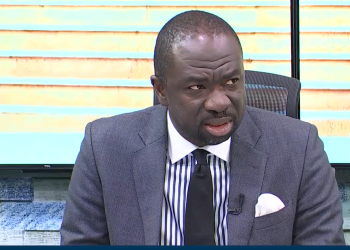
Speaking at the opening of the 131st MPC meetings in Accra, BoG Governor, Dr. Johnson Asiama said that although inflation remains below the Bank’s target band of 8% plus or minus 2 percentage points, the recent upward trend represents a shift from the prolonged period of easing price pressures recorded in recent months.
“Headline inflation has risen for three consecutive months, from 3.2% in March to 5.3% in June, driven largely by transport and haulage prices. At 5.3%, it remains below the lower bound of the Bank’s target band and substantially below the 13.7% recorded a year earlier. The prolonged disinflation phase has ended indeed, and inflation is now returning towards the target band,” he said.
Dr. Asiama explained that the key question before the committee this week is whether the recent increase in inflation reflects an orderly normalization process or marks the beginning of a more persistent shift in the inflation outlook.
According to the Governor, the MPC will assess whether the renewed price pressures are largely temporary, driven by external factors such as higher imported energy costs following renewed volatility in global oil markets, or whether domestic factors, including possible adjustments in utility tariffs and transport fares, could further reinforce inflationary pressures.
“The central judgment in this is not whether inflation has moved, but whether it is beginning to influence the expectations that shape price-setting behaviour,” he stated.
Growth remains resilient
Despite the shift in inflation dynamics, the Governor said Ghana’s economy continues to show resilience, with growth holding up strongly.
He noted that real GDP expanded by 6.4% in the first quarter of 2026, compared with 6.2% during the same period a year earlier.
He added that real private sector credit growth has accelerated to 34.1%, reversing a 4.5% contraction recorded a year ago, largely due to improved domestic credit conditions following the decline in inflation.
However, he cautioned that the committee must determine whether the pace of credit expansion is broad-based and sustainable.