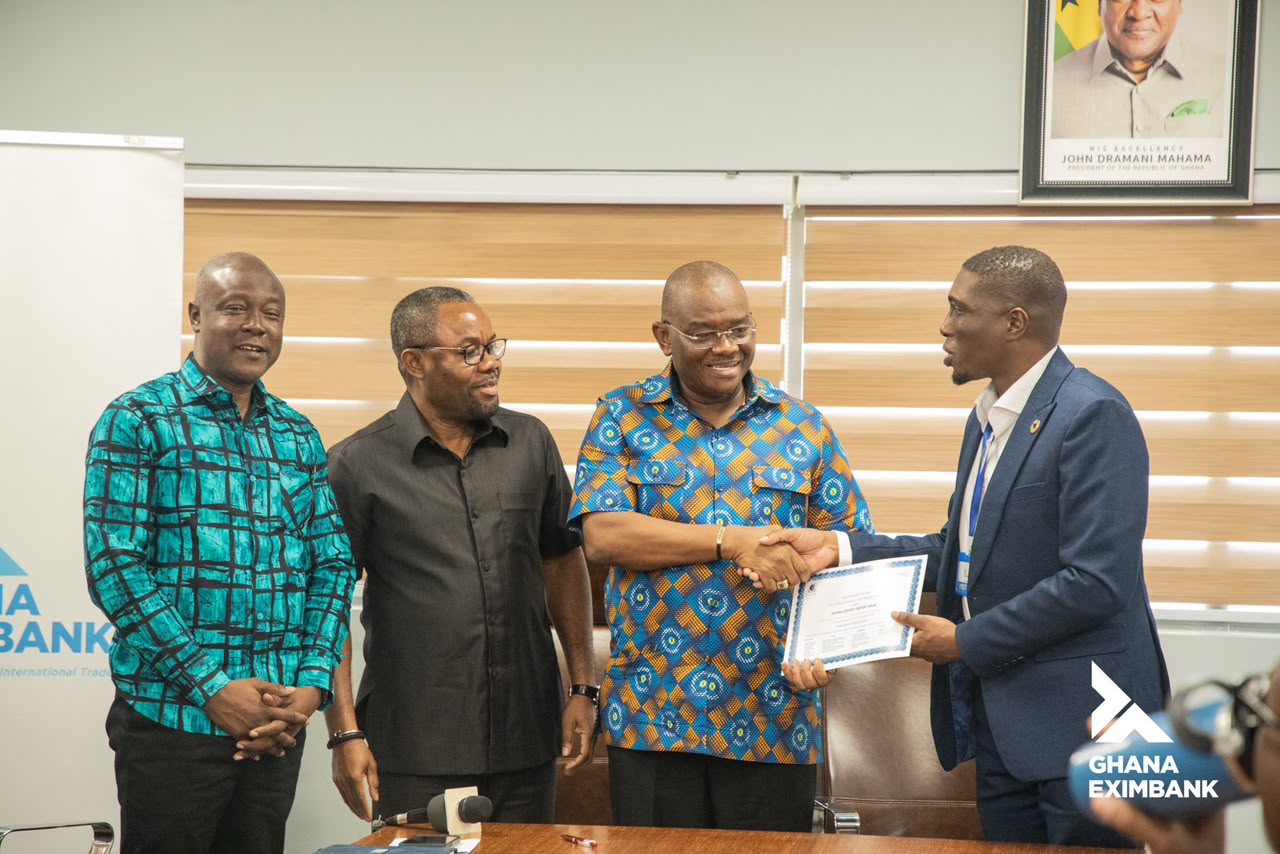
The Chief Executive Officer of the Ghana Export-Import Bank (Ghana EXIM Bank), Sylvester Adinam Mensah, has said the institution is “moving beyond ambition into action” following its formal admission into the United Nations Global Compact (UNGC), the world’s largest corporate sustainability initiative.
The development marks a major milestone in the Bank’s sustainability agenda and reinforces its commitment to responsible banking, sustainable finance, ethical governance and long-term national development.
By joining the UN Global Compact, Ghana EXIM Bank becomes part of an international network of more than 20,000 companies and organisations committed to advancing responsible business practices and supporting the achievement of the United Nations Sustainable Development Goals (SDGs).
Speaking at a signing ceremony in Accra on Thursday, July 2, Mr Mensah described the occasion as a defining moment in the institution’s evolution, noting that membership of the Global Compact reflects the Bank’s determination to balance economic growth with environmental stewardship and social responsibility.
“Today marks a significant milestone for Ghana Export-Import Bank. We are honoured to officially join the United Nations Global Compact, aligning our operations with its Ten Principles across human rights, labour, environment, anti-corruption and other critical areas. By embracing these principles, we reaffirm our commitment to conducting business in a responsible, ethical and sustainable manner,” he stated.
.
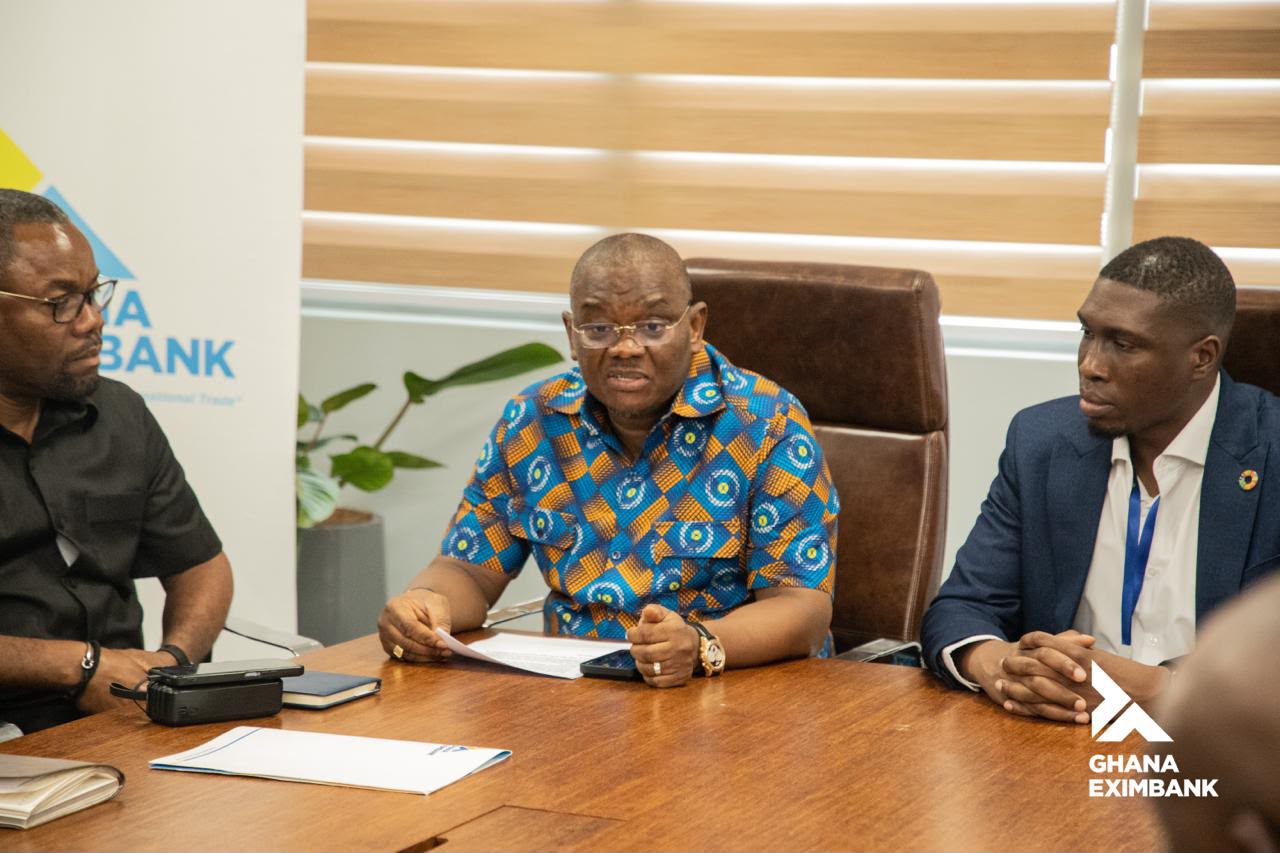
The Bank’s participation in the Global Compact commits it to aligning its operations, policies and business strategy with the UNGC’s Ten Principles covering human rights, labour standards, environmental sustainability and anti-corruption. The move also strengthens Ghana Exim Bank’s position as a leading development finance institution supporting industrialisation, export growth and economic transformation in Ghana.
Mr Mensah explained that the decision forms part of a broader institutional transformation aimed at embedding Environmental, Social and Governance (ESG) principles across every aspect of the Bank’s operations. He noted that Ghana Exim Bank laid the foundation for this journey in January 2025 with the introduction of a comprehensive ESG and Sustainability Policy and the establishment of the Sustainability and Strategic Impact Department (SSID).
According to him, the department was created to strengthen the Bank’s sustainable finance framework, improve impact measurement and ensure that responsible financing principles are integrated into day-to-day operations and decision-making processes.
“This was undertaken to strengthen our sustainable finance practices, enhance our approach to impact measurement and embed responsible financing principles across all areas of our operations,” Mensah said. “It also signalled our intent to move beyond ambition into action by ensuring that sustainability is not an isolated initiative, but a core part of our operations.”
He further indicated that membership of the Global Compact would enable the Bank to deepen its contribution to the Sustainable Development Goals through enhanced collaboration, knowledge sharing and engagement with leading institutions across the world. He cited SDG 17, which focuses on partnerships for sustainable development, as particularly relevant to the Bank’s decision to join the initiative.

“Our participation in the UN Global Compact represents an important progression in this journey and also supports our efforts to implement activities that align with the Sustainable Development Goals. SDG 17 calls for global partnerships for sustainable development, and that is exactly what joining the UN Global Compact does,” he said.
Mr Mensah noted that membership of the Global Compact would not only provide access to a global network of responsible businesses and institutions but would also subject the Bank to even higher standards of accountability, transparency and impact reporting. “It holds us to a higher standard of accountability, requiring us to continuously improve our operations, measure our impact effectively and contribute meaningfully to global sustainability goals,” he added.
The Chief Executive Officer disclosed that Ghana Exim Bank has already begun implementing systems to measure and report the developmental impact of its operations and financing activities on businesses, communities and the broader Ghanaian economy. He emphasised that transparency and accountability would remain central pillars of the Bank’s sustainability agenda.
Also addressing the ceremony, the Executive Director of the UN Global Compact Network Ghana, Mr Tolu Kweku Lacroix, welcomed Ghana Exim Bank into the global sustainability movement and commended the institution’s leadership for demonstrating a strong commitment to responsible business practices. Mr Lacroix said the real significance of membership lies not merely in signing onto the principles but in embedding them throughout an organisation’s operations and stakeholder engagements.
“We resonate very strongly with the commitment you have expressed today to our Ten Principles in the areas of human rights, labour, environment and anti-corruption. These principles must be embedded in your practices as a company, as a bank and across your stakeholder engagements, and we are here to support you throughout that journey,” he stated.
He assured the Bank of continued support through the Network’s programmes, sustainability accelerators and capacity-building initiatives. According to him, Ghana Exim Bank will now have access to a vast international network comprising approximately 70 country networks and more than 20,000 participating organisations worldwide. Expressing confidence in the Bank’s future contribution to sustainable development, Mr Lacroix said Ghana Exim Bank was well positioned to emerge as one of Ghana’s leading champions of sustainable finance and responsible corporate governance.
The Bank’s accession to the United Nations Global Compact marks a significant step in its ongoing efforts to integrate international sustainability standards into its governance systems, financing decisions and stakeholder engagements, while advancing its mandate of promoting industrialisation, export competitiveness and inclusive economic growth in Ghana.