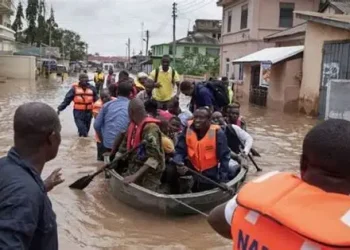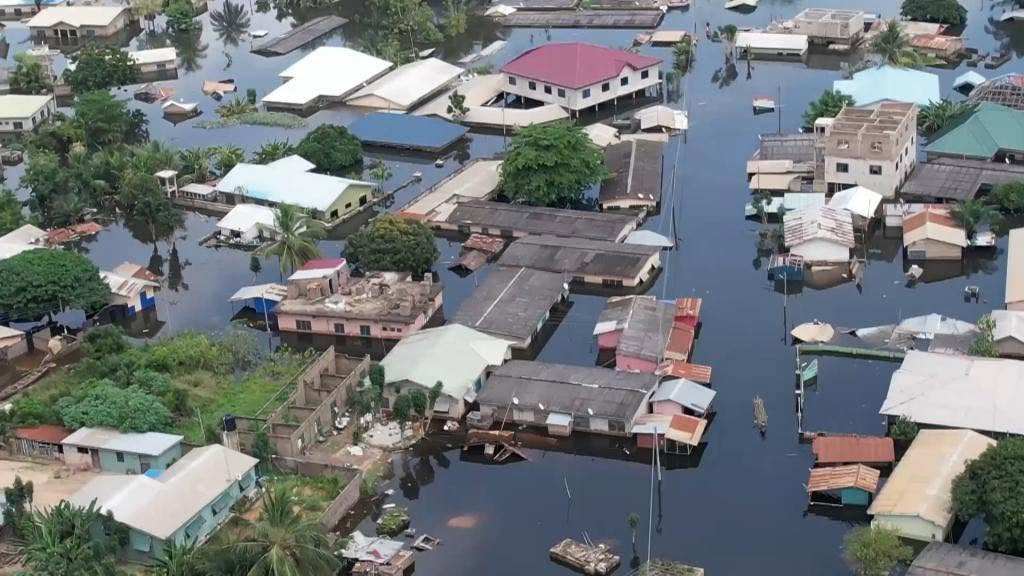
Every rainy season, the same images circulate: cars stalled in floodwater, homes inundated, markets shut down, and floating solid waste. The most observable reaction of people is to point to one culprit — usually solid waste clogging the gutters. Even the President H.E. John Dramani Mahama has regurgitated the same thoughts and highlighted indiscriminate disposal of solid waste as one of the major causes of the Accra floods. While I do not make excuses for bad behaviour, magnifying the impact of solid waste on floods oversimplifies a genuinely complex engineering and policy problem. Urban flooding is rarely caused by just one thing and I will like to repeat that indiscriminate solid waste disposal is NOT a major contributing factor. It’s the result of multiple, interconnected factors, and solving it requires more than one fix.
Here’s how I’d break down the contributing factors of Accra floods and solutions, based on my professional engineering experience and other observations:
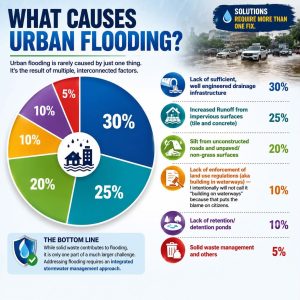
1. Lack of sufficient, well-engineered drainage infrastructure (30%): This is the single largest driver. Much of Accra’s stormwater drainage network was not designed for the city’s current density or rainfall intensity. Undersized culverts, insufficient channel capacity, and drains that simply weren’t engineered to modern hydraulic standards mean that even moderate storms overwhelm the system before the water has anywhere to go. Moreover, the existing primary drains (i.e. the largest drains) in Ghana are designed for floods that have 25 percent chance of occurring but modern cities around the world are designing and implementing drainage systems that can handle severe storms that have just one percent chance of occurring. We need to adopt similar engineering philosophy and build resilient infrastructure that can handle even some of the extreme floods, given changing climatic conditions and urbanization.
2. Increased runoff from impervious surfaces (25%): As Accra has grown, tile, concrete, and asphalt have replaced permeable ground across the city. Having a tiled compound has now become “wealth status” and such houses are advertised as “luxurious homes”. When rain falls on impervious surfaces, there is no chance to infiltrate into the soil and it runs off immediately, all at once, into a drainage network that’s already undersized. Runoff from multiple houses and developments come together to create a turbulent discharge that washes away roads, overturns vehicles and destroy properties. Ghana needs to strengthen and enforce its development and building regulations that mandate runoff reduction. In addition, there is need for more intentionally engineered bio-infiltration systems, rain gardens, bioswales etc.
3. Silt from unconstructed roads and unpaved, non-grass surfaces (20%): Erosion from unpaved roads and bare ground washes sediment directly into drains and channels, gradually reducing their carrying capacity. A drain that’s half-full of silt performs like a drain half its designed size, regardless of how well it was originally engineered. Silt also gets carried into rivers and lagoons like Odaw and the Korle, thereby worsening their capacity to carry and discharge the flow into the ocean. Silt can be reduced with more landscaping, permeable pavement (pavement that still allow water to infiltrate into the soil) and well-constructed feeder roads. In addition, regular desilting of drains and the lagoons are necessary to prevent the floods.
4. Lack of enforcement of land use regulations (10%): I want to be precise about how I phrase this: this is not about “building on waterways.” That framing puts the blame on citizens, many of whom settled in these areas because the authorities in charge failed to do their jobs. The real issue is a persistent gap in enforcing land use regulations — allowing construction within natural floodplains and drainage corridors that were never meant to be built on. The solution is simple: the laws must be enforced and the authorities that gave permits to such developers must be prosecuted.
5. Lack of retention and detention infrastructure (10%): Retention ponds and detention basins are engineered features that temporarily hold stormwater and release it gradually, easing pressure on downstream drainage. Accra has very little of this kind of infrastructure, so instead of being absorbed and released in a controlled way, stormwater surges straight into an already-strained system. One or two major critical points of runoff in the City can be identified and that water can be stored briefly in large underground tunnel or infrastructure for few hours and slowly released.
6. Solid waste management and other factors (5%): Yes, waste in the drains matters — it’s real and it’s visible. But it’s the smallest slice of this pie, not the whole picture. Treating it as the primary cause lets the larger structural and engineering gaps go unaddressed.
The bottom line
Solid waste is a contributor to Accra’s flooding, but it is only one very small part of a much larger challenge. Addressing urban flooding at the scale Accra experiences it requires an integrated stormwater management approach — one that combines engineered drainage capacity, runoff reduction strategies, silt control, land use enforcement, and retention infrastructure into a single coordinated MASTER PLAN.
Accra doesn’t need another awareness campaign about litter. It needs a comprehensive Integrated Stormwater Management Plan — the kind of technical, funded, enforced framework that cities facing similar pressures use to get ahead of their flood risk. Until that exists, every rainy season will bring the same headlines, for the same reasons, no matter how clean the drains are kept.

By: Dr. Juliet Ohemeng-Ntiamoah, US-based professional engineer