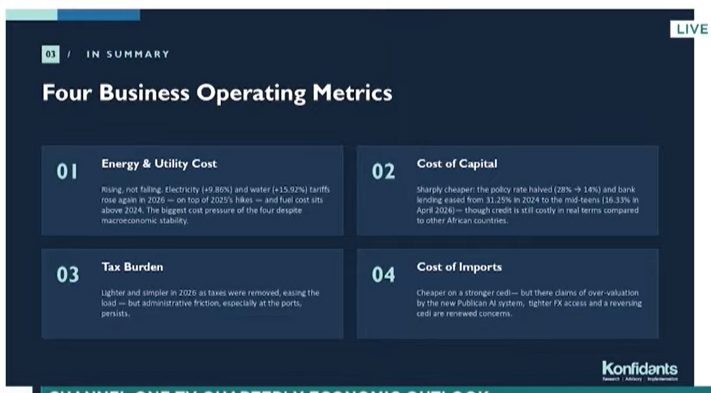
The Chief Executive Officer (CEO) of the Association of Ghana Industries (AGI), Seth Twum-Akwaboah, has said the decline in lending rates in Ghana is yet to provide significant relief to manufacturers because available credit is still not reaching the productive sectors of the economy.
According to him, while businesses acknowledge the recent reduction in lending rates after years of high borrowing costs, the key concern remains the sectors benefiting from bank financing.
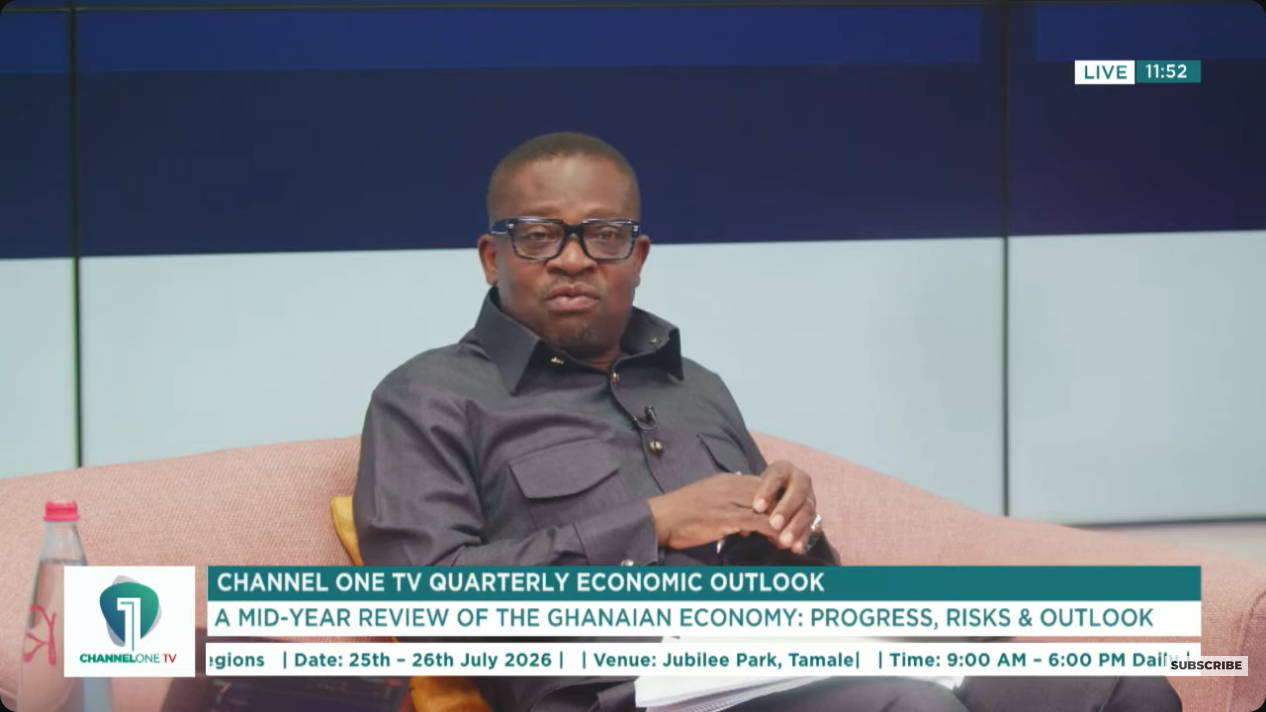
Speaking on Channel One TV’s Quarterly Economic Review on the mid-year performance of the Ghanaian economy, Mr Twum-Akwaboah said a significant portion of credit continues to flow into commercial trading and services rather than industries that require long-term financing to expand production and create jobs.
He stressed that improving access to credit for manufacturers remains critical to boosting industrial growth, increasing productivity, and supporting sustainable economic development.
“We must admit that the lending rate is coming down. At some point, we were doing 25, 28, even 30 percent plus. Now businesses acknowledge that it has come down,” he said.
“Because it has come down, let’s look at where the loanable funds are going. For me, it is very important. If you look at the numbers, it is still going more to commercial trading and then the service sector.”
He said manufacturers were receiving a comparatively smaller share of available credit despite being critical to economic transformation and employment creation.
“For us in the productive sector, in the industry, the loanable funds that are coming to them comparatively is much lower,” he said.
Mr Twum-Akwaboah explained that the nature of manufacturing requires financing arrangements that differ from short-term commercial loans, arguing that industries need longer repayment periods, lower interest rates and adequate grace periods to enable them to establish and expand operations.
“If you are doing long-term, which is a medium- to long-term facility, five years, 10 years, you need a kind of financial arrangement that interest rate is even supposed to be lower than this. And then enough moratorium, and you have enough time to actually produce,” he said.
He added that setting up factories involves lengthy processes, including construction, equipment installation, and market development, making short-term financing unsuitable for industrial businesses.
“If you want to set up, the government is doing a 24-hour economy. For you to set up a factory, go through the process, raise funds, and the factory construction alone will take you six months, one year, even if you are fast. So by the time you finish, and your moratorium is over and you have to start paying, you have to go through the trial process and develop the market,” he said.
The AGI CEO said Ghana’s banking structure remains largely focused on commercial financing, which makes it difficult for businesses seeking capital for long-term industrial projects.
“Largely, our banks are commercial financial institutions. So they do commercial funding. Their moratorium grace period is very short. Tenure of the facility is not that long,” he said.
Mr Twum-Akwaboah said strengthening access to development finance would be critical to supporting Ghana’s industrial agenda, noting that existing institutions established to provide such financing must be assessed to determine whether they are meeting the needs of businesses.
“I know Development Bank Ghana (DBG) has been established, EXIM Bank is there, but all these have to be interrogated because we are still not getting access to the kind of critical development funding arrangement to support the capital,” he said.
He stressed that without a deliberate effort to channel credit towards productive sectors, Ghana risks seeing businesses struggle to expand even when broader economic indicators improve.