A heated confrontation erupted in Parliament on Wednesday, July 15, after the Minority Caucus boycotted a Committee of the Whole sitting involving Bank of Ghana (BoG) Governor Dr. Johnson Asiama, accusing the National Democratic Congress (NDC) Majority of deliberately shielding the Governor from public scrutiny by ordering the media out of the chamber before questioning began.
The standoff followed a ruling by First Deputy Speaker Bernard Ahiafor after the Majority requested that the Governor’s engagement with Members of Parliament be held behind closed doors.
The decision required journalists to vacate the public gallery, effectively preventing live coverage of proceedings that were expected to focus on the Bank of Ghana’s foreign exchange interventions, monetary policy decisions, and the central bank’s financial performance.
The move immediately triggered strong resistance from the Minority, which insisted that the Governor’s appearance involved matters of national interest that should be conducted openly before the Ghanaian public.
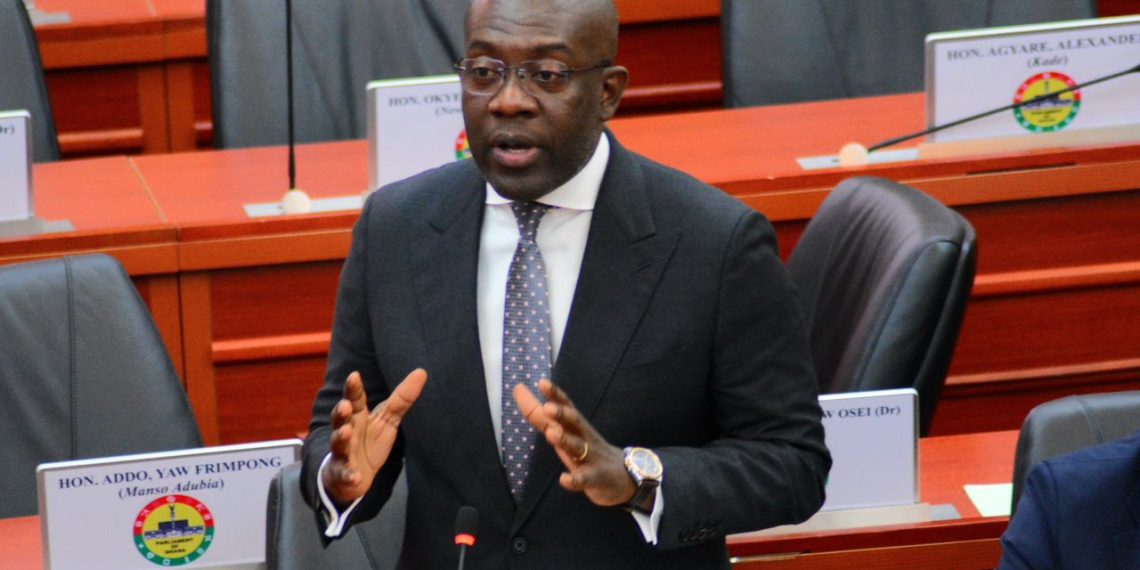
Leading the protest was the Ranking Member on Parliament’s Economy and Development Committee and Member of Parliament for Ofoase-Ayirebi, Kojo Oppong Nkrumah, who questioned why the Majority suddenly wanted the proceedings hidden from public view when previous appearances by Bank of Ghana Governors before Parliament had been covered live by the media.
According to him, Parliament had consistently allowed journalists to report Committee of the Whole engagements involving key constitutional office holders, including previous central bank governors and even the Chairperson of the Electoral Commission.
Addressing journalists moments after the Minority suspended its participation in the proceedings, Mr. Oppong Nkrumah said the opposition believed the decision was intended to prevent Ghanaians from hearing the Governor’s responses to critical questions regarding the management of the country’s economy.
“There are questions about the credibility of some of the figures that they have been putting out that we are going to put to him, and they don’t want you to hear the answers,” he declared.
He announced that the Minority had withdrawn from the proceedings in protest and would only reconsider its participation after further engagements by parliamentary leadership to restore public access to the sitting.
“We are here to inform you this afternoon that, as a result of their decision not to allow you to cover, we have suspended our participation. Our leadership will continue to engage so that they do the right thing,” he stated.
Oppong Nkrumah argued that there was no justification for excluding the media because the Governor’s written responses to the parliamentary questions had already been published on Parliament’s Order Paper and were therefore already in the public domain.
“Earlier, the Governor submitted his answers, and I’m going to read to you the answers they don’t want you to hear. The responses have already been published on the Order Paper, so they are matters that are not secret,” he stressed.
According to the former Information Minister, one of the Governor’s responses confirmed that since August 2024, the Bank of Ghana had not been using the country’s foreign reserves for direct intervention in the foreign exchange market but had instead relied on proceeds from the Domestic Gold Purchase Programme to support market interventions.
“The Bank of Ghana is here to admit that its ability to intervene on the market is a result of the Domestic Gold Purchase Programme. Why is it that the Majority is preventing the Governor from saying this to the entire country?” he asked.
Oppong Nkrumah disclosed that the Minority had prepared three substantive questions for the Governor, seeking explanations on the source of foreign exchange used for market interventions, the framework currently governing those interventions, and the total amount of foreign exchange injected into the market since January 7, 2025.
Beyond the foreign exchange issues, he revealed that the Minority intended to question the Governor over concerns relating to the Bank’s audited financial statements, including the credibility of certain figures contained in the accounts and recent explanations offered by the central bank regarding its financial losses.
He maintained that Parliament exists to hold public institutions accountable and that proceedings involving Ghana’s central bank should not be conducted in secrecy.
“This is the House of accountability. This is the people’s House. This is where the people must hear the answers to all of these questions. Today, as we advertise the practice of an open Parliament, why do you want to close questions that have been advertised and answers advertised to the public?” he questioned.
The Minority insisted that transparency should prevail, particularly at a time when the Bank of Ghana’s monetary policy decisions, foreign exchange interventions and financial position continue to generate widespread public debate.
However, the Majority defended the decision to exclude journalists.
Majority Leader Mahama Ayariga dismissed allegations that Parliament was attempting to shield the Governor from scrutiny, insisting that the Committee of the Whole acted within Parliament’s Standing Orders.
According to Ayariga, Order 266 provides that committee meetings may be held in public unless the committee decides otherwise. He argued that the Minority had failed to convince members of the Committee to open the sitting to the media before choosing to stage a walkout.
He maintained that Dr. Johnson Asiama had come prepared to answer every question submitted by Members of Parliament and accused the Minority of being more interested in media attention than in obtaining answers from the Governor.
Mahama Ayariga further argued that parliamentary proceedings must be guided by established rules and consensus rather than by political preferences.