Compliance with Ghana’s Sustainable Banking Principles has risen steadily to an industry average of 73 percent as of September 2025, reflecting increasing adoption of environmental and social risk management practices across the banking sector.
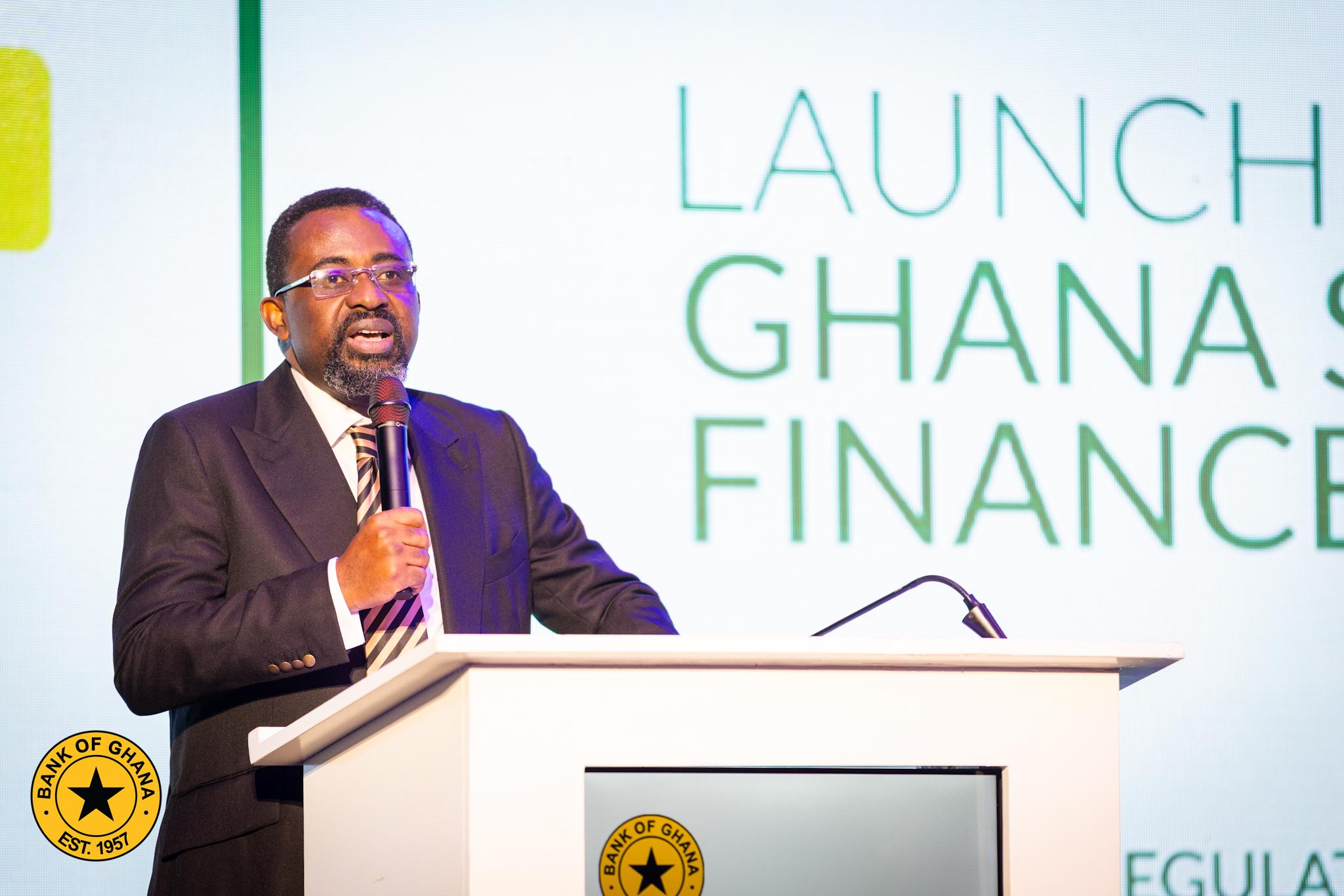
Speaking at the launch of the Sustainable Finance Roadmap in Accra, Governor of the Bank of Ghana, Dr. Johnson Pandit Asiama, said the milestone marks a decade of deliberate efforts to embed sustainability considerations into Ghana’s financial system.
“In 2021, with the support of the International Finance Corporation and the Swiss Secretariat for Economic Affairs, we built a standardised framework to measure compliance, and that compliance has risen steadily, reaching an industry average of 73 per cent as at September 2025,” he said.
He noted that the central bank’s sustainability journey began in 2015 with the establishment of a multi-stakeholder committee comprising the Bank of Ghana, the Ghana Association of Banks and the Environmental Protection Agency. The initiative later evolved into the Sustainable Banking Principles Steering Committee.
The collaboration produced the Sustainable Banking Principles in 2019, alongside sector guidance notes aimed at managing environmental and social risks, promoting green investment and aligning financial intermediation with Ghana’s broader development objectives.
According to the Governor, all 23 commercial bank chief executives voluntarily endorsed the framework, committing their institutions to integrate sustainability considerations into governance structures, risk management systems and overall business operations.
“This unified commitment marked a turning point, signalling the readiness of Ghana’s banking sector to embrace sustainability not as an obligation, but as a strategic imperative,” Dr. Asiama said.
He explained that a standardised compliance measurement framework was introduced in 2021 with support from the International Finance Corporation (IFC) and the Swiss Secretariat for Economic Affairs (SECO), enabling regulators to monitor progress across the industry. Compliance levels have since improved steadily, reaching 73 percent by September last year.
The Governor added that the central bank reinforced these efforts in 2024 with the launch of a four-year Strategic Plan on Sustainability and Climate-Related Risks covering the period from 2024 to 2028. The plan is intended to deepen and scale up ongoing reforms while strengthening institutions’ capacity to identify, assess and manage climate-related financial risks.
Dr. Asiama said the newly launched Sustainable Finance Roadmap builds on these foundations by providing, for the first time, a common framework through which Ghana’s financial regulators can coordinate sustainability initiatives across the banking, insurance, securities and pensions sectors.
He stressed that the progress made so far demonstrates that sustainability has evolved from a regulatory obligation into a strategic priority for Ghana’s financial institutions, positioning the country to attract green investment and strengthen long-term economic resilience.