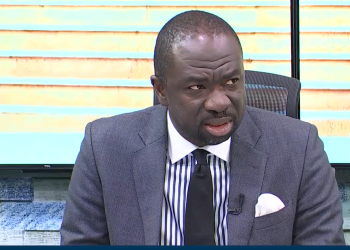
Private legal practitioner Martin Kpebu has questioned the suitability of Bernard Antwi Boasiako, popularly known as Chairman Wontumi, to lead the New Patriotic Party (NPP), arguing that a party chairman facing serious legal controversies does not project the image of leadership expected by society.
Kpebu said Wontumi’s conviction in the Samreboi illegal mining case further complicates his political ambitions, particularly his reported bid to become the NPP’s national chairman.
Speaking on Channel One TV on Monday, July 20, 2026, Kpebu said political leadership requires individuals who can serve as role models and uphold standards expected by the public.
He argued that leaders of political parties must demonstrate integrity and accountability, given the influence they wield in society.
“When your party chairman is not a good example to society, it’s not the best,” he said.
The comments follow the conviction of Wontumi and Akonta Mining Limited by the High Court in Accra for offences relating to the unlawful assignment of mineral rights and the facilitation of illegal mining activities on the company’s Samreboi concession in the Western Region.
Wontumi was sentenced to 20 years’ imprisonment on two counts, with the sentences to run concurrently.
Kpebu said the conviction was a major blow to Wontumi’s ambition to lead the NPP at the national level, arguing that the party would struggle to separate itself from the allegations surrounding him.
“Chairman Wontumi was bidding to become national chairman of the NPP. So with this, for now, it’s a huge setback,” he said.
He added that even before the conviction, Wontumi’s legal challenges had already affected perceptions about his suitability for the position.
“Even without the conviction, at a point it was very clear that his bid was untenable, very untenable, that with the situation he was embroiled with, it wasn’t conducive to become chairman of the party,” Kpebu said.
According to him, political parties must consider not only legal outcomes but also public perception when selecting their leaders.
“The party will be dogged by the accusations of galamsey, galamsey,” he said.
Kpebu acknowledged that the law presumes accused persons innocent until proven guilty, but said political leadership involves broader considerations beyond legal principles.
“A person is innocent until proven guilty, Article 19, Clause 2. But also practically, sometimes the nature of the charges and the evidence so far available already point to guilt, even before the person is convicted,” he said.
The lawyer also noted that Wontumi still has the option of appealing the judgment and applying for bail pending the determination of the appeal.
The conviction of Wontumi has renewed debate about accountability among politically exposed persons and whether individuals facing major legal controversies should hold senior positions within political parties.