
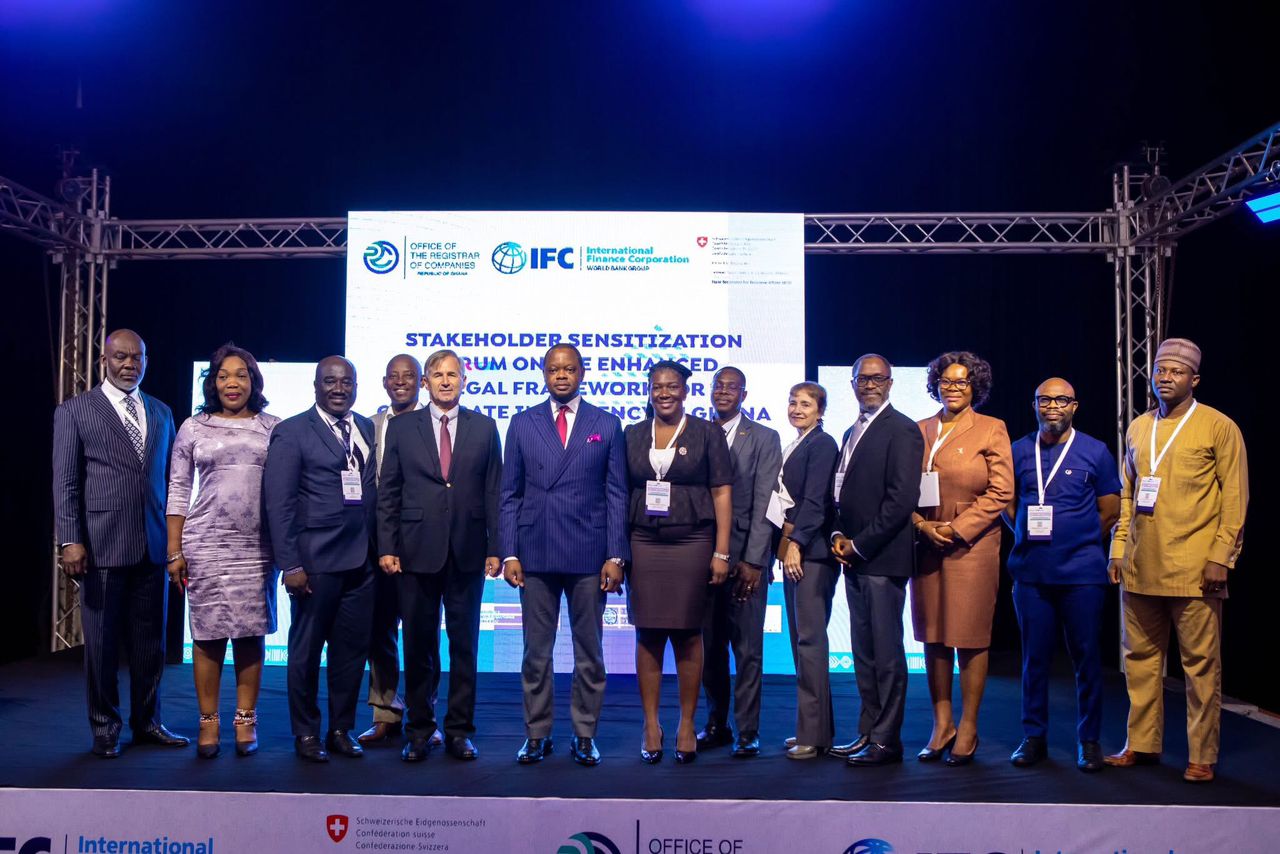
Deputy Attorney-General and Minister of Justice, Dr. Justice Srem-Sai, has underscored the importance of Ghana’s Corporate Insolvency and Restructuring Act (CIRA), describing it as a vital instrument for protecting local enterprises and rebuilding investor confidence.
Speaking at a stakeholder sensitization forum on Ghana’s enhanced insolvency framework on October 8, 2025, Dr. Srem-Sai noted that the Act introduces a more structured process for managing financially distressed companies, allowing them to reorganize and remain operational rather than shutting down entirely.
He explained that the law is designed to bring greater order to the corporate restructuring environment while safeguarding the interests of creditors.
“What the Insolvency and Restructuring Act suggests is that when companies are insolvent, we put in place mechanisms to restructure them and ensure the business continues. Creditors are confident that their money will not be lost forever. Employees are confident they will not lose their jobs, and families will continue to be happy,” he said.
Dr. Srem-Sai further highlighted that the Act tackles the long-standing issue of ‘goro boys’—unqualified intermediaries who exploit vulnerable businesses seeking insolvency support.
“Now the Act does another thing. It eliminates goro boys from corporate insolvency. What the Act does is create professional, official creditors and practitioners. If you are not properly trained and have not demonstrated experience and commitment, you are not allowed to touch anyone’s business even if the business has collapsed. The Act protects creditors,” he stated.
For his part, IFC’s Senior Country Manager for Ghana and Liberia, Kyle Kelhofer, stressed the importance of the new framework in strengthening Ghana’s economic resilience and competitiveness. He said the CIRA framework is expected to improve access to finance across key sectors.
“The CIRA framework is modern and predictable, making corporate distress manageable for banks, workers, and business owners. It gives companies a second chance through orderly restructuring. Now that we have the framework, the next step is to operationalize it and make it effective so businesses and lenders can start leveraging it as soon as possible,” he shared.
Meanwhile, Acting Registrar of the Office of the Registrar of Companies (ORC), Maame Samma Peprah, said Ghana is taking a progressive step toward a more forward-looking approach to business recovery and insolvency management.
“This is why forums like these are so crucial. They ensure the law is not just on paper but in practice effectively implemented, well understood, and aligned with the real-world needs of our business participants,” she noted.