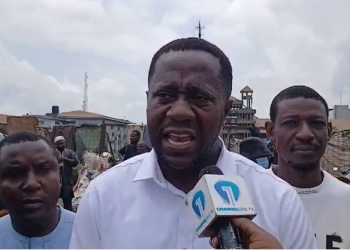
Private legal practitioner Ace Ankomah has suggested that Ghana’s Parliament has historically shown resistance to independent state institutions once they begin to assert their constitutional autonomy.
His comments come against the backdrop of calls by the Majority Leader, Mahama Ayariga, and some Members of Parliament for the Office of the Special Prosecutor (OSP) to be abolished, with proposals that the Attorney-General’s Department should instead handle all corruption-related investigations and prosecutions.
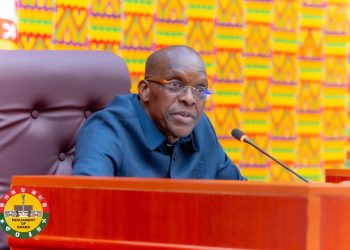
Addressing Parliament on Wednesday, December 3, Mr Ayariga questioned why the Attorney-General’s Department remains under-resourced while significant funds are allocated to the OSP, which he argued has failed to meet public expectations.
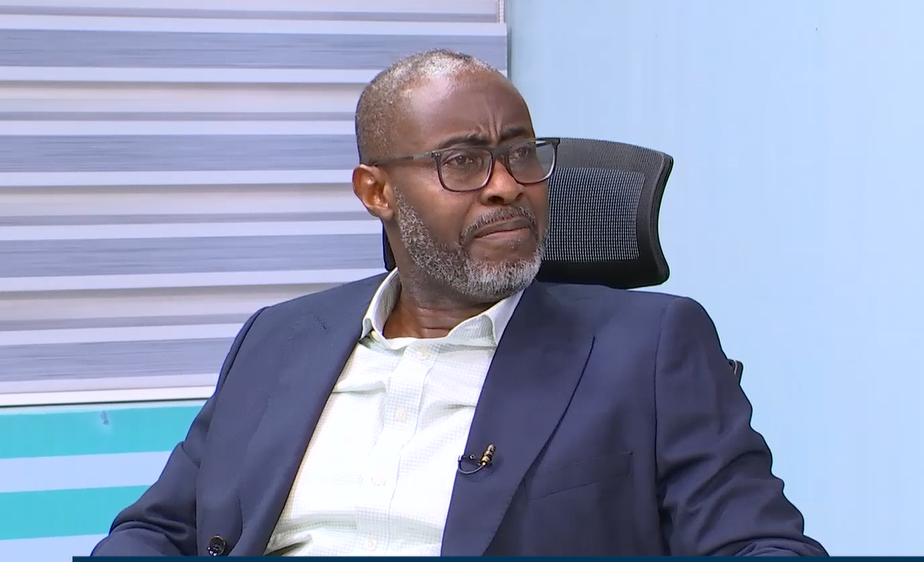
Mr Ankomah, however, offered a broader perspective on the debate while speaking on Channel One TV’s The Point of View with Bernard Avle on Monday, December 8.
He argued that Parliament’s posture toward the OSP reflects a long-standing pattern of hostility toward independent constitutional bodies.
“Parliament has a great aversion to all the independent institutions, even those set up by the Constitution,” he said, citing the experience of the Auditor-General’s Office as an example.
According to Mr Ankomah, it took legal action to compel the Auditor-General to exercise its constitutional powers of disallowance and surcharge years after the Constitution came into effect.
He said that once the office began actively enforcing those powers, it recovered about GH¢65 million for the state, based on World Bank data.
He further recalled subsequent events that, in his view, weakened the Auditor-General’s Office, including parliamentary debates aimed at circumventing Supreme Court decisions that strengthened the institution’s independence.
“For years after the constitution came into effect, the Auditor General had never bothered to assert the independence of disallowance and surcharge. It took us to go to court to get a court order to compel the Auditor General to start disallowing and surcharging.
“At least according to the World Bank, by the time we killed the Auditor General’s office again by declaring the occupant Togolese and declaring him retired all of a sudden, the former Auditor General [Daniel Domelevo] had recovered GHC65 million for the Republic of Ghana.
He added, “This is according to the World Bank. Okay, then we decided that he was doing too much work. But the interesting thing was that in Parliament, there was a debate, I think the vetting of a Minister of National Security, where between the minority and majority, they decided that the decision we went to the Supreme Court for, Occupy Ghana, was too bad. They should find a way to go around it. I remember we issued a statement challenging that, and they immediately backed down. So whenever the institution starts showing any independence, our Parliament tends to get anti.”
Mr Ankomah argued that similar reactions now confront the OSP as it seeks to establish itself, cautioning against rushing to dismantle institutions that are still developing.
He called on Ghanaians to urge Parliament to exercise restraint and allow independent offices the space to grow, stressing that institutional learning and effectiveness take time.