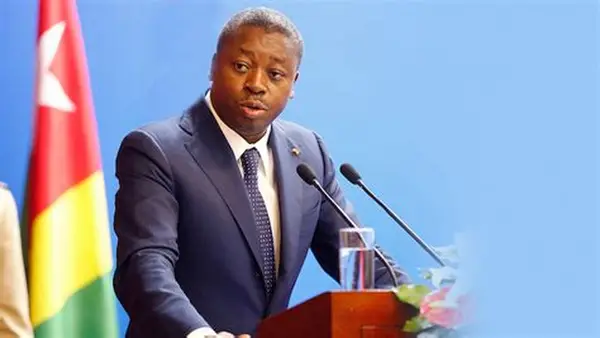
President of the Council of Ministers of the Togolese Republic, Faure Gnassingbé, has emphasised the need for reparatory justice for Africa’s development, arguing that addressing historical injustices is essential for the continent’s economic, social, and technological progress.
Speaking at the Diaspora Summit 2025 on the theme, Resetting Ghana, The Diaspora as the 17th Region, he emphasised that the global community must confront the truth about the devastation caused by the transatlantic slave trade across Africa.
President Gnassingbé further argued that acknowledging and addressing these historical injustices is not about blaming the past but about creating the conditions for a more equitable future for Africa and its diaspora.
He called on African nations and the global community to unite in advancing reparatory justice as a critical step toward sustainable development and continental empowerment.
“Reparation is not about dwelling on the wrongs of the past; it is a condition for building the future. Discussing reparation is not looking backward, it is about identifying the invisible forces that continue to operate within the global system to the detriment of Africa and its diaspora.
“The impacts of colonisation did not only harm us, they also shaped the global economy, creating unequal productivity, asymmetrical trade, and gaps in technology.
“These mechanisms are not behind us. They are embedded in our economies, our trade, and our position in the world today.
“Reparation is essential for Africa’s development, in our infrastructure, finance, and productive transformation. The first step is truth. The world must know that the transatlantic slave trade was a crime against humanity,” he stated.
Ablakwa calls for coordinated global action on reparative justice