Claim: The appreciation of the Ghana cedi began in 2024 under the NPP government.
Verdict: True. Although the cedi depreciated by about 19 percent in 2024, Bank of Ghana data show that from November 15, 2024, the currency began to recover and appreciate against the US dollar, during the final quarter of the NPP administration.
The Mahama administration is marking its first year in office amid widespread commendation, following its historic electoral victory in 2024. Before President John Dramani Mahama’s second swearing-in as an elected president, Ghana was emerging from a severe economic downturn that necessitated a US$3 billion IMF bailout programme.
One of the clearest indicators of the economic distress preceding the Mahama government was the sharp depreciation of the cedi, alongside Ghana’s downgrade to junk status. Consequently, any fair assessment of the new administration’s performance naturally begins with key macroeconomic indicators, particularly the exchange rate.
It is therefore understandable that the government has attracted praise as several indicators, including inflation and the exchange rate, have shown positive movement.
A global economic news platform has reported that the Ghana cedi emerged as the best-performing currency among 166 currencies tracked.
According to the report, the cedi appreciated by about 41 percent in 2025, marking the first annual gain since at least 1994, when the ranking of global currency performance began.
(Source: Bloomberg, December 31, 2025)
Oppong Nkrumah’s Claim
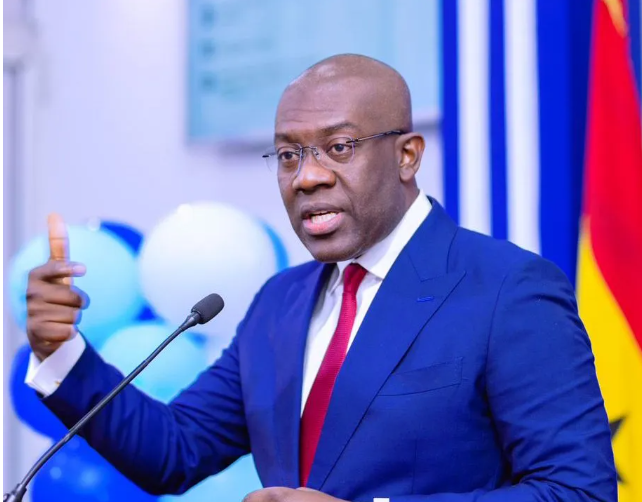
However, the Ranking Member on Parliament’s Economy and Development Committee, Kojo Oppong Nkrumah, in an interview on Asempa FM’s Ekosiisen, argued that the cedi’s appreciation began before the Mahama government assumed office, specifically in the last quarter of 2024 under the erstwhile NPP administration.
Mr. Oppong Nkrumah challenged what he described as false narratives surrounding the exchange rate performance. He stated:
“The government told a lie that they inherited an exchange rate of GH¢17 to a dollar. It was rather GH¢14 to a dollar. As of the 7th, when we left office, it was GH¢14.”
He further dismissed claims that the appreciation of the cedi was solely due to policies of the incoming government.
“Again, when they say it is when they assumed office that the cedi began appreciating because of good governance, that is false. The appreciation started in the last quarter of 2024 when the gold-for-reserves programme led to excess supply.”
Mr. Oppong Nkrumah referenced a Bank of Ghana report to support his assertion.
What the Bank of Ghana Report Says
The team reviewed the Bank of Ghana Annual Report and Financial Statements for 2024, prepared under the authority of Governor Dr. Johnson Pandit Asiama.
On page 15, under the overview of developments in the Ghanaian economy, the report states:
“The Ghana cedi came under intermittent pressures during the first three quarters of the year, but regained some value in the last quarter.”
Further, on page 20 (Section 3.10), which discusses the foreign exchange market, the report notes:
“The foreign exchange market experienced intermittent pressures during the first three quarters, which led to the cedi depreciating, but it recovered in the last quarter…The cedi appreciated in the last quarter on account of increased commercial banks’ participation in the gold purchase programme for foreign currency, positive sentiments from the progress made in the debt restructuring, and improved liquidity management.”
Interbank Exchange Rate Data
To further verify the claim, the team examined Bank of Ghana interbank exchange rate data from January 2024 to December 2025.
January 2, 2024: Dollar selling rate – GH¢11.8888
January 29, 2024: Depreciated to GH¢12.011
April 13, 2024: Depreciated further to GH¢13.0037
October 18, 2024: Dollar selling at GH¢15.998
November 14, 2024: Peaked at GH¢16.088
The Bank of Ghana attributed the depreciation to pressures from energy-related foreign exchange demand, delays in external bond restructuring, COCOBOD financing uncertainties, and election-related jitters. By the end of 2024, the cedi had depreciated by 19.2 percent, compared to 27.8 percent in 2023.
However, from November 15, 2024, the trend reversed.
November 15, 2024: Dollar selling at GH¢15.983
January 6, 2025: Improved to GH¢14.7074
The appreciation continued through 2025, with the cedi ending the year at GH¢10.4552 to the dollar.
Conclusion
While the Ghana cedi recorded its strongest performance in 2025, appreciating by 41 percent as reported by Bloomberg, the data clearly show that the appreciation trend began in November 2024, during the final quarter of the NPP administration.
Therefore, the claim by Kojo Oppong Nkrumah, MP for Ofoase Ayirebi, that the cedi’s appreciation began under the erstwhile NPP government is supported by Bank of Ghana data and is true.