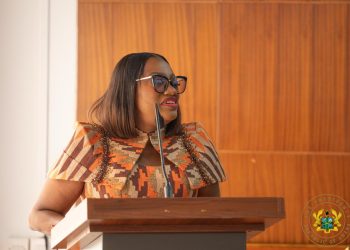
The Human Milk Bank at the University of Ghana Medical Centre (UGMC) has made a passionate appeal to lactating mothers with excess breast milk to voluntarily donate and help save the lives of premature and vulnerable babies across the country.
Dr Ophelia Ganyaglo, a paediatrician at the facility, in an interview with the Ghana News Agency, said donor breast milk had become a lifeline for several newborns whose mothers were unable to breastfeed due to death, illness, surgery, or inadequate milk production.
She explained that the Human Milk Bank, the first of its kind in Ghana, operates similarly to a blood bank but focuses on collecting, screening, pasteurising, storing, and redistributing donated breast milk to babies in need.
“A human milk bank receives breast milk from healthy lactating mothers who have excess milk beyond what their babies need. The milk is screened, safely stored, pasteurised to eliminate harmful bacteria, and redistributed to vulnerable babies,” she explained.
According to her, although the bank was launched in June 2025, operations officially began in November 2025 after staff training, equipment testing, and operational preparations.
She disclosed that within six months of operation, the bank had successfully recruited eight donor mothers and served 15 babies, including premature infants at the Korle Bu Teaching Hospital, the Greater Accra Regional Hospital, and the Suhum Government Hospital.
“Eight donors may sound small, but these mothers have donated about 64 litres of breast milk, which has gone a long way to support babies in critical need,” she stated.
Dr Ganyaglo noted that some of the beneficiary babies had mothers who passed away after childbirth, while others were born prematurely and could not immediately access enough milk from their own mothers.
She stressed that breast milk remained the best source of nutrition for newborns, especially preterm babies, because it contains essential nutrients and immune-protective properties that formula feeding could not fully provide.
“Breast milk is liquid gold. It supports growth, protects babies against infections, and improves survival outcomes, especially for premature babies,” she said.
The paediatrician assured the public that strict safety measures were in place to ensure the quality of donated milk.
She explained that all donor mothers undergo screening for infections such as HIV, hepatitis B, hepatitis C, and syphilis before being accepted into the programme.
In addition, the milk is collected under hygienic conditions, pasteurised, and later tested in the laboratory to confirm its safety before being given to babies.
Dr Ganyaglo dismissed fears and misconceptions surrounding breast milk donation and encouraged the public to embrace the initiative.
She noted that the concept was not entirely new to Ghanaian society, recalling that wet nursing had existed for generations, where relatives or other women breastfed babies whose mothers could not nurse them.
“All we are doing now is formalising the process and ensuring that it is done safely and scientifically,” she said.
The paediatrician clarified that breast milk donation at the facility was completely voluntary and not for profit.
She explained that donor mothers currently receive only appreciation tokens such as branded souvenirs and breast pumps, instead of cash incentives.
“We do not attach monetary value to breast milk donation because we do not want mothers neglecting their own babies for financial gain,” she added.
Dr Ganyaglo identified low public awareness and inadequate funding as some of the key challenges facing the milk bank.
She therefore appealed to lactating mothers, corporate organisations, philanthropists, and development partners to support the initiative to ensure its sustainability.
“We need more donors. There are many babies out there whose survival depends on access to safe breast milk,” she stressed.
She further expressed hope that more health facilities across the country would establish human milk banks in the future to improve neonatal care nationwide.
“We dream of a future where every region in Ghana will have a human milk bank so that no vulnerable baby is denied the benefits of breast milk,” she said.
Breast milk strengthens immunity, fosters brain development, protects against infections, and lowers the risk of chronic disease later in life.
It is for these reasons that the World Health Organisation (WHO) recommends a mother’s breast milk as the best milk for newborns. However, when unavailable, pasteurised donor human milk has proven to be the best alternative.
Source: GNA