The National House of Chiefs has explained that its call for greater autonomy and direct administrative placement under the Presidency is because its current structure under a government ministry is weakening its effectiveness and slowing down its work, particularly in resolving conflicts.
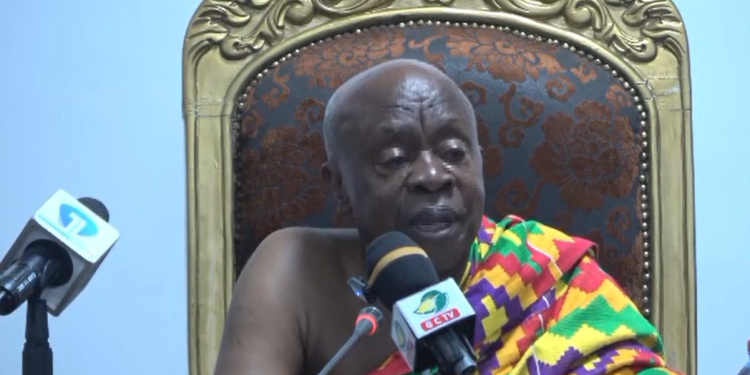
President of the National House of Chiefs and Paramount Chief of the Sefwi Anhwiaso Traditional Area, Ogyeahoho Yaw Gyebi II, on Citi Eyewitness News on Friday, May 15, said the institution’s repeated movement between ministries over the years has undermined its independence and created operational delays.
He explained that the House, which is currently attached to the Ministry of Local Government, has, since the PNDC era, been reassigned under different ministries depending on the government in power. According to him, this constant restructuring exposes the institution to shifting policy directions and affects its stability.
Ogyeahoho Yaw Gyebi II said the arrangement also creates serious funding challenges, as the House does not have a direct budgetary allocation and must rely on the supervising ministry to access resources.
He noted that this dependency makes it difficult for the House to respond quickly to emerging chieftaincy disputes, especially in situations where early intervention could prevent tensions from escalating into full-blown conflicts.
According to him, while some security assessments suggest that a significant proportion of local disturbances are linked to chieftaincy issues, traditional authorities are often unable to act promptly due to these administrative bottlenecks.
He stressed that instead of deploying chiefs early to mediate disputes, the system often delays action until conflicts escalate, after which government is forced to intervene and blame traditional leaders.
He said it was for this reason the National House of Chiefs is proposing that it be placed directly under the Presidency at Jubilee House on an interim basis, with a dedicated budgetary allocation similar to other independent constitutional bodies such as the Electoral Commission.
Ogyeahoho Yaw Gyebi II said this reform would strengthen the institution’s independence, improve its responsiveness, and enhance its ability to support governance and conflict prevention across the country.