


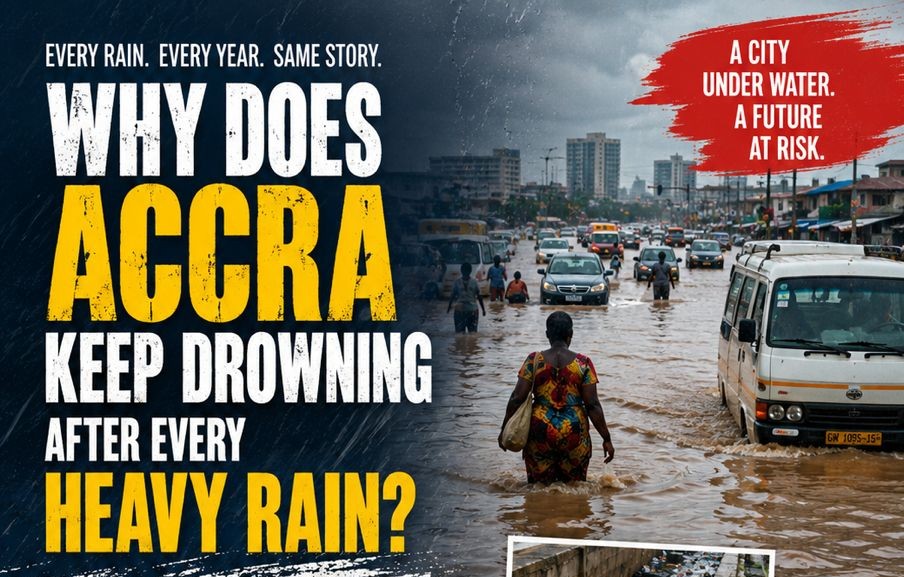
Every year, the story remains the same. Dark clouds gather over Accra, heavy rains begin to fall, and within hours roads become rivers, homes are submerged, businesses are disrupted, and lives are put at risk. As residents struggle through floodwaters, one question continues to echo across the city: Why does Accra keep drowning after every heavy rain?
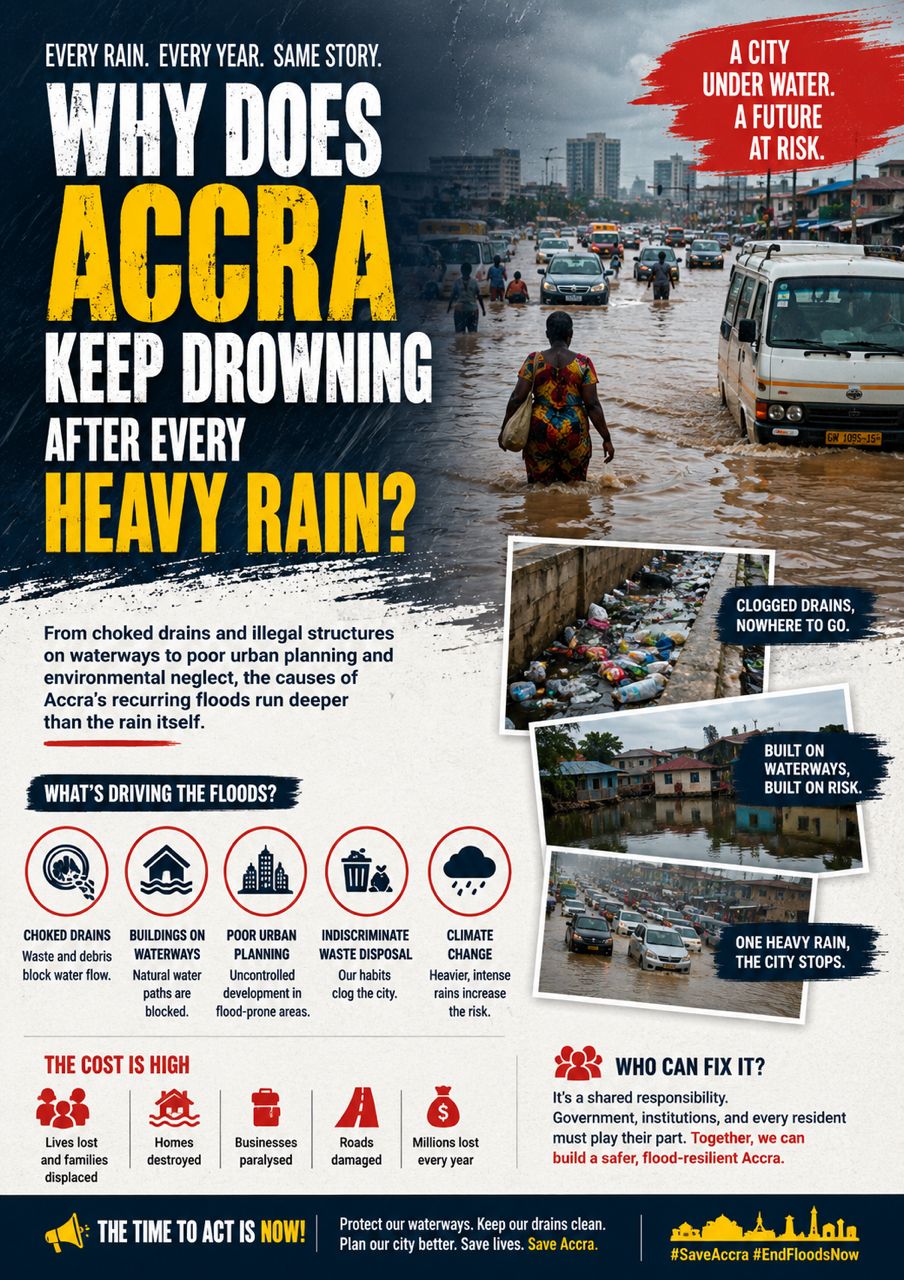
While many point to clogged drains as the primary cause, the reality is far more complex. Accra’s flooding crisis is the result of years of human activities, poor planning, environmental neglect, and rapid urbanization that have gradually weakened the city’s ability to manage stormwater.
One of the most visible causes is the indiscriminate dumping of refuse into drains and waterways. Plastic waste, household garbage, and construction debris often block drainage channels, preventing rainwater from flowing freely. During heavy rains, these blocked drains quickly overflow, turning streets and communities into flood zones. However, choked drains tell only part of the story.
Across the city, natural waterways and wetlands that once absorbed excess rainfall have been encroached upon by residential and commercial developments. Houses, shops, and other structures have been built on flood plains, watercourses, and wetlands, leaving floodwaters with nowhere to go when rains intensify.
In many communities, buildings stand directly in the path of natural water channels. What was once a stream, marshland, or flood retention area has been replaced by concrete structures. As a result, water that should flow naturally into rivers and drains is forced into homes, roads, and public spaces.
Rapid urbanization has further worsened the problem. Large portions of the city are now covered by concrete and asphalt surfaces, reducing the amount of rainwater that can seep into the ground. Instead, runoff accumulates quickly, increasing pressure on drainage systems that are already inadequate or poorly maintained.
Weak enforcement of planning regulations has also contributed to the crisis. Despite laws prohibiting construction on waterways and protected areas, illegal developments continue to emerge in flood-prone locations. In some cases, political interference, inadequate monitoring, and corruption have undermined efforts to prevent encroachment.
The devastating June 3, 2015 disaster remains a painful reminder of what can happen when these challenges are ignored. More than 150 people lost their lives following severe flooding and the subsequent explosion at a fuel station near the Kwame Nkrumah Interchange. More than a decade later, many of the conditions that contributed to that tragedy still exist.
Climate change is adding another layer to the problem. Experts warn that rainfall patterns are becoming more intense and unpredictable, increasing the likelihood of flash floods in urban centres such as Accra. Without resilient infrastructure and proper environmental management, the city remains highly vulnerable.
Solving Accra’s flood problem requires more than desilting drains before the rainy season. It demands strict enforcement of building regulations, protection of waterways and wetlands, improved waste management systems, investment in modern drainage infrastructure, and greater public responsibility.
Flooding in Accra is no longer just a natural occurrence caused by heavy rainfall. It is increasingly a reflection of the choices made by both authorities and residents over many years.
Until the city confronts these underlying issues, every heavy rain will continue to expose the same painful reality: Accra is not simply drowning because of the rain. It is drowning because the systems, spaces, and behaviours needed to manage that rain have been neglected.
The writer Isaac Offei, is a journalist with Citi FM and Channel One TV